Improve Education System in Pakistan
Improve Education System in Pakistan: Imagine a classroom in Pakistan. You might picture students sitting in neat rows, repeating facts from a textbook. The teacher stands at the front, and the goal is to memorize information for the next exam. For many of us, this is what education looks like. But if we look closely, we see a big problem. This system is not preparing our children for the real world. It is not teaching them how to think, solve problems, or innovate.
Pakistan is at a crossroads. We have a huge population of young people. This “youth bulge” could be a huge advantage for the country. But if we don’t give them the right education, it could become a challenge. The fact is, we are facing an “education emergency.” To understand how to improve the education system in Pakistan, we must first look at the deep-rooted issues holding it back.
The Root Causes: What is Really Wrong with Our Schools?
Our education system has many problems. They are not just about old buildings or not having enough schools. The issues go much deeper. They affect what students learn, how they learn, and even who gets to learn at all.
Outdated Teaching Methods: The “Rote Memorization” Disease
For a long time, the main way of teaching in Pakistan has been “rote memorization.” This means students are asked to memorize facts, dates, and formulas without truly understanding them . They learn to pass a test, not to use the knowledge in life. This method kills creativity and critical thinking. It is the biggest reason our students struggle to compete globally.
The Crisis of Access: Millions of Children Are Out of School
This is perhaps the most painful reality. An estimated 25.1 million children aged 5-16 are not in school . This is a staggering number. Pakistan has the world’s second-highest number of out-of-school children . These children are being left behind. They are losing their chance for a better future. This crisis is especially severe in rural areas and for girls .
| Province | Out-of-School Children (Aged 5-16) | % of Provincial Age Cohort |
|---|---|---|
| Punjab | 9.7 million | 27% |
| Sindh | 7.4 million | 44% |
| Khyber Pakhtunkhwa | 4.5 million | 34% |
| Balochistan | 3.5 million | 69% |
| Islamabad | 0.09 million | 15% |
The Divide: Elite vs. Public Schools
In Pakistan, your family’s wealth often decides the quality of education you get. This creates a huge divide. On one side, you have elite, expensive private schools. These schools have good facilities, trained teachers, and modern technology. On the other side, you have public schools. These schools often lack basic resources .
The curriculum in many public schools is not relevant to the students’ lives . This unequal system creates a two-tiered society. It limits opportunities for millions of bright children from low-income families .
“Shadow Education”: Why Private Tutoring is a Red Flag
Walk through any city in Pakistan in the afternoon, and you will see a “second school day” starting. Children go from their regular school to private tuition centers. This practice, known as “shadow education,” is a massive red flag . It shows that parents do not trust the school system to teach their children properly. They pay twice for education—once for the school and again for the tuition. This puts a huge burden on poor families and makes inequality worse .
The Roadmap to Reform: How to Improve Education System in Pakistan?
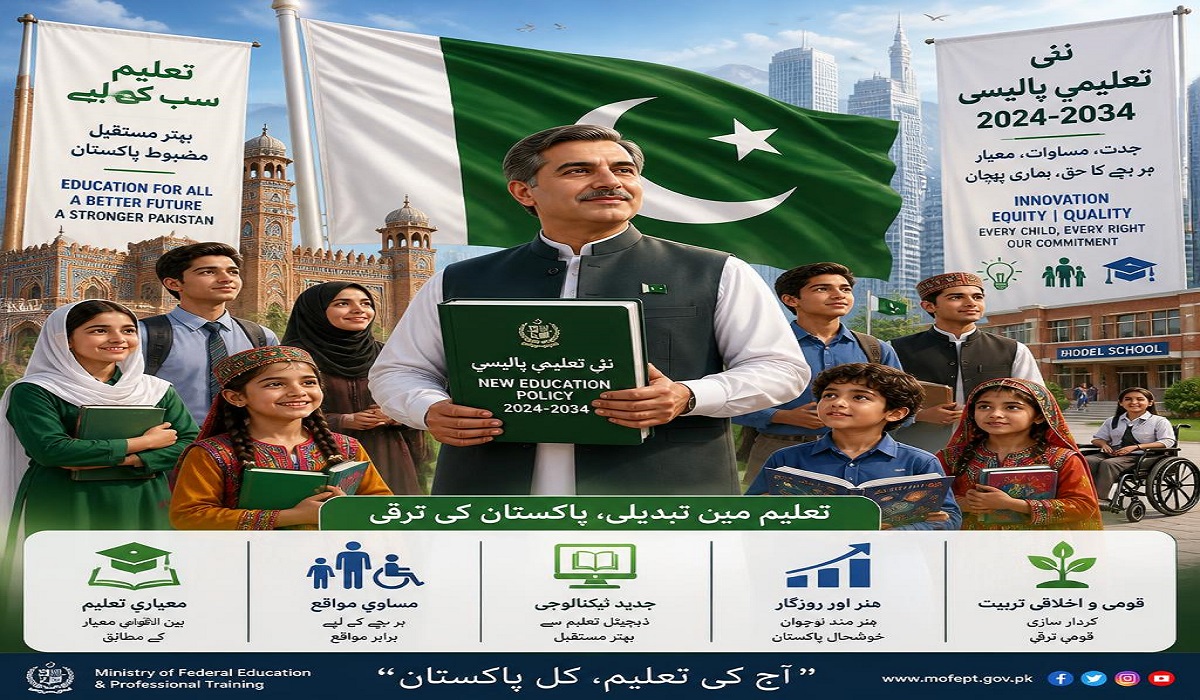
Fixing our education system is a huge task, but it is not impossible. It requires a clear plan and a strong will to change. The good news is that experts and policymakers are discussing solutions .
1. Fixing the Curriculum: Moving from Memorization to Critical Thinking
The heart of the problem is the curriculum. We must change what we teach and how we teach it.
The Shift to “Student Learning Outcomes” (SLOs)
There is a move towards a system focused on Student Learning Outcomes (SLOs) . The idea is simple: we should measure what a student can actually do with the knowledge they gain, not just what they can memorize. This shifts the focus to conceptual understanding and skills .
Introducing the Liberal Arts Model
A major change could be adopting a “liberal arts” model. This does not mean just studying arts and humanities. It means a well-rounded education that builds critical thinking, communication skills, and ethical reasoning . It moves away from just preparing students for a narrow job. Instead, it aims to create thoughtful citizens who can adapt to a changing world .
2. Empowering the Teacher: The Hero of the Classroom
No education reform can succeed without great teachers. They are the most important part of the system.
Professional Development: Training Our Teachers Better
Many teachers themselves were taught using rote memorization. They need proper, continuous training to learn new, student-centered teaching methods. This training should not be a one-time event. It should be a part of their career so they can keep improving .
The Pay Problem: Valuing Our Educators
If we want the best people to become teachers, we need to pay them well. Currently, low salaries are a major issue . When a teacher has to take on private tuition to make ends meet, it’s a problem . We must make teaching a respected and well-paid profession to attract and keep talented people.
3. Bridging the Digital Divide: Technology as a Tool, Not a Luxury
The world is digital. Our classrooms must be too. Technology can be a great equalizer.
Expanding Access to Internet and Devices
A major hurdle is that millions of students, especially girls and those in rural areas, do not have access to the internet or computers . The government must treat this as a priority. Providing laptops and internet access can connect students to a world of knowledge .
Smart Classrooms and E-Learning Platforms
Imagine classrooms where teachers use digital tools to explain complex ideas, or where students can access online courses. This is not a luxury; it is becoming a necessity. The government is taking steps to encourage distance learning and online education . This can help reach students in remote areas and bring modern teaching methods into the classroom .
4. Reforming Higher Education: Preparing for the Economy
The goal of education is to prepare students for a good life, which includes a good job. Our higher education system needs to connect with the real world.
The “Learning to Livelihood” Approach
There is a growing call to link education directly to livelihood . This means teaching students skills that employers actually need. Right now, many graduates are unemployed because they do not have the right skills .
Outcome-Based Education (OBE) and University Reforms
The Higher Education Commission (HEC) is pushing for “Outcome-Based Education” in universities . This means focusing on what graduates can do. They are also working to improve transparency and governance in higher education institutions .
HEC’s Reforms: Standardized Testing and More
To ensure fair and transparent admissions, the HEC is introducing standardized tests like the GRE/HAT for graduate programs . This is meant to be a better measure of a student’s aptitude than university-specific tests, which can sometimes be unreliable. The goal is to create a uniform, credible system .
5. Funding the Future: Investing in Education
All these reforms require money. Currently, Pakistan spends a very small percentage of its GDP on education. It is one of the lowest in the region .
- Increase Budget Allocation: The government must commit to spending at least 4% of its GDP on education, as recommended by UNESCO .
- Strategic Spending: It is not just about spending more, but spending smarter. Currently, a huge chunk of the budget goes to salaries. More money is needed for infrastructure, teacher training, and resources like books and technology .
Overcoming the Challenges: What’s Stopping Progress?
It is important to be realistic. Fixing education is hard. There are many obstacles.
- Policy Instability: When a new government takes power, education policies often change. This makes it impossible to build a long-term, stable plan .
- Provincial Fragmentation: After the 18th Amendment, education became a provincial matter. While this allows provinces to make their own rules, it has also led to a lack of national coherence and comparison .
- The “One-Size-Fits-All” Problem: A single national curriculum does not work for all students. Children in a big city like Karachi have very different needs than children in the mountains of Gilgit-Baltistan .
- Changing the Mindset: The biggest challenge is cultural. We need to convince parents, teachers, and society that education is not about getting a certificate. It is about learning how to think .
Conclusion: The Future of Pakistan is in Its Classrooms
How to improve the education system in Pakistan is not just a question for policymakers. It is a question for all of us. A weak education system weakens the entire nation. It leads to poverty, inequality, and a lack of progress.
The path forward is clear, even if it is difficult. We need to move away from the old system of memorization and punishment. Need a system that builds creativity, critical thinking, and good character.
We must empower our teachers. We must invest in our schools. Must make sure that every child, whether in a city or a village, girl or boy, rich or poor, gets access to a quality education. Only then can Pakistan unlock the full potential of its young people and build a prosperous and just future for all.
Frequently Asked Questions (FAQs)
1. Why is rote learning still so common in Pakistan?
Rote learning is common because it is seen as the easiest way to pass exams. The exam system rewards memorization over understanding. Furthermore, many teachers were trained this way themselves, and it is a hard habit to break. There is also a belief that learning facts is the main goal of education .
2. What is the “Single National Curriculum” and why is it important?
The Single National Curriculum (SNC) was introduced to create a uniform standard of education for all children in Pakistan. The idea is to ensure that every student, whether in a public or private school, learns the same core subjects and skills. This aims to reduce inequality and create a more cohesive society .
3. How can I, as a parent, help improve education even if the system is flawed?
Parents can play a big role. First, be involved in your child’s learning. Ask them what they are learning and what they think about it. Encourage them to ask questions, not just memorize. Read with them. Create a learning environment at home. Also, support and respect teachers. A strong partnership between parents and teachers is key to a child’s success.
4. What role does the Higher Education Commission (HEC) play?
The Higher Education Commission (HEC) is the main regulatory body for universities in Pakistan. Its job is to make sure that higher education is of high quality and meets international standards. It does this by setting policies, overseeing curriculum, and ensuring that universities are well-governed. It also works on initiatives to help Pakistani universities rank better globally .
5. Is Pakistan’s education system getting any better?
Yes, there are some positive signs. Experts and officials are talking more about reforming the curriculum and moving away from rote learning . The HEC is also pushing for major reforms in universities . Organizations like UNICEF are working with the government to get more children into school and improve the quality of learning . However, progress is slow, and the need for urgent action is greater than ever.