Broad Field Curriculum
Broad Field Curriculum: Think back to your time in school. Did you ever wonder why you were learning about World War II in history class, analyzing a map in geography, and talking about government leaders in civics, all within the same week—yet never connecting these ideas? Many of us have experienced this. Traditional education often puts subjects into separate boxes. We have a period for math, a period for science, and a period for history, and rarely do they mix. It’s like learning about all the ingredients for a recipe but never being taught how to actually cook the meal.
There is a different way to do this. A broad field curriculum offers an alternative to that traditional “separate box” way of learning. It’s a method of organizing what kids learn. Instead of having many different subjects, we group related ones together into larger, “broad fields” . The goal is to teach subjects together because they are connected in real life. After all, in the real world, challenges are not separated into neat little boxes labeled “math” or “history.” The broad field curriculum aims to prepare students for that complex world by showing them how everything is connected.
What is a Broad Field Curriculum? (The Big Picture)
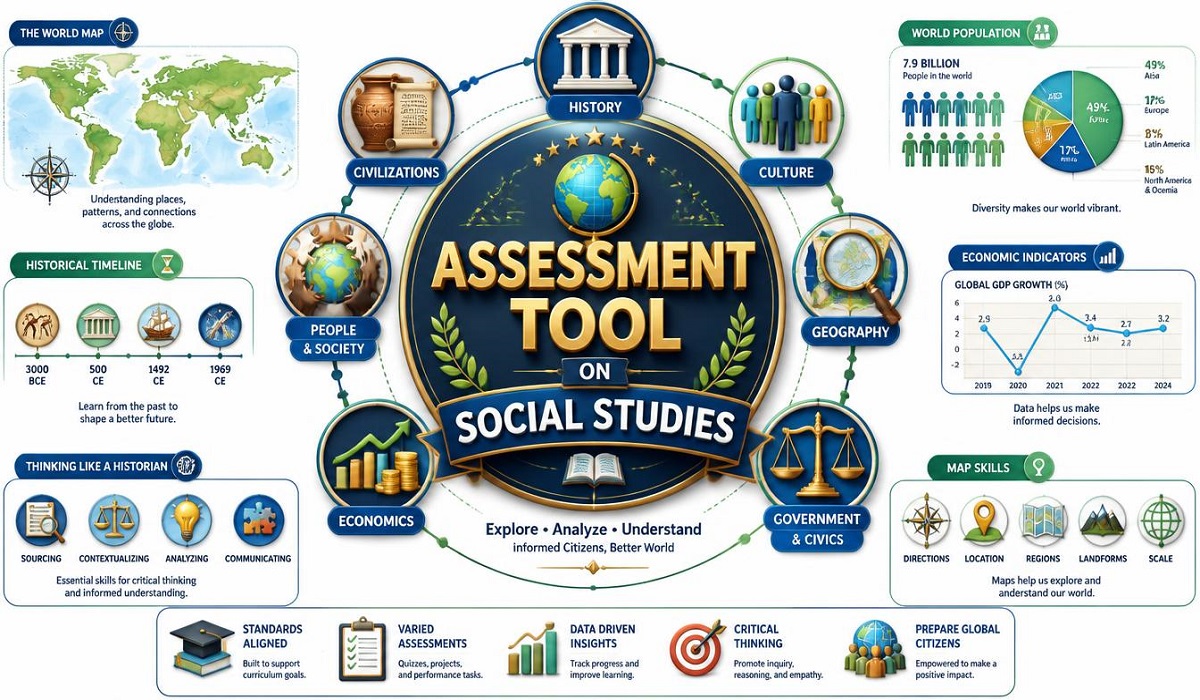
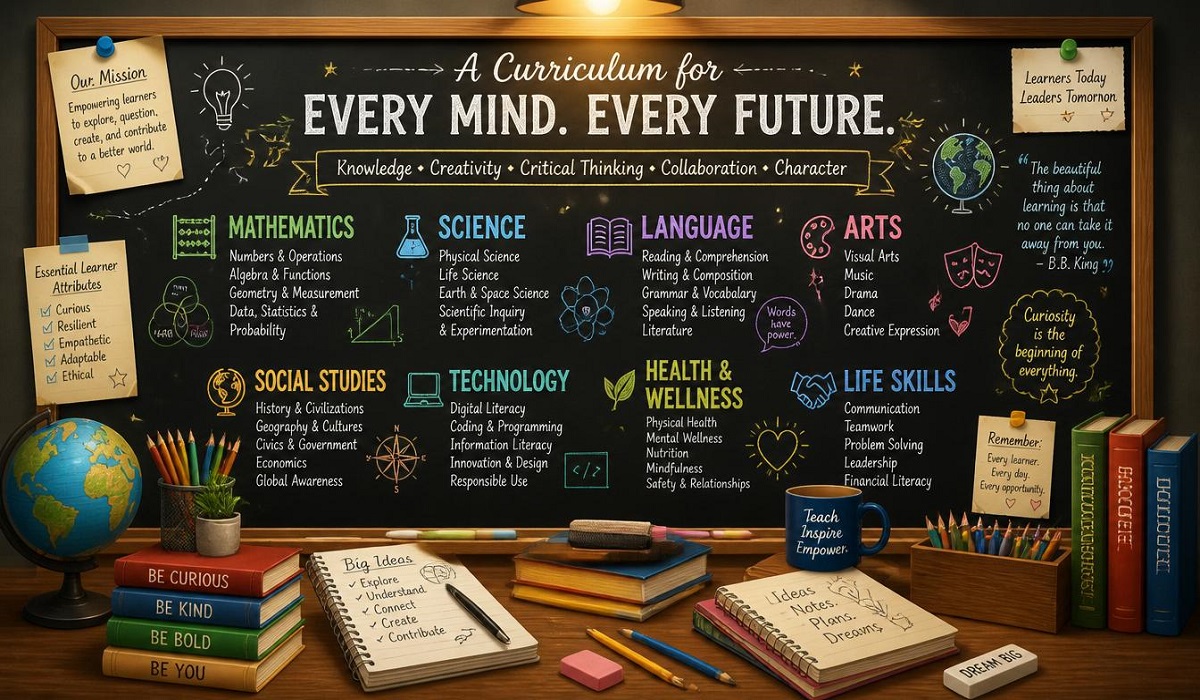
At its heart, this type of curriculum takes a “big picture” approach to education. It’s about breaking down the walls that separate subjects. The main idea is to combine subjects that are alike. Instead of teaching economics, geography, history, sociology, and political science as five different classes, a broad field model would combine them into a single class called “Social Studies” . Similarly, instead of separating grammar, literature, composition, and linguistics, they can all come together under the umbrella of “Language Arts” .
This approach was created as a solution to a big problem in traditional education: fragmentation. When students learn subjects in isolation, they often fail to see how these subjects relate to one another or to the world around them. A broad field curriculum fixes this by putting together closely related subjects into one big area. This gives students a more complete and connected view of that field .
Key Features
- Integration: This is the most important feature. The goal is to combine content from different but related subjects to build deeper understanding .
- Thematic Units: Learning is often organized around themes. For instance, a Social Studies unit might focus on “Ancient Civilizations” and cover the geography, history, culture, and government of that time all at once .
- Flexibility: Because subjects are grouped, teachers have more freedom to dig into a topic without being stuck to a strict schedule. They can spend more time on concepts that students find interesting .
- Skill-Focused: This model focuses on big concepts and ideas rather than just memorizing many tiny facts. It helps students develop important life skills like critical thinking and problem-solving .
Real-World Examples: Seeing It in Action
To understand it better, let’s look at how it works in a real school setting.
Example 1: Language Arts
Instead of having separate classes for reading, writing, speaking, and spelling, the broad field approach groups them together into “Language Arts” . A class might read a novel, discuss it (speaking and listening), write an essay about its themes, and learn new vocabulary from the text. It covers a wide area but uses one central theme to connect it all.
Example 2: Social Studies
As mentioned, Social Studies is the classic example. History, geography, civics, and sociology are all part of this one broad field . If students are learning about their city, they might study its founding (history), where it is located (geography), how its local government works (civics), and how its population has grown over time (sociology).
Example 3: General Science
Biology, chemistry, and physics can be taught as “General Science,” especially in younger grades. Students might learn about ecosystems (biology) while studying the chemical makeup of soil (chemistry) and the forces that cause weather patterns (physics).
Why Use a Broad Field Curriculum? The Advantages
This integrated approach brings many benefits to both students and teachers.
1. Better Connections and Understanding
The main reason to use a broad field curriculum is that it helps students see how different types of knowledge work together. For instance, to understand a news story about a new government policy, you need to understand economics, politics, and history. This model shows those connections . It makes learning feel less like a collection of random facts and more like a story where everything fits.
2. More Meaningful and Practical Learning
Because it links subjects to real-world issues, this curriculum makes school feel more relevant to life. When students see how math, science, and art come together to build a bridge or how history and geography explain current events, the information becomes more important. It gives them practical knowledge and skills they can actually use in their daily lives .
3. Encourages Critical Thinking
A broad field curriculum is excellent for developing higher-level thinking. It’s not just about memorizing facts; it’s about solving problems that require pulling ideas from different fields. This encourages students to think critically, ask better questions, and come up with creative solutions .
4. Reduces Overlap and Repetition
When subjects are separate, there can be a lot of repetition. A student might learn about the water cycle in geography, then again in science, and then again in another class. The broad field approach combines these similar lessons, leaving more time for deeper learning instead of re-teaching the same thing .
5. A Better Fit for Modern Life
Today’s world requires people to be able to work in teams and see the big picture. Jobs ask for people who can solve complex problems that don’t fit neatly into a single category like “math” or “writing.” This curriculum helps prepare students by giving them a well-rounded, “whole-brain” way of thinking .
The Other Side: Challenges of a Broad Field Curriculum
While there are many advantages, there are also some real challenges with this approach.
1. The “Breadth vs. Depth” Problem
Perhaps the biggest criticism is that students might learn “a mile wide and an inch deep.” By covering many subjects in one class, there is a risk that they will only get a surface-level understanding of each one . A student might learn a little about history, geography, and politics, but may not get the deep, detailed knowledge they would get from a specific history class.
2. Risk of a “Messy” Learning Experience
If the teacher isn’t trained to see the connections or how to teach them, the class can feel disjointed. The blend of subjects can be a mess, confusing students more than it helps them .
3. Teacher Training and Collaboration
To teach a broad field class, a teacher needs to be an expert in multiple areas or be great at working with other teachers. A history teacher now also needs to know geography and civics well. Good teamwork and planning are essential, and this can be difficult to manage .
4. Standardized Testing Problems
Standardized tests are often subject-based (e.g., math, reading, science). It can be much more difficult to test a “broad field” topic and see how well a student has done in each part of the material .
Making It Work in the Classroom: The Role of Unit Teaching
To make the broad field approach work well, many educators recommend using “unit teaching.” Instead of the old “assign, study, and recite” method, a unit involves a deep dive into a central problem or theme.
What is Unit Teaching?
A unit is a purposeful and carefully planned learning experience. The class focuses on a significant topic to solve a problem or answer a big question . For example, a unit might ask, “How can we improve our school’s recycling program?” This question would pull in science (recycling processes), math (measuring waste), social studies (community involvement), and language arts (writing a proposal).
How Unit Teaching Works?
Planning a unit is a joint effort between teachers and students. The teacher provides the main direction and connects it to the bigger goals of the curriculum. The students get to help plan based on their interests and experiences . This makes learning more engaging because it gives students ownership and purpose.
The Learning Process in a Unit
A good unit is based on real-life experiences. It might involve:
- Field trips: Visiting a local factory or historical site.
- Hands-on projects: Building a model, conducting a science experiment, or writing a play.
- Group work: Students work together to gather information, share their findings, and present what they have learned.
These real-world experiences give students a chance to use their skills in a natural way and see how what they learn in the classroom applies outside of school .
Benefits of Unit Teaching for Students
- Builds Social and Emotional Skills: As students cooperate, they learn to take responsibility, accept feedback, lead, and follow. This develops important social skills like tolerance and open-mindedness .
- Teaches Functional Skills: In the process of solving the unit’s problem, students naturally need to use math, writing, speaking, and other skills. This makes those basic skills feel more important and useful .
- High Motivation: When students feel they have a say in what they’re learning and see the purpose in it, they are more naturally motivated. This reduces the need for threats or rewards, as learning becomes its own reward .
Conclusion: Is a Broad Field Curriculum the Right Choice?
The broad field curriculum is a powerful alternative to the traditional, subject-based way of learning. It focuses on making connections, encouraging critical thinking, and making school more relevant to real life. While there are real challenges like the risk of teaching too little about too many subjects and the need for highly trained teachers, the core ideas of this approach are becoming more and more important in today’s world. In the long run, this method might be more effective at preparing students for a complex, rapidly changing world where seeing the big picture is essential.
Frequently Asked Questions (FAQs)
1. What is the main difference between a subject curriculum and a broad field curriculum?
A subject curriculum teaches each subject as a separate class (like history, geography, and civics as separate courses). A broad field curriculum combines these separate but related subjects into one larger field, like “Social Studies” .
2. Is a broad field curriculum the same as an integrated curriculum?
Yes, it is a type of integrated curriculum. They both focus on connecting different areas of knowledge. The broad field model is a specific type of integration that groups similar subjects into one broad field.
3. What is the biggest risk of using a broad field approach?
The biggest risk is that students might not learn topics in as much depth as they would in a single-subject class. This is sometimes called the “breadth vs. depth” problem . Teachers need to plan carefully to ensure they are covering material thoroughly.
4. Is this approach suitable for all grades?
It is often used in elementary and middle schools to give students a broad foundation. It can also be used in high school and college but often with more careful planning to ensure students get the specialized knowledge they need for exams and future study.
5. How do teachers effectively teach a broad field curriculum?
Teachers need good training and must be willing to collaborate. They often use unit teaching, where they plan thematic, project-based units that naturally pull in different subjects, and they work in teams to combine their areas of expertise.