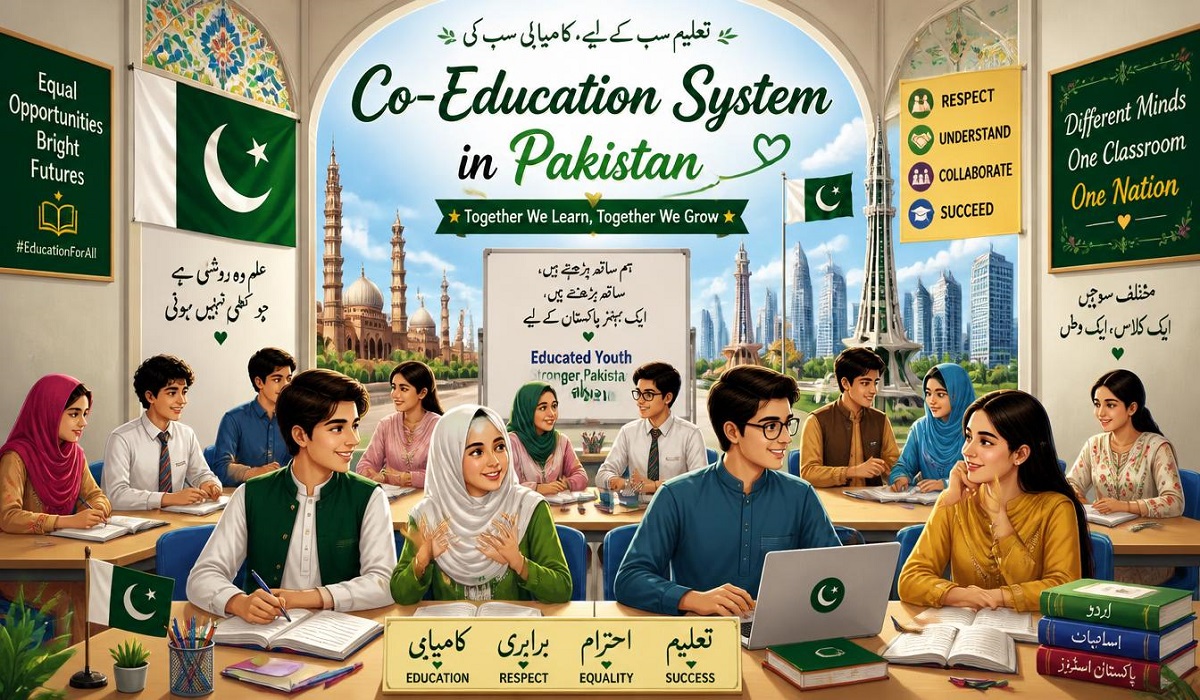
Co-Education System in Pakistan
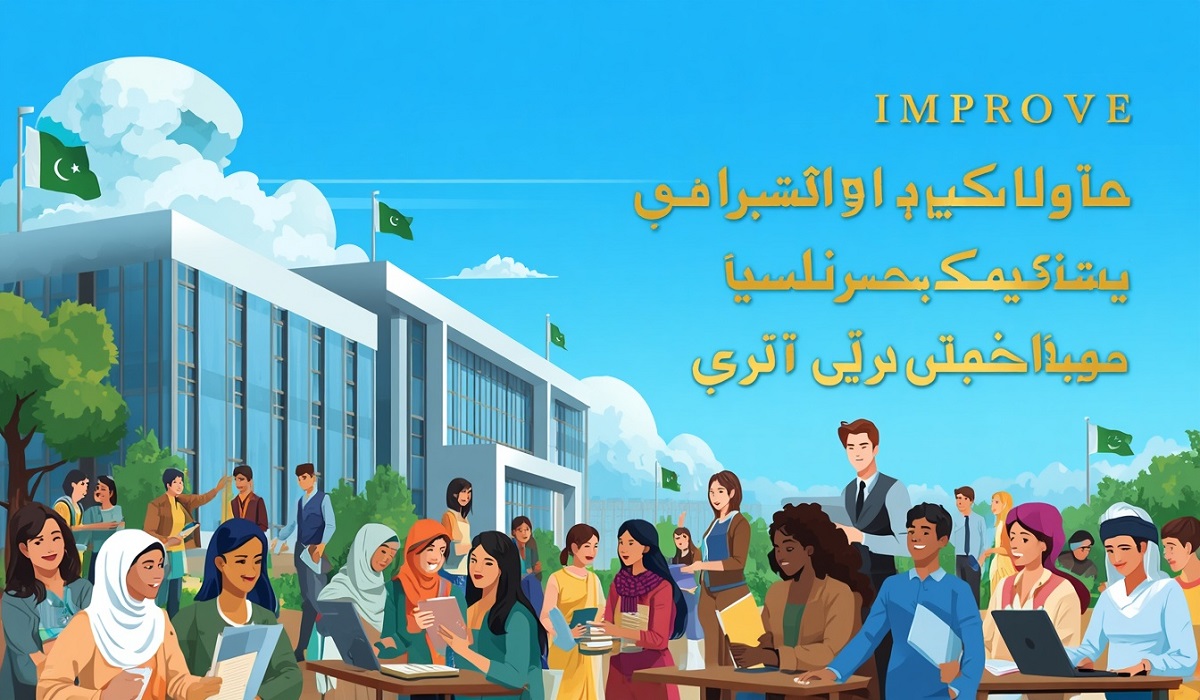
Co-Education System in Pakistan: Picture this: a classroom in Quetta where boys and girls sit side by side, sharing textbooks, asking questions, and learning together. This scene, once rare in many parts of Pakistan, is becoming more common in 2026. The Co-Education System in Pakistan is experiencing a remarkable transformation, with major policy changes sweeping across provinces .
For decades, Pakistan’s education system has been divided along gender lines. Boys went to boys’ schools, girls to girls’ schools. But the world is changing, and Pakistan is changing with it. The question on everyone’s mind is simple yet powerful: Can boys and girls learn better together?
This blog post explores the latest developments in the Co-Education System in Pakistan, examining why it matters, what’s changing in 2026, and how it could shape the future of millions of young Pakistanis. We’ll look at the facts, the controversies, and the hopes surrounding this important topic.
Whether you’re a student, parent, teacher, or simply someone who cares about Pakistan’s future, this guide will help you understand the co-education landscape in simple, clear terms.
What Exactly is Co-Education?
Before we dive deeper, let’s understand what we’re talking about. Co-education simply means teaching boys and girls together in the same classroom, school, or college. It’s the opposite of single-gender education, where boys and girls learn separately .
Think of it this way: the real world isn’t divided by gender. Men and women work together, run businesses together, and build communities together. Co-education prepares young people for this reality from an early age.
Key Features of Co-Education:
- Boys and girls share the same classroom
- They participate in the same activities
- They learn to respect and understand each other
- They develop social skills that help later in life
Big News: Balochistan’s Education Revolution in 2026
The biggest story in 2026 is happening in Balochistan. The provincial government has announced sweeping education reforms that are making headlines across the country .
What’s Changing in Balochistan?
Chief Minister Mir Sarfraz Bugti recently chaired a high-level meeting where education was declared a top priority. Here are the most exciting changes:
1. Co-Education in Primary Schools
All primary government schools in Balochistan will now be “gender-free.” This means boys and girls will study together in the same classrooms . This is a huge step forward for a province where literacy rates have traditionally been low.
2. No More Compulsory Uniforms
The government is scrapping the requirement for school uniforms. This might seem small, but for poor families, buying uniforms was a real burden. Removing this requirement helps more children attend school .
3. Goodbye “Tat Culture”
In many remote areas, children used to sit on mats or sacks instead of proper furniture. The government has declared this practice unacceptable. “No child will sit on a tat anymore,” the Chief Minister declared. Desks and chairs will be provided to every student in all public schools .
4. More Classrooms and Double Shifts
The government is building new classrooms in 3,000 single-room schools and introducing double shifts in 900 schools. This means more children can get an education, even in areas with limited space .
5. Higher Pay for Teachers
Teachers working under the National Commission for Human Development will receive significant salary increases. Happy teachers make better teachers .
Why This Matters?
Balochistan’s literacy rate has been far below the national average, especially in rural, tribal, and remote areas . These reforms aim to change that. By making schools more accessible and welcoming, the government hopes to encourage more families to send their children to school.
Punjab’s “Schools of Eminence” Initiative
Balochistan isn’t the only province making moves. Punjab, Pakistan’s most populous province, is launching 300 “Nawaz Sharif Schools of Eminence” .
What Makes These Schools Special?
These aren’t ordinary schools. They’re designed to be modern, tech-savvy learning environments with:
- Science laboratories
- Robotics labs
- Computer labs
- Smart classrooms with digital boards
- Sports grounds
- Early childhood education rooms
Co-Education at Primary Level
Like Balochistan, Punjab is implementing co-education at the primary level in these new schools. The government believes this promotes inclusivity and gives equal learning opportunities to both boys and girls .
Impressive Enrollment
Already, nearly 77,000 students have enrolled in the first phase of these schools, with almost equal numbers of boys and girls. This shows that parents are embracing the new model .
Why Some People Support Co-Education?
Many education experts and social scientists strongly support the Co-Education System in Pakistan. Here are their main arguments:
1. Better Social Skills
When boys and girls learn together, they develop better social skills. They learn to communicate, cooperate, and understand each other .
Think about your own life. In the real world, you work with people of all genders. Co-education prepares you for this from an early age. You don’t feel awkward or uncomfortable around the opposite gender because you’ve grown up studying with them.
2. Breaking Stereotypes
In single-gender schools, stereotypes often flourish. People might think girls are bad at math or boys aren’t good at languages. But in co-education classrooms, these myths are challenged .
When a girl excels in a science project or a boy shines in creative writing, everyone sees that talent isn’t about gender. It’s about individual effort and ability.
3. Healthy Competition
Co-education creates healthy competition. When boys and girls compete academically, both groups push themselves harder. This leads to better performance overall .
A student from Swat University once said that co-education “creates healthy competition in which one group tries to achieve superiority over the other.” This friendly rivalry can drive students to excel .
4. Efficient Use of Resources
Pakistan faces serious resource constraints. Building and maintaining separate schools for boys and girls is expensive. Co-education allows the government to use its limited resources more efficiently .
In remote areas, it’s often impossible to have separate schools for boys and girls. Co-education makes education possible for everyone .
5. Preparing for the Real World
Life after school is co-educational. Whether in hospitals, offices, or markets, men and women work together. Co-education helps young people adapt to this reality smoothly .
What Critics Say About Co-Education?
Of course, not everyone supports the Co-Education System in Pakistan. Critics raise important concerns that deserve attention.
Cultural and Religious Concerns
Some parents worry that co-education goes against cultural and religious values . In conservative areas, families are hesitant to send their daughters to schools where boys are present.
A study in Khyber Pakhtunkhwa found that parents with lower socioeconomic status preferred single-gender education . Cultural norms and fears about safety play a big role in these decisions .
Safety Issues
Safety is a genuine concern. Parents worry about harassment or inappropriate behavior in co-educational settings .
A recent study showed that fear of harassment is a major reason girls stay out of school . This fear must be taken seriously and addressed through strict policies and monitoring.
Implementation Challenges
Even where co-education is allowed, implementation can be difficult. There’s an example from Swat University where a proctor tried to ban boys and girls from sitting or walking together on campus . This shows that mindsets don’t change overnight.
In Punjab, some contracted schools were found defying orders and continuing co-education when they shouldn’t have . This confusion makes parents uneasy.
What Research Shows?
Research from Khyber Pakhtunkhwa reveals a clear pattern: wealthier, more educated families tend to support co-education, while poorer families prefer segregation . This suggests that economic factors and education levels influence attitudes.
Another study found that even in urban areas, many educators hold traditional views about gender roles . This means the people running schools might not fully support co-education, even when it’s the official policy.
The Female Education Crisis in Pakistan
To understand why co-education matters, we need to look at the bigger picture: Pakistan’s education crisis, especially for girls.
Shocking Statistics
- 63% of Pakistan’s youth have never received formal education
- Nearly 3 out of 4 females aged 15-29 have never enrolled in school
- Pakistan’s female labor force participation is less than 25%, compared to over 48% globally
These numbers are alarming. Millions of girls are being left behind, which hurts not just them but the entire country.
Why Girls Stay Out of School?
Research shows that financial hardship is the biggest reason young people drop out of school, affecting nearly three-quarters of respondents . Other factors include:
- Household responsibilities – Girls often have to do chores at home
- Work pressure – Some families need children to earn money
- Lack of nearby schools – Schools are too far away
- Unsafe transport – Traveling to school can be dangerous
- Social norms – Some families simply don’t believe girls should be educated
Early marriage is also common, with the median marriage age for girls being just 18 years . Once married, most girls never return to school.
How Co-Education Can Help?
Where there aren’t enough resources for separate schools, co-education can be the answer. In many remote areas, it’s the only way girls can get an education .
In Balochistan, for example, separate facilities for boys and girls are often not available. The government’s decision to introduce co-education addresses this infrastructure shortage .
The Constitution and Education
Pakistan’s Constitution, under Article 25A, makes education free and compulsory for all children aged five to sixteen . This is a gender-neutral goal, but in practice, many parents don’t allow girls to study with boys.
This creates a conflict between the law and cultural practices. The government’s push for co-education is one way to resolve this conflict, making education truly accessible for everyone.
The Economic Argument
There’s also a powerful economic case for co-education. Pakistan’s economy suffers when women aren’t educated and can’t work.
The Facts
- Global female labor force participation: over 48%
- Pakistani female labor force participation: less than 25%
That’s a huge gap! When women don’t participate in the workforce, the country loses out on talent, innovation, and economic growth.
Why Co-Education Helps
One reason women don’t enter the workforce is cultural discomfort. They’ve been segregated throughout their education, so entering a mixed workplace feels intimidating.
If children grow up studying together, this discomfort disappears. Women who’ve had co-education are more likely to feel comfortable in mixed workplaces. They’re also more confident and better prepared for professional life.
What Needs to Happen Next?
The Co-Education System in Pakistan is clearly moving forward, but there’s still work to be done. Here are some key steps:
1. Address Safety Concerns
Parents won’t send their daughters to co-educational schools if they don’t feel safe. The government must:
- Put strict anti-harassment policies in place
- Monitor schools regularly
- Act quickly when problems are reported
- Make schools accessible and safe for girls to travel to
2. Community Engagement
Cultural resistance won’t disappear overnight. The government needs to work with communities to explain the benefits of co-education .
Imams, community leaders, and respected elders can help convince families that co-education is acceptable and beneficial.
3. Teacher Training
Teachers need proper training to handle co-educational classrooms effectively. They should learn:
- How to treat boys and girls equally
- How to prevent harassment
- How to create an inclusive learning environment
- How to challenge gender stereotypes
4. Financial Support
Poverty is a major barrier to education . The government should provide scholarships and financial assistance to poor families, encouraging them to send children to school.
5. Track Results
The government should monitor the impact of co-education policies. Are enrollment rates going up?, are girls performing well? Are there safety issues?
This data will help policymakers refine their approach and make co-education more successful.
What About the Students?
It’s important to hear from students themselves. A 2016 survey from Swat found that students supported co-education, seeing it as beneficial for developing social and moral values .
Students appreciated that co-education helped them overcome hesitation and express their opinions more freely. They also valued the healthy competition that co-education created .
Conclusion: Hope for the Future
The Co-Education System in Pakistan is at a turning point in 2026. Major reforms in Balochistan and Punjab show that the government is committed to making education more accessible and inclusive .
At the same time, challenges remain. Cultural resistance, safety concerns, and poverty are real obstacles that need to be addressed.
But there’s reason for hope. The growing enrollment numbers in new schools suggest that parents are becoming more accepting of co-education . The government’s clear commitment to ending practices like “tat culture” shows that dignity and quality education are now priorities .
Education experts argue that schools should do more than just produce students who can pass tests. Schools should create citizens who can cooperate, innovate, and lead together . The Co-Education System in Pakistan, if implemented thoughtfully, can help achieve this goal.
In the end, co-education isn’t just about putting boys and girls in the same classroom. It’s about preparing Pakistan’s youth for a world where men and women work side by side. It’s about breaking down stereotypes and building a more inclusive, prosperous society.
The future of Pakistan depends on its young people. And in 2026, more of those young people than ever before are learning together, regardless of gender. That’s progress worth celebrating.
Frequently Asked Questions (FAQs)
1. Is co-education allowed in Pakistan?
Yes, co-education is allowed in Pakistan, though its implementation varies by region and level of education. In 2026, provinces like Balochistan and Punjab are actively expanding co-education, especially at the primary school level . However, some areas and parents still prefer single-gender education due to cultural or religious reasons .
2. What is the biggest challenge facing co-education in Pakistan?
Cultural resistance and safety concerns are the biggest challenges. Many parents, especially in conservative areas, are hesitant to send their daughters to co-educational schools . There are also genuine concerns about harassment, which the government must address through strict policies and monitoring .
3. Does co-education improve academic performance?
Research suggests that co-education can improve academic performance through healthy competition. When boys and girls compete academically, both groups tend to push themselves harder . Co-education also helps students develop better social skills, which are valuable in the real world.
4. What is Article 25A of Pakistan’s Constitution?
Article 25A makes education free and compulsory for all children aged five to sixteen in Pakistan . This constitutional obligation is gender-neutral, meaning both boys and girls have the right to education. Co-education helps fulfill this goal by making education more accessible, especially in areas where separate schools aren’t available.
5. How can parents who oppose co-education be convinced?
Experts recommend community engagement and awareness campaigns to address parents’ concerns . Working with religious leaders and respected community elders can help explain the benefits of co-education. Improving school safety, providing financial assistance, and sharing success stories from co-educational schools can also change minds .
Summary
The Co-Education System in Pakistan is experiencing significant changes in 2026. Major reforms in Balochistan and Punjab are making co-education more common, especially at the primary school level . These changes aim to improve enrollment, use resources more efficiently, and promote gender equality .
Supporters argue that co-education develops better social skills, breaks stereotypes, creates healthy competition, and prepares students for the real world . Critics worry about cultural and religious values, safety issues, and implementation challenges . Research shows that wealthier, more educated families tend to support co-education, while poorer families prefer segregation .
Pakistan faces a serious education crisis, with 63% of youth never having received formal education . Girls are especially affected, with nearly 3 out of 4 females aged 15-29 having never enrolled in school . Co-education offers a practical solution, especially in remote areas where separate schools aren’t possible .
The future of the Co-Education System in Pakistan depends on addressing safety concerns, engaging communities, training teachers, and providing financial support to poor families . If implemented thoughtfully, co-education can help Pakistan build a more inclusive, educated, and prosperous society.