Management of the Classroom
Classroom Management: Teaching lessons is not the only way to establish a successful classroom. Clear guidelines, polite interactions, stimulating activities, and a secure learning environment are all necessary for students. For this reason, in 2026, classroom management will still be one of the most crucial abilities for educators.
Controlling every student’s behavior is not the definition of good management. Rather, it entails setting up a classroom environment where students are aware of expectations and given chances to be accountable for their conduct and learning.
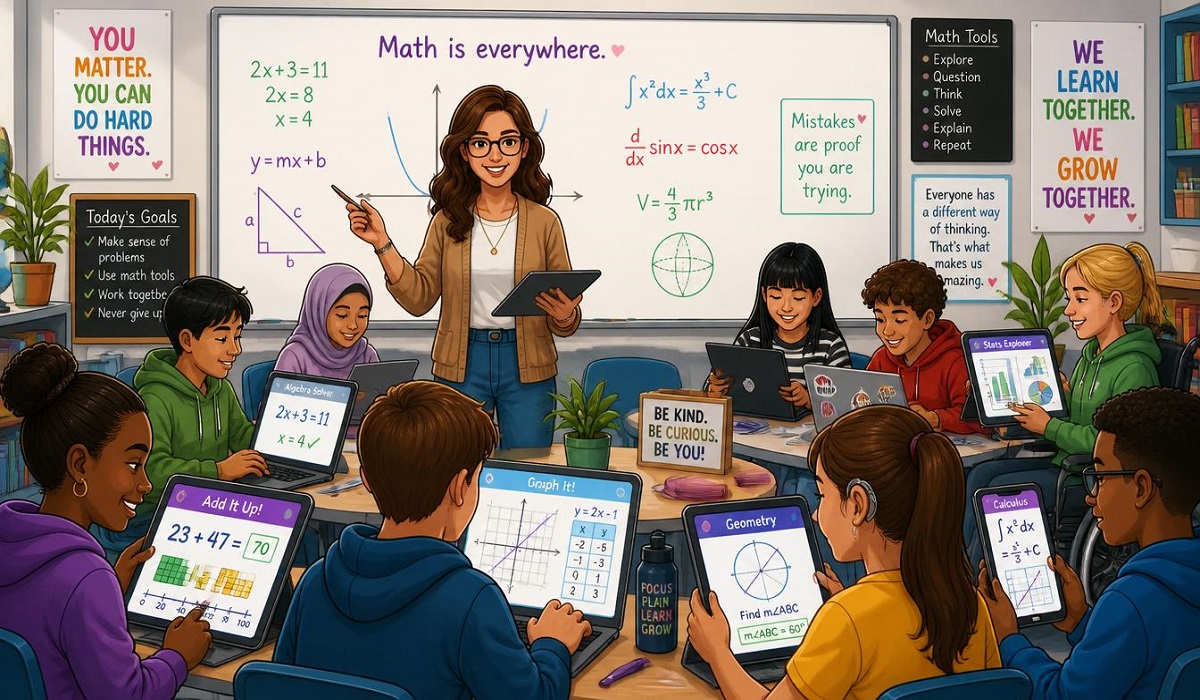
Classrooms nowadays are rapidly evolving. Pupils differ in their attention spans, interests, cultures, experiences, and learning requirements. Additionally, technology is being utilized more often. Teachers therefore require adaptable management techniques that are effective in blended learning, activity-based learning, digital learning settings, and traditional classrooms.
Academic achievement can also be impacted by classroom conduct. Important learning time might be missed when students talk too much, move around a much, argue, or become sidetracked. However, learning may become more concentrated and pleasurable when expectations are explicit and students feel valued.
As a result, classroom management should be viewed by educators as a comprehensive strategy for fostering a pleasant learning environment rather than just a way to curb disruptive conduct.
Classroom Management: What Is It?
The process of setting up students, lessons, activities, time, space, and conduct in a classroom to facilitate effective learning is known as classroom management.
It involves a wide range of duties. For instance, a teacher could have to:
- Set guidelines for the classroom.
- Clearly state what is expected of you.
- Arrange the supplies for the classroom.
- Control the conduct of your students.
- Arrange for seamless transitions.
- Promote involvement.
- Resolve disputes.
- Develop wholesome connections.
- Maintain pupils’ interest.
- Make good use of the time spent in class.
- Assist with various learning requirements.
Establish a courteous and safe atmosphere.
To put it simply, classroom management contributes to the resolution of a crucial query:
How can a teacher set up a classroom where students feel prepared to learn, know what to do, and comprehend why they are doing it?
Every classroom has a different response. A method that is effective for one student group might not be as effective for another. As a result, educators should keep an eye on their pupils and modify their methods as necessary.
Why Will Classroom Management Be Important in 2026?
In 2026, classrooms will be more varied and adaptable. Books, films, interactive exercises, digital platforms, group projects, games, presentations, and hands-on activities are some of the ways that students might learn.
This diversity has made classroom management even more crucial.
1: It Preserves Educational Time
Each lesson has a time limit. Students miss out on learning chances if a teacher has cope with frequent interruptions for a significant portion of the class.
Lessons start on schedule and go well when there is effective management. Additionally, less time is spent outlining fundamental processes as students get used to classroom practices.
2: It Makes the Environment Safe
When students feel emotionally and physically secure, they study more effectively.
Fear and humiliation may be lessened in a classroom with respect. When students are certain that their errors won’t be viewed as embarrassing, they are more inclined to ask inquiries.
As a result, educators should foster a culture in which making errors is seen as a necessary element of learning.
3: It Encourages Academic Achievement
Academic learning and good behavior are tightly related. Students have more time to practice skills, finish assignments, ask questions, and get feedback when they stay focused.
Therefore, better academic progress can be supported by efficient classroom management.
4: It Increases Students’ Accountability
Every little decision should not be made by the teacher.
Alternatively, classroom routines can be created so that students progressively learn how to manage group projects, follow directions, organize materials, and solve basic problems on their own.
Students are also prepared for responsibilities outside of the classroom.
The Principal Objectives of Classroom Management
A robust management system must to have well-defined objectives.
Make an Order
Routines must be predictable for students. They should understand when to talk, how to move between tasks, where to sit, and how to accept things.
Promote Respect
Respect ought to be reciprocated. pupils should learn to respect their professors and peers, and teachers should respect their pupils.
Increase Engagement
A bored pupil might become sidetracked fast. Therefore, classes should contain activities that push students to think, communicate, create, practice, and engage.
Reduce Disruptions
The purpose is not to penalize every error. Instead, teachers should discover why disruptions occurred and utilize appropriate measures to prevent repeating issues.
Develop Independence
Pupils should progressively take ownership of their own decisions, course materials, conduct, and classroom duties.
15 Useful Classroom Management Techniques for 2026
1: Clearly define the rules for the classroom.
Before issues arise, students must understand what is expected of them.
Rules have to be brief, understandable, and simple. Teachers might concentrate on a few key requirements rather than developing a broad list of limitations.
For instance:
- Show consideration.
- Prepare to learn.
- Pay attention to what other people are saying.
- Maintain the classroom supplies.
- Fulfilll your obligations.
- Additionally, rules must to be clarified rather than just posted on a wall.
Teachers might talk about the significance of each rule. Students may be more inclined to abide by a regulation if they comprehend its rationale.
2: Establish Regular Routines
Confusion is lessened by routines.
For instance, a teacher may create a schedule for:
- going into the classroom.
- commencing an instruction.
- obtaining supplies.
- posing queries.
- collaborating with others.
- turning in assignments.
- tidying up the classroom.
- Getting out of the room.
- Students don’t need to wait for repeated instructions after they perform these activities on a regular basis.
- Routines shouldn’t be overly rigid, tho. When unforeseen circumstances arise, flexibility is still crucial.
3: Develop Good Teacher-Student Connections
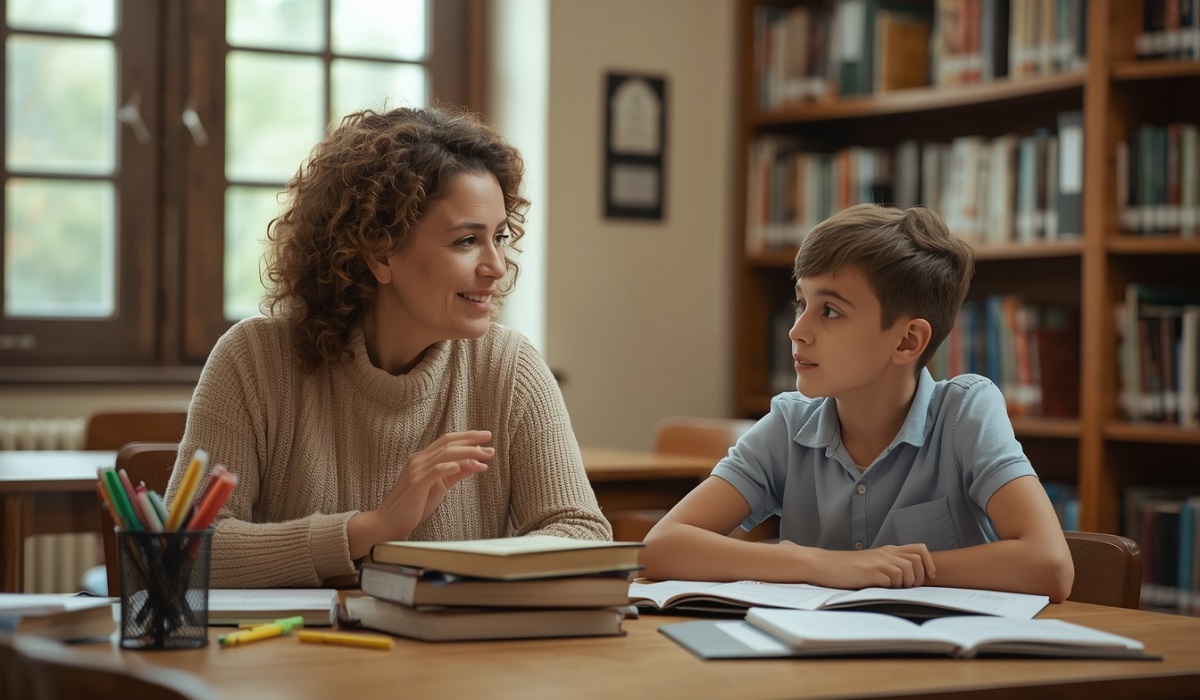
When students feel appreciated and respected, they are more inclined to collaborate with teachers.
A teacher can cultivate connections by:
- finding out the names of the pupils.
- paying close attention.
- expressing curiosity about their concepts.
- Acknowledging work.
- providing constructive criticism.
- avoiding needless humiliation.
- asking pupils on their educational experiences.
- Even a brief hello at the door of the classroom can have an impact.
Saying, “Good morning, Ahmed,” for example. “I’m glad to see you today” can foster a good rapport.
4: Make Use of Positive Reinforcement
Acknowledging positive conduct is known as positive reinforcement.
Prizes and tangible rewards are not always necessary.
Teachers can make advantage of:
- verbal compliments.
- Positive remarks.
- Points for class.
- Possibilities for leadership.
- certificates.
- additional accountability.
- public acknowledgment when it is suitable.
- Praise, tho, need to be targeted.
- Rather than stating:
- “You’re doing well.”
- A instructor could state:
- “You helped your classmates understand the instructions and got your group activity started quickly.”
- The pupil is informed in detail about the effective conduct in the second statement.
5: Directly Teach Expectations
It’s a typical error to assume that children will always know how to act in any activity.
They might not.
When students are required to work in groups, for instance, the instructor should clarify:
- How many pupils ought to be in each group?
- Who is going to take the lead?
- How resources should be shared among pupils.
- The duration of the action.
- How to resolve conflicts.
- How the finished product should seem.
- Similar to academic skills, expectations should be taught.
6: Maintain Students’ Interest
One of the best strategies for avoiding needless disturbance is student participation.
A lesson may involve a variety of exercises, including:
- queries.
- brief conversations.
- work in pairs.
- group initiatives.
- demonstrations.
- writing assignments.
- useful exercises.
- games that teach.
- presentations.
- exercises for fixing problems.
- Additionally, during lengthier classes, activities might be modified.
- Students may, for instance, spend ten minutes listening, five minutes discussing, fifteen minutes doing a task, and then sharing their responses.
- This diversity can keep people’s interest.
7: Make Use of Smooth Transitions
When pupils go from one activity to another, transitions take place.
For instance:
- reading to have a conversation.
- Talk about writing.
- from individual to group work.
- from laboratory work to classroom work.
- Noise and confusion can result from poor transitions.
- Teachers can set up transition signals as a result.
- A instructor may say:
- “There are three minutes left.”
- Next:
- “Please complete your sentence.”
- Lastly:
- “Set your pencil down and turn to face the board when I count to three.”
- Transitions are simpler when there are clear steps.
8: Carefully Manage Class Time
An essential component of classroom management is time management.
Lessons can be broken up into several pieces by teachers.
For instance:
- Five minutes: Overview
- Ten minutes: Clarification
- 15 minutes of student work
- Ten minutes: Conversation in groups
- Five minutes: Go over
Teachers can better grasp the amount of time available thanks to this arrangement.
However, educators shouldn’t get so preoccupied with the clock that they interrupt important conversations too soon. There should be some leeway.
9: Employ Nonverbal Management Strategies
Verbal correction is not always necessary.
Instructors may occasionally use:
- Make eye contact.
- a gesture with the hands.
- Getting closer to a pupil.
- standing close to a boisterous gathering.
- A silent motion.
- A pause in speech.
Minor misbehavior can be corrected using these techniques without disrupting the entire class.
For instance, the instructor can only move closer to the desks of two pupils who are conversing throughout an explanation.
This is often sufficient.
10: Appropriate Conduct Calmly
Teachers should refrain from responding with needless rage when correction is required.
The student’s dignity can be preserved and the issue can be kept from getting worse by responding calmly.
Rather than yelling:
“Why do you always disrupt the lesson?”
A instructor could state:
- “Please put an end to the discussion and focus on the task at hand.”
- The second strategy is more straightforward but less combative.
11: Steer clear of public disputes
Teacher-student arguments have the potential to turn disruptive very fast.
Teachers should refrain from making the situation into a public discussion if a student disobeys an instruction.
An improved strategy may be:
- Give a precise directive.
- Give compliance a few moment.
- If needed, have a private conversation.
- Talk about the cause of the behavior.
- If necessary, apply a just punishment.
- Relationships may be safeguarded and shame can be decreased with private talks.
12: Make Use of Logical Consequences
- Whenever feasible, the conduct should be linked to the consequences.
- For instance, a student might need to assist with organizing classroom supplies if they are frequently misused.
- A suitable restorative measure could be necessary if a student destroys a common resource.
- Random penalties are not as effective at teaching responsibility as logical consequences.
- Consequences, however, have to be reasonable, age-appropriate, and compliant with school regulations.
13: Teach how to resolve conflicts.
- Every classroom has the potential for conflict.
- Students might not agree on:
- roles in groups.
- games.
- Materials.
- seating.
- concepts.
- private matters.
- Instructors can instruct pupils in:
- Calm down and stop.
- Pay attention to what the other person is saying.
- Describe the issue.
- Steer clear of insults.
- Make suggestions for potential fixes.
- Decide on a reasonable course of action.
- Students may eventually get the ability to resolve minor disputes on their own.
14: Arrange the actual classroom.
- Management is also impacted by the physical surroundings.
- Desks have to be set up in accordance with the educational task.
For instance:
- Individual work can be supported by rows.
- Teamwork can be enhanced by small groups.
- Discussion can be facilitated by a circle.
- Conversations and presentations can be facilitated by U-shaped seats.
- Additionally, materials have to be simple to locate.
- Labels can be applied on school supplies, shelves, boxes, and folders.
- Students can move around and work more effectively in a well-organized setting.
15: Assign Students Accountability
Students can work as classroom assistants.
Among the responsibilities might be:
- distributing books.
- Organizing the resources used in the classroom.
- examining the supplies.
- assisting in group activity planning.
- tidying common areas.
- assisting with technology in the classroom.
- overseeing basic procedures.
- Assigning accountability conveys trust.
Students also discover that a good classroom is not only the teacher’s duty, but rather a shared obligation.
Technology and Classroom Management
- While technology can facilitate study, it can also be a distraction.
- Students may occasionally become distracted from the class by phones, tablets, computers, and other electronic devices.
- As a result, it’s important to properly define digital expectations.
- Establish Technology Guidelines
Students ought to be aware of:
- when gadgets are usable.
- which applications are permitted.
- when it’s appropriate to shut screens.
- How conversations should be conducted online.
- What is meant by responsible digital behavior?
- Technology regulations must to be straightforward and uniform.
- Utilize Technology to Increase Engagement
- When utilized carefully, technology may also increase engagement.
- Teachers might utilize:
- online tests.
- presentations that are interactive.
- instructional vids.
- online cooperation.
- online actions.
- digital investigation.
- platforms for interactive learning.
- Using technology just because it is accessible shouldn’t be the main objective.
- Rather, technology ought to help achieve the learning goal.
Classroom Management for Various Age Groups
The age of the students should be taken into consideration while developing management tactics.
Early Life
Young toddlers require:
- basic guidelines.
- visual cues.
- regular repetitions.
- brief activities.
- opportunities for mobility.
- positive comments right away.
- Instructions ought to be brief and unambiguous.
- Students in elementary school
- Students in elementary school gain from:
- routine that is predictable.
- jobs in the classroom.
- favorable reinforcement.
- cooperative endeavors.
- obvious repercussions.
- regular chances to take part.
Students in Middle School
Students in middle school frequently desire greater freedom.
Teachers are able to offer:
- Option.
- positions of leadership.
- group initiatives.
- conversations among students.
- Set clear limits.
- Possibilities for accountability.
Students in High School
It is important to regard older children as more responsible learners.
Teachers can make advantage of:
- student-led conversations.
- learning thru projects.
- autonomous duties.
- cooperation amongst peers.
- establishing goals.
- self-evaluation.
Although students can take more responsibility, the instructor is still in charge of both learning and classroom safety.
Managing the Classroom with Big Classes
- It might be challenging to oversee a large class.
- Nonetheless, a number of tactics can be useful.
- Make Use of Seating Plans
A seating arrangement can assist teachers keep an eye on the classroom and minimize needless movement.
Form Groups
- For activities, students might be split up into small groups.
- Every group could be assigned a certain task.
Make Use of Classroom Signals
Gaining attention without yelling may be accomplished with a straightforward signal.
A raised hand, for instance, can indicate:
- “Look at the teacher and stop talking.”
- Get the materials ready beforehand.
- Before class starts, the materials should be arranged.
- Waiting times are decreased as a result.
Make Use of Peer Support
- Sometimes, students may help their peers with easy assignments.
- Peer help should, however, be properly supervised to prevent students from being assigned unsuitable tasks.
Inclusive Classroom Management
- Not every student learns or acts in the same manner.
- Some kids might require extra help with social interaction, reading, writing, organization, mobility, communication, and attention.
As a result, inclusive classroom management is necessary.
Teachers are able to:
- Give precise directions.
- Divide up big jobs into smaller ones.
- Make use of visual timetables.
- When necessary, give more time.
- Provide several avenues for participation.
- Make use of dependable procedures.
- Cut down on pointless distractions.
- When feasible, provide quiet work areas.
Reducing expectations is not the aim.
Alternatively, educators can offer appropriate assistance to ensure that students have an equal chance to fulfilll expectations.
- Typical Errors in Classroom Management
- Even seasoned educators can make poor management decisions.
Error 1: An excessive number of rules
- It might be challenging to recall a lengthy set of regulations.
- It is typically simpler to educate and adhere to a few significant requirements.
2: Uneven Repercussions
- Students may believe that the system is unjust if one student is disciplined while another is not.
- Maintaining consistency is crucial.
3: Excessive Teacher Talking
- Students may have fewer opportunities to contribute if professors talk for the majority of the class.
- Engagement may be improved by student-centered activities.
4: Public Humiliation
- Students’ trust might be harmed by humiliation.
- Respect should be shown when making corrections.
5: Ignoring Minor Issues
- When minor issues are consistently disregarded, they might occasionally get bigger.
- This does not, however, imply that every minor error calls for punishment.
- Teachers should choose which behaviors need to be addressed right now and which can wait.
Error 6: Applying the Same Approach to Everyone
- Every student is unique.
- Teachers should therefore be open to modifying their methods based on factors such as age, personality, learning requirements, classroom culture, and circumstance.
How Teachers Can Develop Their Classroom Management Capabilities
- Effective management is a talent that can be cultivated.
- After every lesson, reflect.
- Teachers may inquire:
- What was effective?
- What didn’t function?
- When did pupils start becoming sidetracked?
- Which procedure was confusing?
- What was the most engaging activity?
- What may be altered tomorrow?
- Gradual progress might result from reflection.
Pay Attention to Other Teachers
By seeing their peers, teachers may pick up practical skills.
They can see how seasoned educators:
- Get the lessons started.
- Give directions.
- proper conduct.
- Go around the classroom.
- Put groupings together.
- Manage challenging circumstances.
Request Input from Students
Sometimes, students may spot issues in the classroom that adults miss.
A teacher may inquire:
- In this class, what aids in your learning the most?”
Or:
- What causes group activities to be challenging?”
- Feedback from students can yield valuable insights.
A Basic Plan for Classroom Management
Five components can be used by educators to develop a workable management strategy.
Section 1: Anticipations
List three to five key expectations for the classroom.
Section 2: Procedures
Describe how students should come in, start working, participate, turn in their assignments, and depart.
Section 3: Involvement
Create exercises that motivate kids to engage and think.
Section 4: Reaction
Choose how to handle both minor and major behavioral issues.
Section 5: Introspection
- Regularly review the system and adjust it as necessary.
- This strategy doesn’t have to be difficult.
A complex system that is infrequently followed may not be as successful as a straightforward system that is utilized often.
Communication’s Function in Classroom Management
- Effective teaching is centered on communication.
- Expectations should be politely and clearly communicated by teachers.
The following should be the instructions:
- brief.
- particular.
- Direct.
- Whenever possible, be optimistic.
- simple to comprehend.
- For instance:
- Rather than:
- “Avoid creating a mess.”
Try:
- “After the activity, please put the markers back in the box.”
- Students are made fully aware of what is expected of them in the second instruction.
Teachers ought to pay attention as well.
Speaking is simply one aspect of communication. Pupils must have the chance to voice their concerns, pose inquiries, and exchange views.
- Creating a Positive Environment in the Classroom
- Over time, a classroom culture evolves.
- The daily interactions between teachers and students have an impact.
Positive cultures can consist of:
- Be respectful.
- generosity.
- collaboration.
- accountability.
- curiosity.
- Be patient.
- equity.
- motivation.
These characteristics can be modeled by educators.
- Teachers should listen with respect if they want their students to do the same.
- A teacher may show that making errors is common if they expect their pupils to own up to their faults.
- In this approach, both words and deeds are used to teach classroom ideals.
Student Motivation and Classroom Management
- There is a tight relationship between management and motivation.
- When students know why a task is important, they are more inclined to engage.
- By relating teachings to real-world scenarios, educators may increase student motivation.
- For instance, there are connections between mathematics and technology, sports, building, budgeting, and shopping.
- Health, weather, food, energy, and the environment are all related to science.
- Communication, narrative, media, and daily living may all be linked to language activities.
- Students’ involvement might increase when they see a purpose.
How Parents Can Help with Classroom Management?
Although families can help, schools are mostly in charge of classroom management.
Parents can motivate their children to:
- Honor educators.
- fulfilll all obligations.
- Bring the necessary supplies.
- Observe the standards set by the school.
- Communicate issues in a suitable manner.
- Accept accountability for your errors.
- Respectful and student-centered communication should continue between the home and the school.
Families and educators don’t necessarily have to agree on everything. However, they can collaborate to assist students’ learning.
Managing the Classroom in Online and Hybrid Education
When students are learning online, classroom management is equally crucial.
Instructors might have to set expectations for:
- arriving on time for classes.
- using microphones.
- use cameras when necessary.
- taking part in conversations.
- turning in digital assignments.
- Conversational conduct.
- communication over the internet.
- digital accountability.
Interaction should be a part of online education as well.
- Students may become less attentive if they are required to observe a teacher talk for an extended amount of time.
- As a result, questions, surveys, brief assignments, conversations, breakout activities, and reflection can all be incorporated into online courses.
A Daily Checklist for Classroom Management
This easy checklist may be used by teachers both before and after classes.
Prior to Class
- Are the supplies prepared?
- Is there order in the classroom?
- Is the goal of the lesson clear?
- Are the instructions ready?
- Are the activities suitable for the students?
While in Class
- Are pupils paying attention?
- Do you understand the instructions?
- Do transfers go smoothly?
- Are expectations being met in the classroom?
- Is more assistance required?
Following Class
- What was effective?
- What led to issues?
- Which pupils required assistance?
- Which routine needs to be enhanced?
- What ought to be altered going forward?
- Over time, this tiny practice can improve classroom management.
Ten Easy Ways to Improve Classroom Management
Try these if you’re looking for quick and easy ideas:
- Every class should begin with a well-defined routine.
- Keep the rules for the classroom brief.
- Before beginning any activities, explain the expectations.
- Give particular appreciation.
- Behave in a calm manner.
- Steer clear of pointless public disputes.
- Maintain pupils’ engagement and activity.
- Assign kids worthwhile tasks.
- Prepare transitions in advance.
- After every class, consider what worked.
These tactics are straightforward, but when applied regularly, they may have a significant impact.
Classroom Management’s Prospects in 2026 and Beyond
- Education will continue to evolve in the future.
- Classrooms will be impacted by digital tools, adaptable learning environments, individualized training, collaborative learning, and innovative teaching techniques.
- Certain fundamentals will still be crucial, tho.
Students will still require:
- Be respectful.
- certain expectations.
- security.
- feeling like you belong.
- Organization.
- motivation.
- studying with purpose.
- favorable connections.
Therefore, behavior control should not be the only emphasis of classroom management in the future.
Rather, it need to concentrate on assisting pupils in developing into autonomous, responsible, courteous, and driven learners.
Teachers will remain crucial. They may establish classrooms where kids feel encouraged while yet being held accountable by combining structure and empathy.
Common Questions Regarding Classroom Management
1: Classroom management: What is it?
Organizing student behavior, learning activities, classroom procedures, time, materials, and relationships in order to facilitate effective learning is known as classroom management.
2: What makes classroom management crucial?
It is crucial because it safeguards class time, minimizes needless interruptions, fosters a courteous atmosphere, and aids students in understanding their obligations.
3: Which approach to classroom management works best?
There isn’t a single approach that works in every classroom. Nonetheless, solid foundations include courteous criticism, healthy relationships, regular routines, clear expectations, and student participation.
4: How can educators deal with challenging behavior?
By maintaining composure, determining the cause of the behavior, providing clear directions, applying suitable penalties, and having private conversations with children when necessary, teachers may effectively handle challenging conduct.
5: In what ways might classroom management enhance students’ learning?
Students have more time to concentrate on their studies when there is effective administration. Students can engage more completely in classes and activities when procedures are clear and interruptions are minimized.
Synopsis
Controlling student conduct is only one aspect of classroom management. It is about establishing a well-organized, courteous, secure, and stimulating learning environment.
By 2026, educators will be using a greater variety of teaching strategies and more diverse classrooms. Flexible management techniques are therefore very beneficial.
Establishing clear guidelines is important, but so is teaching and explaining them. Routines that are consistent might help to clear up misunderstanding. Trust may grow in positive partnerships. Boredom and needless interruptions can be decreased with engaging lessons. In the meanwhile, kind correction can help pupils grow from their errors without undermining their self-esteem.
Additionally, educators should keep in mind that every classroom is unique. A tactic that is ideal for one group might need to be modified for another. As a result, introspection and adaptability are crucial.
The best strategy blends responsibility with respect, consistency with adaptability, and structure with kindness.
Everyone finds it simpler to learn in the classroom when kids are aware of expectations, feel appreciated, and have significant opportunities to engage.
In the end, good classroom management does more than just make the classroom calmer. It improves the learning environment.