Role of Education
Role of Education: Remember when going to school meant sitting in a quiet row of desks, listening to a teacher talk, and then taking a test to see if you remembered what was said? That picture is quickly becoming a thing of the past. In 2026, learning is exploding out of the old model. The world is changing so fast that the skills we needed ten years ago aren’t enough anymore.
We are living in an age of artificial intelligence, climate change, and instant global communication. Because of this, the Role of Education in 2026 has become bigger and more important than ever before. It is no longer just a path to a job; it is the tool we use to build fairer, safer, and more peaceful societies. New research from UNESCO shows that education is a key to cutting crime and strengthening the rule of law. According to a UNESCO report, in Sweden, each additional year of schooling reduced violent crime conviction rates by a shocking 10% . That is proof that education doesn’t just change individuals; it changes communities.
The Big Shift: From Memorizing Facts to Building Skills
For a long time, schooling was about what is called “rote learning.” You memorized dates, formulas, and facts, and then you repeated them back on a test. In 2026, that approach is widely seen as outdated. We have the entire sum of human knowledge in our pockets via smartphones. If you need to know a fact, you can find it in seconds.
So, what is the point of school? The point has shifted dramatically. The Role of Education in 2026 is now about teaching students how to think, not what to think. The goal has moved from accumulating knowledge to developing judgment and the ability to use knowledge wisely. A report from the Education World Forum in 2026 made it clear that the big question is no longer whether basic learning matters, but how to make sure education systems can deliver it consistently and effectively .
Now, the focus is on skills like critical thinking, problem-solving, creativity, and collaboration. These are often called “human skills” or “power skills.” As artificial intelligence becomes better at handling routine tasks, these uniquely human abilities become even more valuable . Education is finally starting to value what machines can’t easily replicate: empathy, ethical reasoning, and complex communication.
Technology in the Classroom: AI and Beyond
Technology is a huge part of education in 2026. But it is not just about putting a screen in front of a student. It is about using technology to create powerful, new learning experiences.
AI as a Personal Tutor
One of the biggest trends is the rise of Artificial Intelligence (AI) as a personal tutor. Think of this as having a teacher who knows exactly what you are good at and what you struggle with. AI systems can analyze how a student answers questions and then create a personalized learning path just for them. This is called “hyper-personalization.” The goal is to ensure no child is left behind because the class is moving too fast, and no child is bored because the class is moving too slow . This represents a huge part of the Role of Education in 2026: meeting students where they are.
The Digital Divide: A Major Concern
However, this big push towards technology comes with a big warning: the “Digital Divide.” This is the gap between students who have access to high-tech tools and the internet and those who do not. In 2026, this gap is a major concern . If wealthy schools have AI tutors and coding labs, while less wealthy schools still use outdated textbooks, it creates an “education apartheid” . This means where you live and how much money your family has can decide your entire future. Bridging this gap is one of the most urgent challenges in the Role of Education in 2026.
“Learning by Doing” (Experiential Learning)
Another exciting trend is “Learning by Doing.” This is often called experiential learning. Instead of just reading about how to build a robot or perform a science experiment, students actually do it. Immersive technologies like virtual reality (VR) and augmented reality (AR) are huge in this area. In 2026, students can take a virtual field trip to ancient Rome or perform a complex medical procedure without any risk . This hands-on approach helps students understand how to apply their knowledge in the real world, which is far more valuable than just knowing a theory. It ensures the Role of Education in 2026 is practical and grounded.
A Focus on Mental Health and Well-being
This is perhaps one of the most important changes in 2026. There is a growing understanding that a student cannot learn if they are struggling with their mental health. Anxiety, depression, and stress are major problems for young people. In 2026, treating mental health is no longer seen as a side issue; it is seen as a structural challenge that is key to any educational transformation .
Surveys have shown that only a small percentage of students rate their mental health as “good” or “excellent” . The pressure to succeed, combined with the chaos of the modern world and the pressures of social media, is taking a toll. Because of this, the Role of Education in 2026 includes being a support system. Schools are integrating mental health resources, mindfulness, and wellness practices into the daily routine. The goal is to build resilience and well-being, helping students cope with stress so they can focus on learning and growing.
The New View of Teachers and Education
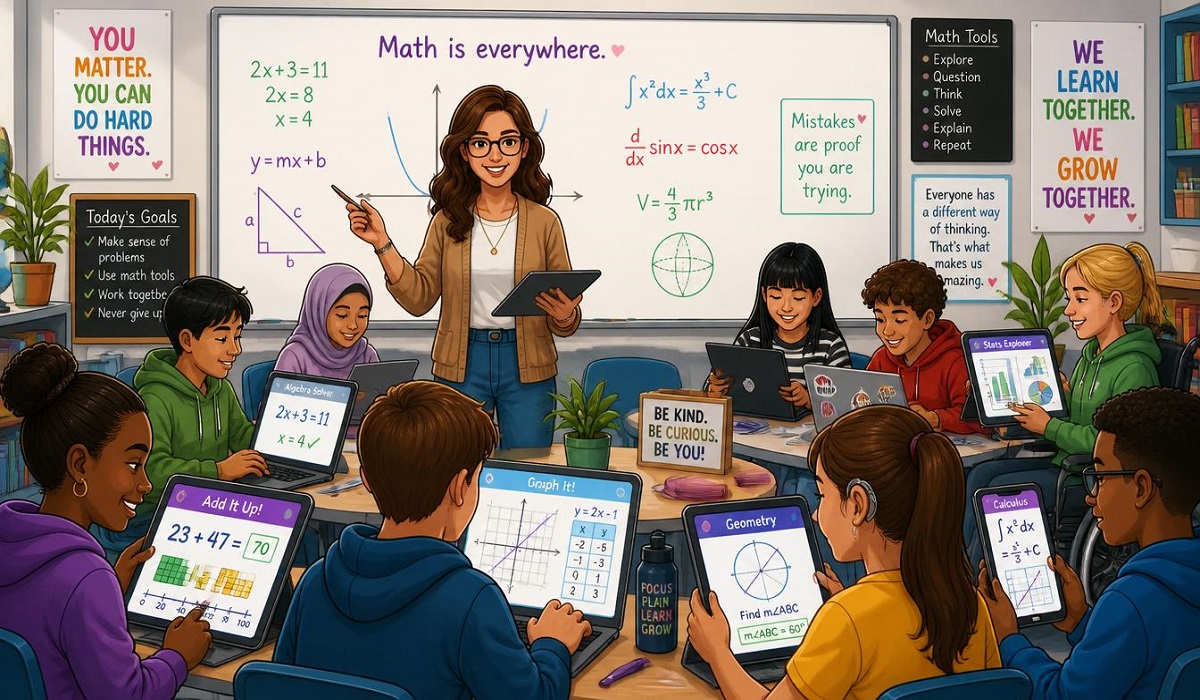
If technology is doing so much, what is the role of the human teacher? In 2026, the teacher is more important than ever. But their job is changing. The Role of Education in 2026 requires teachers to be more than just instructors who deliver information. They have to be mentors, guides, and coaches.
AI can handle the basic teaching, like explaining how to solve an equation. But only a human teacher can provide the emotional support, inspire curiosity, and teach ethics and empathy. There is a big push to “revalue the teaching profession” . This means better pay, better training, and more respect for the incredibly difficult job teachers do.
However, teacher shortages are a major problem. Many countries are struggling to recruit and keep good teachers. This can’t be solved by technology. As one expert put it, “the challenge is not only to fill vacancies but to transform and revalue the teaching profession” . This means creating better working conditions and support for teachers, so they can be the inspirational leaders students need. The Role of Education in 2026 depends on a happy, healthy, and highly-skilled teaching workforce.
Lifelong Learning and Micro-Credentials
The idea that you go to school, get a degree, and then stop learning for the rest of your life is dead. In 2026, the concept of lifelong learning is a key part of education . The world of work is changing so fast that the skills you have today might not be the skills you need in five years.
To deal with this, there has been a huge rise in what are called micro-credentials or alternative credentials. These are short, focused courses that teach you a specific skill. You can earn a certificate in digital marketing, coding, or data analysis in a few weeks or months, rather than spending four years on a university degree. These “stackable pathways” let people build their skills over time, adapting to the changing needs of the job market .
This means the Role of Education in 2026 is a lifelong journey, not a single destination.
Conclusion: Education for a Better Future
So, what is the Role of Education in 2026? It is a shield against crime and poverty, it is a bridge across the digital divide. It is a toolkit for mental well-being. And it is a map for a future that is uncertain and exciting.
Education is no longer about creating workers who can do a single task. It is about creating whole people who can think critically, adapt to change, work with others, and use powerful tools like AI wisely and ethically. It is about building better societies.
As we look at the future, the message is clear: investing in education is not optional. It is foundational. When learning thrives, societies progress, and people find purpose. The Role of Education in 2026 is to shape futures, build societies, and create hope . It’s about time.
Frequently Asked Questions (FAQs)
1. Why is education in 2026 different from education 20 years ago?
20 years ago, the focus was mainly on memorizing facts for exams. Today, in 2026, the focus has shifted to skills. Because we can instantly find information online, the goal is to teach students how to think critically, solve problems, and be creative. Education is now about learning how to use knowledge, not just have it.
2. What is “hybrid learning” and why is it important?
“Hybrid learning” is a mix of in-person and online learning. In 2026, it’s not just a backup plan for emergencies; it’s a strategic way to use the best of both worlds. It allows for more flexibility and can help give students in rural areas access to the same great courses as students in big cities .
3. How is AI actually being used in schools?
AI is being used in many ways. The biggest use is as a personal tutor, creating a specific learning path for each student based on their strengths and weaknesses. It is also used for grading, administrative tasks, and in creating immersive virtual reality experiences for learning. However, we are also being careful to ensure it doesn’t replace human interaction.
4. What does “lifelong learning” mean in 2026?
Lifelong learning means that education doesn’t stop when you graduate. Because the world and job market change so fast, adults must keep learning new skills throughout their lives. This is where “micro-credentials” come in—short courses that teach specific, in-demand skills to help people stay relevant in their careers .
5. Is school still important if I can look up anything on my phone?
School is actually more important now. Your phone can give you facts, but it cannot teach you how to be a good citizen, work in a team, think deeply about a problem, or be creative. School is the place where you learn how to use those facts wisely and develop the human skills that machines and technology cannot replace .
Summary
In 2026, the “Role of Education” is undergoing its most significant transformation in a generation. Moving away from the traditional model of rote memorization and standardized testing, the focus is squarely on developing critical thinkers and problem-solvers. Technology, particularly Artificial Intelligence, is being harnessed to create hyper-personalized learning experiences, although the “digital divide” remains a critical challenge.
At the same time, there is a powerful global movement to prioritize mental health, revalue the teaching profession, and promote lifelong learning through flexible, skill-based “micro-credentials.” Ultimately, the role of education in 2026 is to create adaptable, capable, and resilient humans who can build a more just and peaceful world.