Administrative Problems in Public Sector in Pakistan
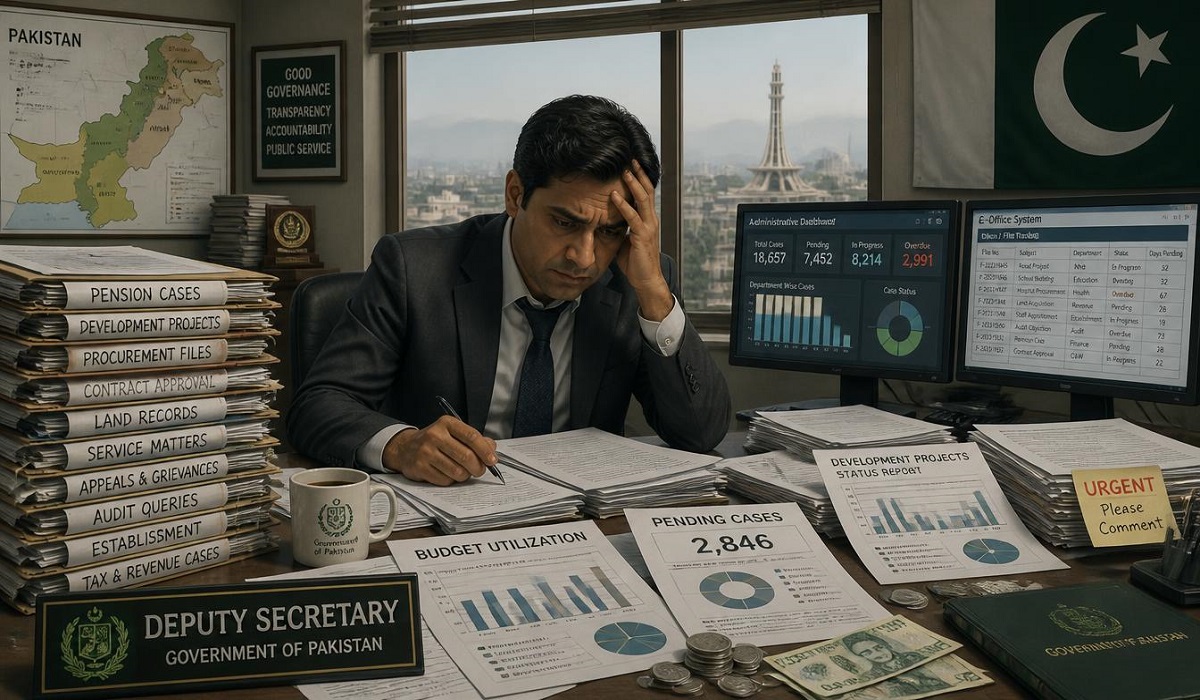
Imagine waking up early in the morning, traveling to a government office, and waiting in line for hours, only to hear the officer say, “I am not available,” or “Your file is under process.” This is the daily reality for millions of Pakistani citizens trying to access basic public services. From getting a passport to registering property, from paying taxes to receiving pensions, the experience is often frustrating, time-consuming, and costly.
The administrative problems in public sector in Pakistan are not just inconveniences—they represent a fundamental failure of governance that costs the country billions in economic losses and erodes public trust in state institutions. But what exactly are these problems, why do they persist despite decades of reform efforts, and what can fix them?
Recent studies and governance experts point to a system trapped in cycles of reform without real change. “The country has produced more commissions, frameworks, and task forces than any in South Asia, yet implementation remains minimal,” notes a Pakistan Today analysis . The National Commission for Government Reforms submitted 750 recommendations in 2008; only a dozen were ever acted upon .
This article will examine the major administrative problems in public sector in Pakistan, their root causes, and the path toward meaningful reform. Whether you’re a student, professional, or concerned citizen, understanding these issues is the first step toward demanding better governance.
What Are the Major Administrative Problems in Public Sector in Pakistan?
The Colonial Hangover: A System Built for Control, Not Service
Pakistan inherited its administrative structure from British colonial rule, and in many ways, it still operates like one. The bureaucracy originally served to maintain order and collect revenue, not to serve citizens. As one governance expert explains, “Despite seven decades of independence, its administrative culture remains deeply influenced by colonial traditions… many institutions still function more as regulators of citizens than servants of citizens, placing control ahead of service” .
This mindset shows up everywhere. Instead of seeing citizens as people with rights, officials often treat them as supplicants and manage them. The result? A system where “public service delivery in Pakistan remains slow, unresponsive, and frustrating” .
Political Interference and Unchecked Discretion
Perhaps the most damaging of all administrative problems in public sector in Pakistan is political interference in bureaucratic matters. Political loyalty, rather than merit, often determines appointments, transfers, and postings.
In Pakistan, political masters shuffle senior officials in the police, administration, or tax services around like pieces on a chessboard. Loyalty to political patrons, rather than professionalism or performance, often determines an officer’s posting,” writes Mansoor Ahmed in The News International .
This system creates a bureaucracy that serves the interests of political masters rather than the public. When officials owe their positions to political patronage, “they are far more likely to remain loyal to their benefactor than to the law, the institution’s mandate or the people it is meant to serve” .
The problem extends to senior leadership. Recent administrative reshuffles in Khyber Pakhtunkhwa exposed serious flaws in the posting and transfer mechanism. According to official records, the government sidelined several senior officers as Officers on Special Duty (OSD) and posted comparatively junior officers to key positions. One BS-19 officer was appointed Secretary Industries, Commerce and Technical Education—a position typically reserved for BS-20 or BS-21 officers .
This practice demoralizes competent civil servants, destroys institutional stability, and ensures that experience and expertise count for little.
Institutional Bloat: More Government, Less Governance
Pakistan has a serious problem of creating new government entities without fixing existing ones. Between 2024 and 2025 alone, the federal government introduced or expanded at least 16 new entities, including intelligence agencies, cybercrime units, and food safety authorities. Provinces followed suit: Punjab added 16 bodies, Khyber Pakhtunkhwa grew 15, Balochistan added 7, and Sindh launched 6 new initiatives .
The result? Duplication, confusion, and waste. Multiple agencies including NACTA, ISI, IB, NIFTAC, and PIFTACs now handle intelligence. Cybercrime enforcement splinters between NFCA, NCCIA, and FIA. Digital policy is contested between DPA, NDC, and the IT ministry .
This unchecked growth is a major administrative problem in public sector in Pakistan. Each new agency creates new layers of bureaucracy, consumes scarce resources, and adds to the confusion citizens face. As one analyst puts it, “most simply add to overlaps” and amount to “governance theatre, not transformation” .
The financial burden is staggering. State-owned enterprises (SOEs) incurred net losses of Rs 123 billion in fiscal year 2024–25, up from Rs 30.6 billion the previous year—a 300% increase . The National Highway Authority alone lost Rs 153 billion . These aren’t just numbers; mismanagement and lack of accountability waste taxpayer money.
Red Tape and Process Obsession
Anyone who has dealt with Pakistani government offices knows the frustration of endless paperwork, multiple signatures, and endless delays. The problem is systemic: “Within ministries, files move through as many as 24 signatures before approval. A single reform proposal can remain ‘under process’ for years” .
This obsession with process serves a purpose—it creates opportunities for bribery and rent-seeking. Officials who control approvals can extract payments from citizens desperate to complete their work. As one governance expert explains, discretion “allows personal preferences to override rules, procedures and qualifications” and “kills merit” .
Consider the example of imports. Pakistan requires unnecessary documentation that creates opportunities for corruption. In contrast, “Singapore clears imports in minutes via a paperless, rules-based system” . The difference is not technology but attitude. The bureaucratic culture is “a stubborn reluctance to relinquish discretionary control—the breeding ground of inefficiency and corruption” .
The Reform Paradox: Motion Without Movement
Pakistan has a long history of reform commissions, task forces, and reports. The National Commission for Government Reforms produced 750 recommendations in 2008; only a dozen were implemented . In 2019, another Task Force on Civil Service Reform produced 600 pages of proposals; most remain under review .
This pattern has been repeated across sectors. The 2018 National Water Policy outlined 33 reform measures, but only six have been fully executed . The country has undertaken 13 major tax reform initiatives since 1980, but the tax-to-GDP ratio still hovers around 9%—compared to 12.5% in Bangladesh and 17% in India .
This is the paradox of reform in Pakistan: lots of motion, little movement. As one commentator observes, “Reform has become a habit rather than a form of correction” . Governments announce reforms, create committees, produce reports, and then move on—leaving the underlying problems untouched.
Digital Governance: Technology Without Transformation
In recent years, Pakistan has invested heavily in digital governance, hoping to use technology to overcome administrative problems in public sector in Pakistan. From tax portals to land records systems, from police reporting to education management, various digital platforms have been launched .
But the results have been mixed at best. “Pakistan has attempted to digitize services without building the institutional capacity, data integration, and public trust required to sustain them” . Portals crash, records don’t update, systems operate in isolation, and citizens end up queuing at the very offices these systems were supposed to replace.
One analyst describes the problem vividly: implanting “a modern IT system onto a medieval management structure” is like installing “a Formula One engine in a bullock cart” . Without corresponding changes in culture, accountability, and incentives, technology alone won’t fix the problems.
The trust deficit is significant. A Pakistan Institute of Development Economics study found that only 28% of citizens trust public institutions to provide accurate digital information . When online services fail, citizens fall back on informal channels and intermediaries, recreating the inefficiencies that digitization should have eliminated.
The Human Cost of Administrative Problems in Public Sector in Pakistan
Economic Impact
The administrative problems in public sector in Pakistan come at a huge economic cost. The IMF estimates that Pakistan loses 1.5 to 2% of GDP every year due to delays in project execution and redundant administrative layers . That’s billions of rupees lost annually—money that we could spend on schools, hospitals, or infrastructure.
Development projects that should take three years often extend to seven . A Planning Commission review found that 42% of ongoing projects have crossed their approved completion timelines . These delays don’t just waste money—they deny citizens essential services and infrastructure.
The tax system is particularly inefficient. The World Bank estimates that nearly 38% of potential tax revenue is lost annually to administrative inefficiency and procedural overlap . This means Pakistan is collecting far less than it should, which in turn means fewer resources for public services.
Erosion of Public Trust
When government institutions consistently fail to deliver, citizens lose faith in the state. This is exactly what’s happening in Pakistan. The Edelman Trust Barometer 2025 found that only 38% of Pakistanis believe government institutions are capable of solving national challenges—a decline of seven points since 2022 .
This trust deficit creates a vicious cycle. When people don’t trust the government, they’re less likely to pay taxes, follow regulations, or participate in civic life. This makes governance harder, which further erodes trust, and so on.
Corruption and Rent-Seeking
Corruption is both a cause and consequence of administrative problems in public sector in Pakistan. Transparency International ranks Pakistan 140th out of 180 countries, with a score of 28 on the Corruption Perception Index . This means people perceive corruption as widespread and deeply embedded in the system.
The growth of corruption has “impeded the reform process badly and has made it an uphill task to implement any change strategies” . Those benefiting from the current system—whether corrupt officials or their political patrons—have no interest in reform.
Poor Service Delivery
At the end of the day, the administrative problems in public sector in Pakistan mean that citizens don’t get the services they need. Whether it’s healthcare, education, or justice, the system consistently underperforms.
In education, 61% of grade-five students cannot read a grade-two Urdu text, and nearly half struggle with basic arithmetic . Teacher absenteeism remains around 18% nationally . In health, the ratio of doctors to population remains below WHO’s minimum threshold of one per 1,000 people .
Why Do Reforms Fail?
Lack of Political Will
The most fundamental reason for reform failure is that those in power have little incentive to change the system. Political interference in appointments and transfers is a tool of control. Giving it up would mean losing power over the bureaucracy.
As one governance expert notes, “The fundamental flaw lies in a governance model that prioritises control over institutional capacity-building” . Leaders want to control the bureaucracy, not empower it. This makes meaningful reform almost impossible.
Resistance from Within the Bureaucracy
The bureaucracy itself resists change. After all, the current system serves its interests. Officials benefit from discretionary powers, which give them opportunities for rent-seeking. They benefit from the status quo, which rewards seniority over performance.
“There is a profound lack of willingness among public entities to implement or undergo a prospective change due to the vested interests of various stakeholders, which suits their prevailing culture of deep-rooted corruption” . Those who might lead reform often benefit from the problems they’re supposed to solve.
Short-Term Thinking
Pakistan’s political system rewards quick fixes and visible projects, not long-term institutional reform. Political leaders want to show results within their terms, often just a few years. Institutional reform takes time—often a decade or more.
The result is a focus on superficial reforms that governments can announce and celebrate, while deeper structural problems remain untouched. This is how we get new agencies and new initiatives but no real change.
Path Forward: Practical Solutions
Strengthening Merit Systems
One of the most important solutions to administrative problems in public sector in Pakistan is strengthening merit in appointments and promotions. Instead of political appointments, positions should be filled through independent commissions. Promotions should be based on performance, not seniority or connections.
The armed forces offer a model: “tenure-based postings and a balanced rotation system… Promotions are earned not through sycophancy, but by performing under diverse and challenging conditions” . If the military can do it, so can the civilian bureaucracy.
Reducing Discretion
Another key reform is replacing discretionary decision-making with transparent, rules-based systems. Citizens should get services because they meet clearly defined requirements, not because they know the right person or have the right connections.
This means automation, simplification, and standardization. Import procedures should be automated, documentation requirements reduced, and approvals streamlined. When discretion is minimized, opportunities for corruption shrink .
Institutional Consolidation
Pakistan needs fewer, better institutions, not more. Instead of creating new agencies, the government should consolidate and strengthen existing ones. This means eliminating duplication, merging overlapping entities, and ensuring clear mandates.
This approach would reduce costs, clarify responsibilities, and improve coordination. As one analyst puts it, “Real reform doesn’t mean creating more; it means simplifying governance, empowering delivery and ensuring outcomes” .
Rightsizing the Bureaucracy
Civil service reform requires rightsizing: “deploying people where they add value, eliminating redundant processes, and reducing unnecessary layers of approval” . Pakistan has a bloated bureaucracy that consumes resources without delivering results.
Downsizing is politically difficult, but necessary. It would “improve governance, reduce administrative costs, and create greater fiscal space for development priorities” .
Learning from Successes
While the overall picture is grim, there are some bright spots. The Punjab Procurement Regulatory Authority’s shift to full e-bidding has reduced project procurement time by 22% . The Sindh Education Management Information System has improved teacher attendance tracking . The Pakistan Single Window initiative has cut customs clearance time by nearly half .
These examples show that reform is possible when there’s continuity and accountability. The challenge is scaling these successes from exceptions to norms.
Building Trust Through Transparency
Trust is the foundation of effective governance. Rebuilding trust requires transparency, accountability, and demonstrable results. Citizens need to see that government institutions can deliver services reliably and fairly.
A Public Service Obligation framework, like the one established by the State-Owned Enterprises Governance and Operations Act 2023, is one approach. This framework “stops unfunded directives with enforceable contracts that clearly define the service to be delivered and the compensation to be paid” . It makes government accountable for what it promises and ensures public services are funded.
Creating a Citizen-Focused Bureaucracy
The fundamental shift needed is from treating citizens as subjects to serving them as customers. “Civil servants are, in principle, servants of the people. Their authority is meant to translate policy into outcomes that improve citizens’ lives” .
This means changing the culture from one of control to one of service. It means measuring performance based on citizen outcomes, not bureaucratic processes. It means holding officials accountable for delays and failures.
Conclusion
The administrative problems in public sector in Pakistan run deep, but we can surmount them. They reflect decades of political interference, institutional bloat, and a culture that prioritizes control over service. But they are also increasingly costly—economically, socially, and politically.
The path forward is clear but difficult. It requires reducing political interference, eliminating discretionary powers, consolidating institutions, and rightsizing the bureaucracy. Most importantly, it requires genuine political will—a willingness to give up control in the interest of effectiveness.
Pakistan has produced enough reform reports. The challenge now is implementation. As governance expert Muhammad Yahya writes, “The real question is not what we need to do, but whether the political leadership is willing to implement reforms that strengthen accountability and place citizens at the centre of governance. Ultimately, this is a political decision” .
The alternative is continued decline: corruption grows, trust erodes, and poverty deepens. The choice is stark. Pakistan can continue down the path of dysfunction, or it can build a government that serves its people. The future depends on which path its leaders choose.
Frequently Asked Questions
1. What are the main causes of administrative problems in public sector in Pakistan?
The main causes include political interference in appointments and transfers, a colonial-era administrative culture that prioritizes control over service, unchecked discretion and red tape, institutional bloat and duplication, and lack of accountability. The reform process has also failed due to lack of political will and resistance from vested interests within the bureaucracy.
2. How do these problems affect ordinary citizens?
Citizens face long delays, poor service delivery, and corruption when dealing with government offices. Simple tasks like getting a passport, registering property, or paying taxes can take weeks or months. Citizens often have to pay bribes to get services they’re entitled to. The poor and marginalized suffer the most.
3. Why do reform efforts keep failing in Pakistan?
Reforms fail due to lack of political will, resistance from the bureaucracy, short-term political thinking, and the absence of continuity between governments. Many reform reports are commissioned but never implemented. Those who would benefit from change often have power to block it, while those with power to implement change have little incentive to do so.
4. What role does technology play in solving administrative problems?
Technology can help, but it’s not a magic solution. Pakistan has invested heavily in digital governance, but systems often malfunction or operate in isolation. Technology works only when accompanied by institutional change, accountability, and transparency. Without these, it becomes digital red tape rather than a real solution.
5. What can ordinary citizens do to demand better governance?
Citizens can hold officials accountable through public feedback mechanisms, engage with local government representatives, and participate in civic organizations. Media and civil society play a crucial role in exposing corruption and demanding transparency. Ultimately, citizens can demand that their leaders prioritize institutional reform over political interests.
Summary
The administrative problems in public sector in Pakistan are a major obstacle to the country’s development. These problems include political interference, bureaucratic red tape, unchecked discretion, institutional bloat, and a culture that treats citizens as subjects rather than clients. Despite decades of reform efforts, the system remains trapped in cycles of motion without movement.
The costs are staggering: 1.5-2% of GDP lost annually to inefficiency and delays, billions wasted on loss-making state enterprises, and a trust deficit that weakens the entire state. Corruption is both a cause and consequence of these problems, enriching officials and their patrons while hurting ordinary citizens.
Solutions exist—reducing discretion, institutional consolidation, rightsizing the bureaucracy, strengthening merit systems, and building transparent, citizen-focused services. But meaningful reform requires political will, something that has been in short supply. The choice is stark: continue down the path of dysfunction, or build a government that serves its people. Pakistan’s future depends on which path its leaders choose.