Assessment Tool for Science Teachers
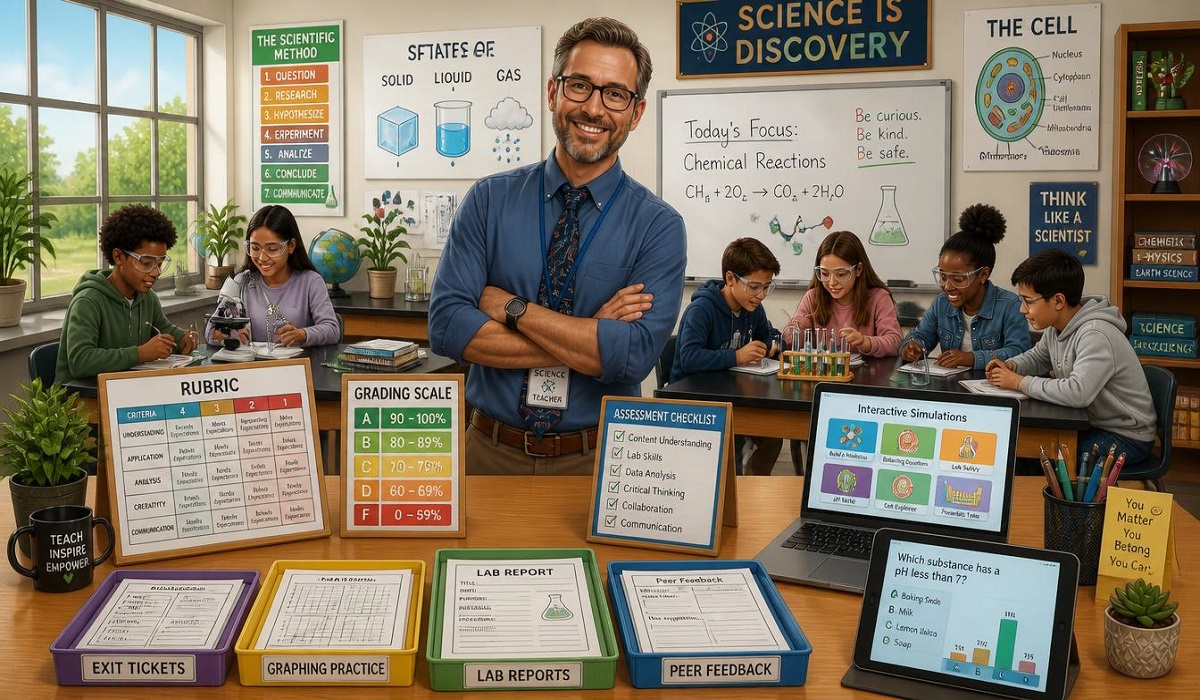
Assessment Tool for Science Teachers: The year 2026 marks a remarkable shift in how we evaluate scientific understanding. Science classrooms have evolved beyond traditional multiple-choice tests, embracing sophisticated digital solutions that measure not just what students know, but how they think. An assessment tool for science teachers today represents a digital compass guiding educators through the complex landscape of modern scientific education.
Imagine a science classroom where teachers can instantly identify misconceptions about photosynthesis, track the development of critical thinking skills over time, and provide personalized feedback to each student—all through a single integrated platform. This isn’t a distant vision; it’s the reality of 2026 science education.
Recent studies show that well-designed assessment instruments significantly enhance teaching effectiveness and student learning outcomes . For science teachers navigating this exciting new landscape, understanding these tools has become essential professional knowledge.
The Evolution of Science Assessment
From Paper Tests to Digital Platforms
Traditional science assessments have come a long way. Historically, teachers relied on written examinations that focused primarily on recall of facts and basic concepts. A student might be asked to “define photosynthesis” or “list the planets in order.” While these questions have their place, they represent only the foundation of scientific understanding.
Modern assessment tools have transformed this process dramatically. Today’s tools evaluate higher-order thinking skills (HOTS), which involve analysis, evaluation, and creation . In a 2026 classroom, students might be asked to design an experiment to test a hypothesis, analyze data to draw conclusions, or create a model to explain a scientific phenomenon.
The Impact of Technology on Science Assessment
Technology has fundamentally changed how teachers evaluate student understanding. Digital assessment tools offer several advantages over traditional methods:
Immediate Feedback: Students receive real-time feedback on their understanding, allowing for timely intervention when misconceptions arise.
Personalized Learning Paths: These tools adapt to individual student needs, providing appropriate challenges for learners at different levels.
Data-Driven Insights: Teachers gain access to comprehensive data analytics that reveal patterns in student performance and understanding.
Types of Assessment Tools Available in 2026
Formative Assessment Tools
Formative assessment tools help teachers check understanding during the learning process. These tools provide quick insights into student comprehension, allowing teachers to adjust instruction accordingly.
Interactive Polling Systems
These tools transform smartphones into classroom response systems. Teachers can pose questions during lessons and instantly see which students understand the concept. This immediate feedback loop makes teaching more responsive and effective.
Digital Exit Tickets
Students complete brief digital assessments at the end of class, providing teachers with valuable data about what concepts need reinforcement. These tools often integrate with learning management systems for seamless data tracking .
Summative Assessment Tools
Summative assessment tools evaluate student learning at the end of an instructional period. These comprehensive evaluations measure overall achievement and mastery of science concepts.
Project-Based Assessment Platforms
These tools support complex, authentic science projects. Students can design experiments, collect data, analyze results, and present findings—all within a structured digital environment.
Skills-Based Assessment Systems
Modern assessment tools evaluate specific science skills: observation, measurement, data analysis, hypothesis formation, and scientific reasoning. These systems provide detailed profiles of student strengths and areas for growth.
Diagnostic Assessment Tools
Diagnostic assessment tools help teachers understand what students already know before instruction begins. These baseline assessments identify misconceptions and gaps in prior knowledge.
Concept Mapping Tools
Students create visual representations of their understanding of science concepts. These maps reveal how students connect ideas and identify misconceptions that need addressing.
Pre-Instructional Quizzes
Brief, targeted assessments determine student readiness for new content. Teachers use this information to differentiate instruction and provide appropriate support.
Key Features of Effective Assessment Tools for Science Teachers
Validity and Reliability
Research emphasizes the importance of validity in assessment tools. An effective assessment tool for science teachers must measure what it claims to measure . Recent studies have demonstrated high validity indices for well-designed assessment instruments, with Aiken’s V index often reaching 0.87 or higher .
Reliability ensures consistent results across different testing occasions. Modern assessment tools undergo rigorous validation processes involving multiple experts and large sample populations .
Alignment with Learning Objectives
Effective assessment tools align closely with science curriculum standards and learning objectives. They measure the specific skills and knowledge that students are expected to develop. This alignment ensures that assessments provide meaningful data about student progress.
Technological Pedagogical Content Knowledge
Modern assessment tools incorporate Technological Pedagogical Content Knowledge (TPACK) frameworks. These integrated systems consider how technology, pedagogy, and science content work together . Teachers need tools that support their understanding of how to effectively teach science with technology.
User-Friendly Interface
Whether you are a tech-savvy educator or just beginning your digital journey, an assessment tool for science teachers should be accessible. An intuitive interface allows teachers to focus on student learning rather than struggling with software.
Implementing Assessment Tools in Your Classroom
Starting Small and Building Success
Implementing new assessment tools can feel overwhelming. Here is a manageable approach to getting started:
Step 1: Begin with One Tool
Select one assessment tool that addresses your most pressing classroom need. This focused approach allows you to master the tool before expanding your toolkit.
Step 2: Start with Simple Activities
Begin by using the tool for low-stakes activities. This allows both you and your students to become comfortable with the technology. Build confidence by starting with familiar assessment types.
Step 3: Gradually Expand Usage
As confidence builds, incorporate the tool into more aspects of your teaching. Use it for a wider variety of assessment purposes: exit tickets, quizzes, performance tasks, and project evaluations.
Meeting Diverse Learning Needs
Modern assessment tools support differentiation for English language learners, students with special needs, and those needing enrichment. Here are ways to meet diverse learning needs effectively:
Differentiated Assessments:
Many tools allow teachers to adjust question difficulty or provide varied formats. This ensures every student can demonstrate their understanding appropriately.
Multiple Modalities:
Students can demonstrate understanding through various methods: text, voice recording, video, or drawing. This flexibility is particularly valuable for students with different learning strengths and communication preferences .
Scaffolded Support:
Built-in supports help students who need extra assistance. These supports can include read-aloud options, vocabulary definitions, or guided question sequences.
Training and Professional Development
Successful implementation requires adequate training and support. Science teachers need opportunities to learn about these tools and how to use them effectively. Professional development should include hands-on practice and collaborative planning time .
Peer Mentoring: More experienced colleagues can share strategies and resources.
Online Communities: Many digital platforms offer forums where teachers share ideas and support.
District Workshops: Formal training sessions provide structured learning opportunities.
Higher-Order Thinking Skills Assessment
Measuring Deep Understanding
True scientific understanding goes beyond memorization. Higher-order thinking skills (HOTS) assessment measures students’ ability to analyze, evaluate, and create . These skills represent the pinnacle of cognitive development in science.
Analysis:
Students break down complex scientific information into component parts. They identify patterns, relationships, and underlying structures. For example, a student might analyze experimental data to identify variables and their relationships.
Evaluation:
Students make judgments based on criteria and standards. They critically examine scientific claims, evidence, and arguments. This involves assessing the validity of conclusions and the quality of evidence presented.
Creation:
Students generate new ideas, products, or ways of thinking. They design experiments, develop models, or propose solutions to scientific problems. Creation represents the highest level of cognitive engagement.
Bloomian HOTS Assessment
Bloom’s Taxonomy provides a framework for categorizing cognitive skills. Modern assessment tools based on this taxonomy measure student abilities across the cognitive spectrum:
Understanding: Students demonstrate comprehension of scientific concepts, explaining ideas in their own words and providing examples.
Applying: Students use scientific knowledge in new situations, solving problems and applying principles to unfamiliar contexts.
Analyzing: Students examine and break down information, identifying relationships and distinguishing between facts and inferences .
The Role of Digital Platforms in Science Assessment
Online Testing Platforms
Digital assessment platforms facilitate efficient and effective evaluation. These systems manage test delivery, scoring, and data analysis. Many platforms also include question banks, automated scoring, and detailed reporting features .
Cloud-Based Solutions: Teachers access tools from anywhere, facilitating flexible assessment delivery. This enables both in-class and remote assessment options.
Real-Time Data: Digital platforms provide immediate access to assessment results, allowing teachers to make quick instructional decisions.
Mobile Assessment Applications
Mobile apps bring assessment directly to students’ devices. These applications often include gamification elements that increase student engagement. Many science assessment apps include interactive simulations and virtual labs .
Anytime, Anywhere Assessment: Students can complete assessments on mobile devices, enabling flexible learning environments. This is especially valuable for homework and independent study.
Engaging Formats: Interactive question types maintain student interest. These formats can include drag-and-drop, hotspot questions, and multimedia responses .
Learning Management System Integration
Many science assessment tools integrate seamlessly with learning management systems (LMS). This integration streamlines assessment administration and data management. Teachers can efficiently manage assessment data alongside other student information .
Best Practices for Using Assessment Tools in Science Teaching
Clear Communication of Expectations
Students should understand the purpose and criteria of assessments. Clear expectations reduce anxiety and help students focus on demonstrating their understanding. Teachers should explain assessment objectives and provide rubrics or scoring guides .
Regular Assessment and Feedback
Frequent, low-stakes assessments provide ongoing feedback and reduce the pressure of high-stakes tests. Regular assessment helps students track their progress and identify areas needing improvement . This formative approach supports continuous learning and skill development.
Data-Informed Instruction
Effective use of assessment data transforms teaching practice. Teachers analyze results to inform instruction, identify gaps, and adjust pacing. Data-driven decision-making enhances student learning outcomes .
Student Involvement in Assessment
Involving students in the assessment process promotes ownership of learning. Students can track their own progress, set learning goals, and reflect on their understanding. This engagement increases motivation and self-awareness.
Collaborative Assessment Development
Science teachers benefit from collaborating with colleagues to develop and refine assessment tools. Sharing best practices and resources enhances the quality of assessments. Professional learning communities focused on assessment improve teaching effectiveness .
The Future of Assessment in Science Education
Artificial Intelligence and Assessment
AI-powered assessment tools are becoming increasingly sophisticated in 2026. These systems analyze student responses for patterns that reveal deep understanding or misconceptions. AI can also generate personalized question sets based on student performance.
Adaptive Testing: AI adjusts question difficulty based on student responses, providing more precise measurement of ability levels. This approach reduces frustration for struggling students and provides appropriate challenges for advanced learners.
Automated Grading: AI systems can evaluate open-ended responses and provide detailed feedback, saving teachers time while maintaining quality. Natural language processing allows for nuanced evaluation of complex scientific explanations.
Personalized Learning Pathways
Assessment data now drives personalized learning experiences. Students receive recommended activities and resources based on their performance patterns. This individualized approach accelerates learning and supports mastery.
Custom Learning Playlists: Teachers can curate resources for students based on assessment results, addressing individual needs efficiently. This ensures every student receives appropriate support and challenge.
Competency-Based Progression: Students advance based on demonstrated mastery rather than seat time. Assessment tools track progress toward specific learning objectives.
Engaging Students Through Assessment
Gamification Strategies
When students are engaged, they perform better on assessments. Gamification elements increase motivation and reduce test anxiety. Many modern assessment tools incorporate game-like features:
- Points and Badges: Reward achievement and progress.
- Leaderboards: Friendly competition motivates student effort.
- Progress Bars: Visual indicators of achievement provide motivation.
- Unlockable Content: Progression through levels maintains engagement.
Immediate Feedback Benefits
Students learn from mistakes when they receive immediate feedback. Digital assessment tools provide quick responses that help students correct misconceptions. This instant loop reinforces correct understanding and prevents the reinforcement of misconceptions.
- Explanation of Answers: Understanding why an answer is correct or incorrect facilitates learning.
- Links to Resources: Directing students to relevant materials for further learning supports improvement.
- Opportunities for Retakes: Learning from mistakes and trying again builds mastery.
Collaborative Assessment Activities
Science assessment doesn’t have to be solitary. Collaborative assessment activities promote discussion and deeper understanding:
- Peer Evaluation: Students assess each other’s work using clear criteria, developing critical evaluation skills .
- Group Problem-Solving: Students work together to solve complex problems.
- Scientific Argumentation: Students discuss and debate scientific explanations.
Supporting Diverse Learners in Science Assessment
English Language Learners
Science assessment tools can support English language learners through multilingual support, visual representations of concepts, and simplified language without sacrificing rigor. These accommodations ensure that students are assessed on science understanding rather than English proficiency.
Language Support:
- Bilingual Question Presentation: Providing questions in multiple languages.
- Visual Vocabulary Support: Providing images that illustrate key terms.
- Simplified Language: Using clear, accessible language while maintaining scientific accuracy.
Students with Learning Differences
Assessment tools accommodate students with learning differences through flexible timing, multiple presentation modes, and alternative response formats. This ensures that all students can demonstrate their understanding.
Adjustments:
- Extended Time: Additional time for processing and responding.
- Read-Aloud Options: Text-to-speech support for students who need it.
- Alternative Response Formats: Offering choices in how students demonstrate learning.
Gifted and Talented Students
Advanced students benefit from assessment tools that provide appropriate challenges through advanced content, open-ended questions, and independent research opportunities. These approaches extend learning for high-achieving students.
Enrichment:
- Depth of Knowledge: Requiring more complex thinking skills.
- Interdisciplinary Connections: Integrating science with other subjects.
- Real-World Applications: Applying science to authentic problems.
Challenges and Solutions
Technology Access and Equity
Not all students have equal access to technology. Schools and districts must address digital divides to ensure equitable assessment opportunities. Solutions include loaner devices, offline options, and community partnerships.
Solutions:
- Device Access: Providing devices for students who lack them.
- Internet Connectivity: Ensuring students have internet access at home.
- Paper Alternatives: Providing printed options when necessary.
Teacher Training Needs
Many teachers need professional development to effectively use assessment tools. Training should focus on practical classroom implementation and data interpretation .
Solutions:
- Hands-On Workshops: Training that includes practice with tools.
- Ongoing Support: Continuous professional development opportunities.
- Collaborative Learning: Learning from colleagues who are using assessment tools effectively.
Data Privacy and Security
Protecting student data is paramount. Assessment providers must comply with strict privacy regulations and security standards. Teachers should understand data policies and best practices .
Solutions:
- Secure Platforms: Using assessment tools with robust security features.
- Data Policies: Understanding and following data protection guidelines.
- Student Privacy: Protecting student identities and assessment information.
Real-World Success Stories
Transformation Through Assessment Integration
Middle school science teacher Ms. Johnson had been teaching for fifteen years using traditional methods. When she implemented a modern assessment tool for science teachers, the transformation was remarkable.
“I could instantly see which students were struggling with the concept of variables in experiments,” she shared. “I grouped those students together for additional instruction while others moved on to designing their own investigations. It was like having a teaching assistant in the room!”
Within three months, Ms. Johnson reported that student engagement increased and test scores improved significantly. Students who had previously struggled with science began demonstrating confidence and understanding .
From Teaching to Learning
A high school biology department across four schools adopted a comprehensive assessment tool. Each teacher could access detailed insights about how students were performing on specific skills, such as data analysis, experimental design, and scientific explanation.
Department chair Mr. Roberts observed: “We moved from simply teaching content to ensuring student understanding. The assessment tool provided the missing link between what we taught and what students actually learned.”
The department’s data showed significant improvement in student science skills across all schools. Teachers adapted their instruction based on assessment data, leading to more effective teaching .
Table of Key Assessment Tool Features
| Feature | Purpose | Benefit |
|---|---|---|
| Formative Assessment | Check understanding during learning | Immediate feedback, adjust instruction |
| Summative Assessment | Measure final learning outcomes | Evaluate achievement, assign grades |
| Higher-Order Thinking | Assess analysis, evaluation, creation | Measure deep understanding |
| Adaptive Testing | Adjust difficulty to student level | Precise ability measurement |
| Real-Time Analytics | Analyze student performance data | Data-driven decision making |
| Collaboration Tools | Support group work and peer assessment | Develop teamwork skills |
| Personalized Pathways | Provide individualized learning routes | Meet diverse student needs |
| Mobile Accessibility | Access on various devices | Flexible assessment opportunities |
Frequently Asked Questions
1. What is an assessment tool for science teachers?
An assessment tool for science teachers is a digital platform or system designed to measure student understanding of scientific concepts and skills. These tools include formative assessments to check learning during instruction, summative evaluations to measure final learning outcomes, and diagnostic assessments to identify prior knowledge .
2. How do modern assessment tools measure higher-order thinking skills?
Modern tools measure analysis by asking students to break down scientific information and identify patterns. They assess evaluation through critical examination of claims and evidence. For creation, students design experiments, develop models, or propose solutions to scientific problems .
3. What should I consider when choosing a science assessment tool?
Consider validity and reliability to ensure the tool measures what it claims. Evaluate alignment with learning objectives to measure appropriate skills and knowledge. Consider ease of use for both teachers and students. Ensure the tool fits your budget, school infrastructure, and provides adequate training and support .
4. How can assessment tools support personalized learning?
Assessment tools support personalized learning by providing data that reveals individual student strengths and areas for growth. Many tools offer adaptive features that adjust question difficulty based on student responses, creating customized learning pathways .
5. What are the benefits of technology-enhanced assessment tools?
Technology-enhanced assessment tools offer immediate feedback so students can learn from mistakes quickly. They provide data analytics to help teachers make informed instructional decisions. Facilitate personalized learning through adaptive features. They increase student engagement through interactive formats and gamification .
Summary
An effective assessment tool for science teachers represents a transformative advancement in science education in 2026. By leveraging digital platforms, these tools measure higher-order thinking, support diverse learners, and provide actionable data to improve teaching effectiveness.
Modern assessment tools have evolved from simple multiple-choice tests to comprehensive systems that evaluate analysis, evaluation, and creation skills. The integration of technology has made assessment more engaging, personalized, and instructionally useful.
Successful implementation requires careful selection, adequate training, and thoughtful integration into classroom practice. Science teachers who embrace these tools report improved student engagement, more effective teaching, and better learning outcomes .
The future of assessment in science education points toward increasingly sophisticated AI-powered tools, personalized learning pathways, and seamless integration with instruction. These advances will further enhance science teachers’ ability to guide their students toward scientific understanding. By using these tools effectively, teachers in 2026 transform science education and help students develop the thinking skills they need for a bright future.
The journey toward assessment excellence begins with a single step. Start exploring the tools available, collaborate with colleagues, and discover how an assessment tool for science teachers can transform your classroom practice. Your students deserve the best possible opportunities to develop scientific understanding and skills.