Curriculum In Realism
Curriculum In Realism: Remember when you sat in class, staring at a textbook, wondering, “When am I ever going to use this in real life?” That question is the exact problem a curriculum in realism is designed to solve. For decades, many students have felt a gap between what they learn in school and the world outside the classroom window.
Education isn’t just about memorizing facts for a test. It’s about preparing you for life. A curriculum in realism dives into this challenge by teaching through real-world experiences, practical subjects, and hands-on experiments. It’s a way of learning that aims to connect the dots between schoolwork and practical living. The core idea is simple: reality is the best teacher .
Think of it this way: instead of just reading about the water cycle, a curriculum in realism would have you create a mini-water cycle in a jar or observe how it works in your own backyard. Instead of just learning the formula for calculating the area of a room, you would measure your classroom to figure out how much paint you’d need to buy. This article explores what this educational philosophy is all about.
Where it came from, and why so many people believe it could be the key to helping us become smarter and more prepared for the future. We’ll talk about its main ideas, what subjects it focuses on, and the role of the teacher in this kind of learning environment. By the end, you’ll have a clear picture of why a curriculum in realism isn’t just a fancy term, but a powerful way to make education truly meaningful.
What is a Curriculum In Realism Anyway?
To understand a curriculum in realism, you first have to understand the philosophy behind it. What is “realism” all about?
A Philosophy Based on the Physical World
Realism, as a way of thinking, is quite straightforward. It says that the physical world, the stuff we can touch, see, smell, hear, and taste, is the real world . It doesn’t focus on the world of ideas or feelings, but on the actual, material universe that exists all around us.
This means that realists believe truth is objective. This means it is true regardless of what anyone thinks or feels about it. For example, water freezes at 0 degrees Celsius (32 degrees Fahrenheit). This is a fact. It doesn’t matter if you “feel” it should freeze at a different temperature; the reality is that this is the temperature at which it happens . This philosophy is heavily based on science, observation, and cause-and-effect relationships .
Key Thinkers Who Shaped Realism
The roots of this way of thinking go far back. The ancient Greek philosopher Aristotle is often called the “father of realism” because he was one of the first major thinkers to emphasize observing the natural world to find truth . Later thinkers like Francis Bacon, John Locke, and Bertrand Russell continued to develop these ideas, pushing for education to be more practical, hands-on, and grounded in experience .
Defining the Curriculum In Realism
So, how does this philosophy translate into a school curriculum? A curriculum in realism is a plan of study built on the belief that education should prepare students for real life .
It is based on the principle that knowledge should be practical and useful. The main goal is to develop students’ physical and mental abilities and to train their senses so they can understand the world around them . It’s about developing skills to face the challenges of everyday life. This means it often focuses heavily on science, math, and practical subjects that teach you how things work . It also generally discourages “bookish” learning that is not connected to the real world .
The Core Ideas Behind a Realistic Education
Let’s break down the “rules” of this kind of learning. What are the fundamental principles that guide a curriculum in realism?
- Reality is the Focus: The most important idea is that the material world is the focus of study. A student’s experiences with the real world are the most important part of their education .
- Cause and Effect: Realists believe that the world works on scientific principles. There is a reason for everything. This approach encourages students to look for the “why” behind the “what” .
- Senses are the Gateway to Knowledge: According to this philosophy, all information comes through our senses. So a key part of education is to help students observe, experiment, and experience things directly .
- Preparing for Life: The ultimate goal isn’t just to be smart or get a good grade, but to be prepared for a happy and successful life. This means being able to handle social situations, find a job, and be a good citizen .
- Opposes “Bookish” Learning: While textbooks have their place, learning is not meant to be only about reading. The philosophy emphasizes practical, hands-on experiences over memorizing information that has no real-world application .
What Students Study in a Realist Curriculum?
When you look at a curriculum in realism, you’ll see a lot of subjects designed to connect students to the real world. The focus is on practicality and utility .
Science is King
Natural sciences take center stage in a curriculum in realism. You’ll find subjects like :
- Physics
- Chemistry
- Biology (which includes Botany and Zoology)
- Astronomy
These subjects are favored because they study the material world and can be taught through observation and experimentation.
Practical Subjects
The curriculum also includes subjects that directly help students in their daily lives and future careers . These include:
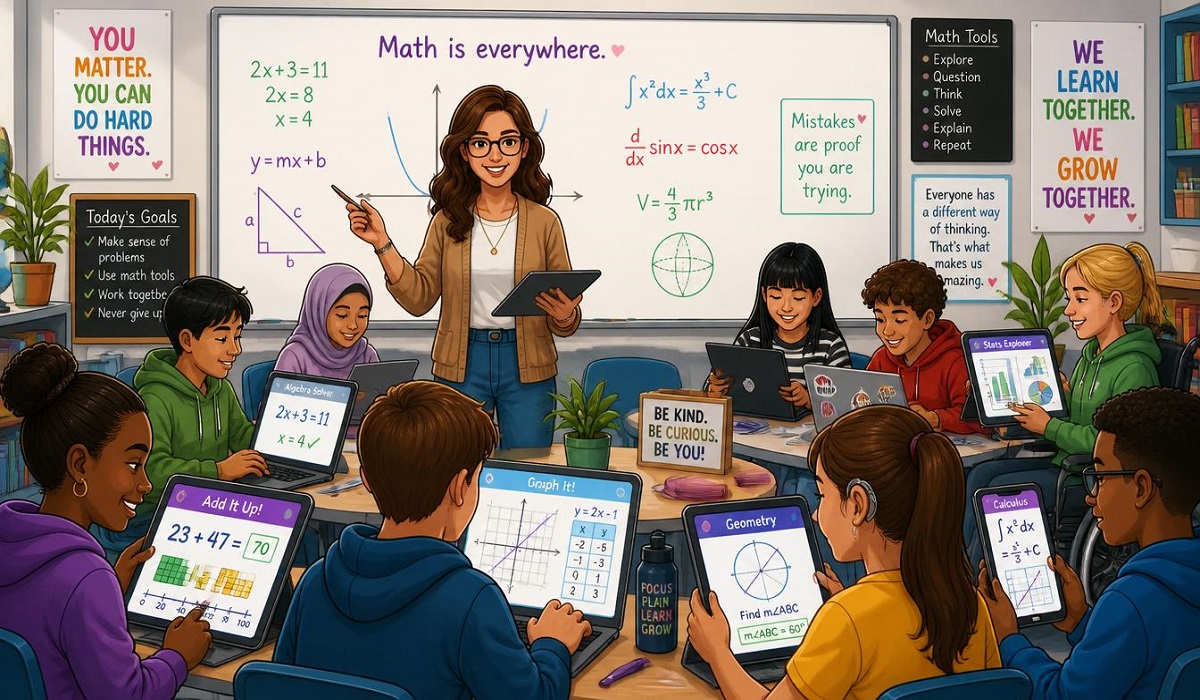
- Mathematics: For calculation, measurement, and logical thinking.
- Physical Education and Sports: For developing physical strength and health.
- Vocational Subjects: Things like farming, handicrafts, and basic trades that can lead directly to a job.
Language and Social Studies
Even subjects like language have a practical purpose. Learning your native language is essential for communication and social interaction . It also helps you read and write effectively. Social studies, geography, and history are also often included because they help students understand society and the world around them . The key difference in a curriculum in realism is that these subjects aren’t just for their own sake. They are included because they are useful for living a practical life.
How Teachers Teach: Methods of Realism?
The way teachers teach is just as important as what they teach. Under a curriculum in realism, the focus is on active learning and direct experience. Let’s explore some of the methods used.
Hands-On Learning
There is a big focus on “experiential learning”—which is just a fancy term for “learning by doing.” The teacher encourages students to use their senses and interact with objects and phenomena . This is a major difference from sitting and listening to a lecture.
The Scientific Method and Experimentation
This is a core part of the process. Students are encouraged to ask questions, form a hypothesis (an educated guess), test it through an experiment, and then analyze the results. This is the exact method scientists use to discover new things . It trains students to be thinkers and problem-solvers, not just listeners.
Observation and Field Trips
A curriculum in realism also emphasizes the importance of observation. Students are encouraged to study the world around them with attention to detail . This often means field trips! Instead of just learning about a factory or a zoo from a book, a class might take a trip to visit them and see them in action .
Inductive and Deductive Reasoning
Teachers will also use two main ways of thinking to help students learn :
- Inductive Method: This means starting with specific examples and observations and then working your way up to a general rule or idea.
- Deductive Method: This is the opposite. It means starting with a general rule and then applying it to a specific situation to see if it is true.
The Teacher’s Job and Classroom Rules
In a curriculum in realism, the teacher has a unique role. They aren’t just a “dispenser of knowledge” who tells students all the answers .
The Teacher as a Guide
Think of the teacher as a guide or a coach. Their main job is to connect the student with the outside world. They organize the learning materials in a clear and systematic way. Show students how to observe things and how to use scientific methods to find answers. They present information objectively, focusing on the facts rather than their own personal opinions .
A Different Kind of Discipline
What are the rules in a classroom with a curriculum in realism? The goal is to create a flexible form of self-discipline . Students are expected to be responsible and control their own behavior. This isn’t a rigid, repressive environment where students are quiet and still. Instead, the focus is on helping students learn how to manage their own feelings and perform their duties, preparing them to be self-sufficient adults . The classroom is also seen as a “mini-society” where students can learn to solve practical problems and interact with the real world.
Conclusion
Ultimately, a curriculum in realism is all about making school count. It shifts the focus from memorizing abstract ideas and gives students tools they can use in the real world. It operates on the simple but powerful idea that the material world is the best classroom.
Through a focus on science, practical subjects, hands-on learning, and guided discovery, a curriculum in realism attempts to bridge the gap between education and everyday life. It aims to develop well-rounded, capable individuals who can think critically, solve problems, and confidently navigate the challenges of a happy and successful life. By asking “When am I ever going to use this?” and working to provide a clear, satisfying answer, this approach to education helps build a foundation for smart, capable, and adaptable students.
Frequently Asked Questions (FAQs)
1. Is a Curriculum In Realism the same as just “learning from experience”?
Yes, that’s a big part of it. However, a curriculum in realism takes that idea and creates a structured plan around it. It’s not just letting students do whatever they want. The teacher guides the experience to ensure that practical, hands-on activities are focused on teaching specific scientific and practical concepts. It combines the philosophy that the real world is the true classroom with an organized system for learning about that world .
2. Does a Curriculum In Realism mean there are no textbooks?
No, textbooks are used, but they are not the only or even the main tool for learning. In a curriculum in realism, textbooks are a resource to support hands-on learning. Students might read about a topic to prepare for an experiment or to understand the theory behind it, but the real “homework” is observing, experimenting, and doing . The core idea is to avoid “bookish” learning where knowledge isn’t connected to real-world experience .
3. What is the main goal for a student in a realistic curriculum?
The primary goal is to prepare you for a successful and happy life in the real world . This means developing your physical and mental abilities, training your senses so you can observe and understand the world, and acquiring practical and vocational skills that will help you get a job and be a productive citizen. It’s about being ready for life, not just being ready for a test .
4. What kinds of subjects are most important in a realistic curriculum?
The most important subjects are those that study the material world and teach practical skills. The natural sciences—like Physics, Chemistry, and Biology—are considered the most profitable content for the curriculum . Practical subjects like Mathematics, Physical Education, and vocational training (like farming or handicrafts) are also highly valued. These subjects help students understand how the world works .
5. Why is this type of curriculum sometimes criticized?
Some people criticize a curriculum in realism for its heavy focus on science and practical subjects. They argue that it can downplay the importance of “softer” subjects like art, literature, and music. These subjects, while not always having an obvious practical function, are seen by some as essential for a student’s creativity, emotional development, and cultural understanding. Critics argue that a balance is needed between practical and creative subjects to develop the whole person .
Summary
A curriculum in realism is an educational philosophy that prioritizes preparing students for the real world through practical, hands-on learning. Based on the work of thinkers like Aristotle and John Locke , it operates on the principle that the physical world is the ultimate reality and that education should be rooted in observation and scientific inquiry . This results in a curriculum that heavily emphasizes natural sciences, math, and vocational subjects .
The teacher’s role is to be a guide, helping students observe, experiment, and discover knowledge through methods like the scientific method, field trips, and inductive reasoning . The primary goal is to develop students’ physical and mental abilities so they can face life’s challenges and achieve happiness . While it offers a powerful, practical approach to education, it can sometimes be criticized for potentially overlooking the value of arts and humanities in a child’s development .