Interactive Classroom Teaching
Interactive Classroom Teaching: Recall your time in school. Do you recall the times in class when you spent what seemed like hours just sitting at a desk and listening to a teacher talk? Many of us recall the slow ticking of the clock, our thoughts straying to lunch, or our plans for after-school activities. Information flow was frequently one-way. Students were expected to pay attention and retain what the teacher said. The old-fashioned “sage on the stage” approach is quickly disappearing.
An Interactive Classroom Teaching is a more dynamic and successful approach that is being used in education today. This is a fundamental shift in the way we think about education, not just about utilizing more technology or making learning “fun.” Students should be actively involved in their own learning process.
It turns the classroom into a lively community of engaged learners rather than a place of passive listening. There are many advantages, including increased student engagement, deeper conceptual understanding, and lifelong development of critical thinking abilities. Let’s examine what makes this contemporary teaching approach so effective and how it is improving education.
An Interactive Classroom: What Is It?
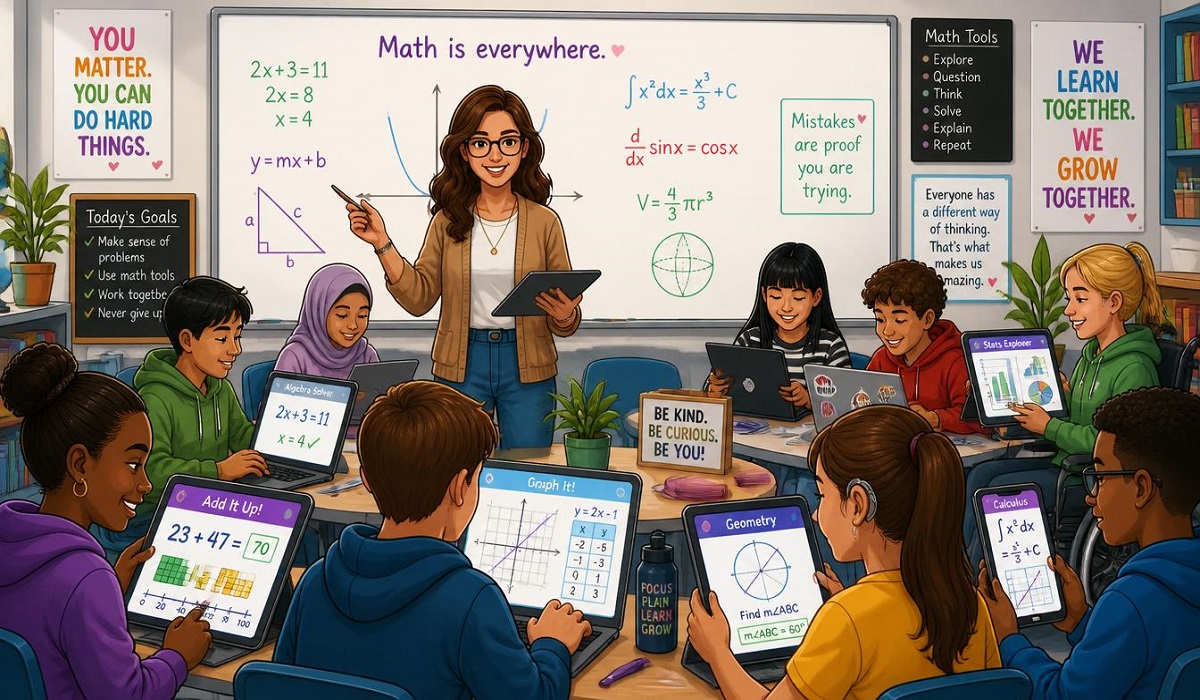
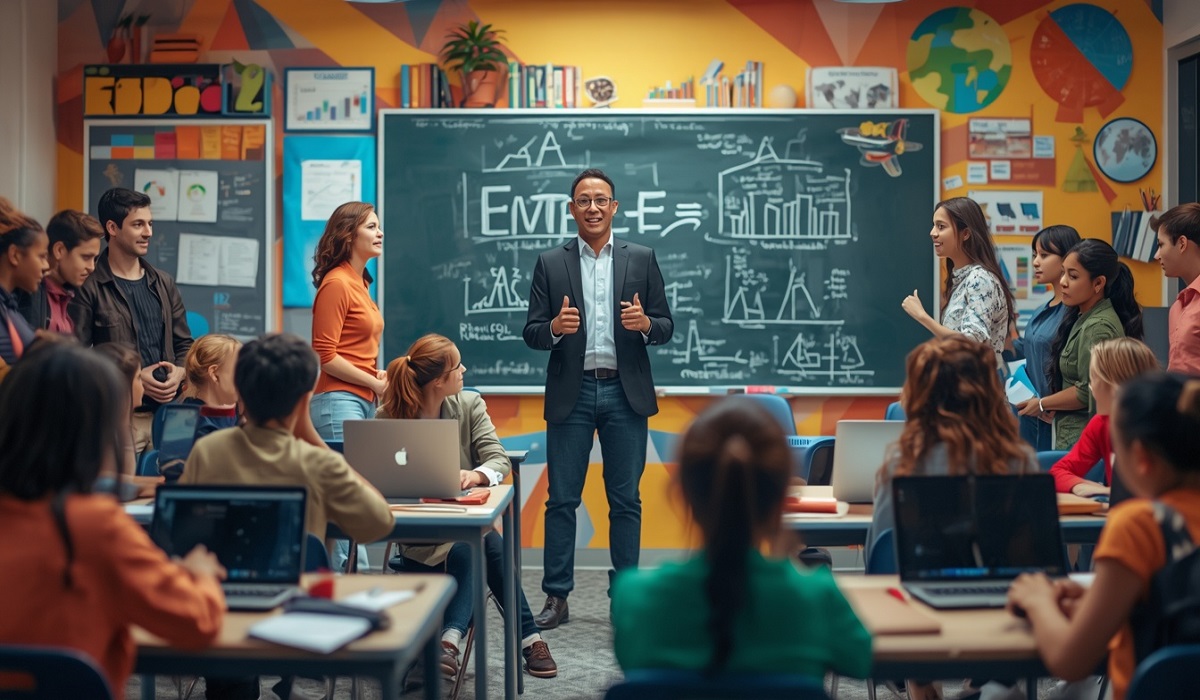
Fundamentally, an interactive classroom is a setting where students actively participate in the learning process rather than merely receiving information. Collaboration, discussion, and practical exercises are prioritized over a teacher merely giving lectures. It changes the conventional dynamic from one that is teacher-centered to one that is student-centered.
Imagine a classroom where students are working together on a project, discussing ideas, using technology to solve problems, and asking questions freely. The teacher acts more as a “guide on the side” than the “sage on the stage.” This approach is based on the idea that students learn best when they are actively involved and when learning is connected to their interests and real-world experiences.
The Key Ingredients of an Interactive Classroom
Several core components make a classroom truly interactive. These include:
- Structured Conversations: Students are given time to process new information by talking with their peers. Strategies like “Turn to Your Partner and…” (TTYPA) and “Paired Verbal Fluency” encourage students to articulate their understanding, ask questions, and learn from each other.
- Movement and Kinesthetic Activities: The idea that students can and should move around the classroom is a hallmark of an interactive classroom. This isn’t just about recess; it’s about using movement to stimulate the brain and improve focus. Activities like “Gallery Walks,” where students move around the room to view and discuss different pieces of work, are powerful tools for engagement.
- Active Learning Strategies: This includes a wide range of techniques like project-based learning, gamification, and problem-solving activities. In an interactive classroom, students might build models, create presentations, or even solve a “murder mystery” to learn complex topics.
- Technology as a Tool: Modern technology is a powerful enabler of interaction. Tools like interactive whiteboards, student response systems (clickers), and educational apps allow for real-time feedback and collaborative work.
- A Focus on “Why”: In an interactive classroom, learning is made relevant. Teachers connect lessons to real-world issues, global challenges (like the Sustainable Development Goals), and students’ own lives, making the material more interesting and meaningful.
Why Does An Interactive Classroom Teaching Matter?
The shift to an interactive classroom isn’t just a trend; it’s a response to what we know about how the human brain learns best. When students are passive, their brains are less active. But when they are engaged, discussing, and doing, learning becomes more efficient and memorable.
The Science Behind the Engagement
Research consistently shows that active learning strategies lead to better student outcomes. When students are actively involved, they are more likely to retain information, understand complex concepts, and develop higher-order thinking skills .Dr. Michael Leung, a physiology lecturer at Monash University, has seen this firsthand. He uses an interactive, “flipped learning” model in his classes.
Turning them into “live theatre” with costumes, roleplay, and even fake blood. It might sound unusual, but it works. In one of his workshops, 90% of students reported high levels of engagement, and students who came in with the least preparation saw the biggest gains in confidence and understanding. This proves that interactive methods are incredibly effective at reaching every student, not just the ones who are already motivated .
Building Essential 21st-Century Skills
Beyond just learning facts, an interactive classroom is the perfect environment for building the skills students need for the future. In today’s world, it’s not enough to just know things. You need to be able to collaborate, communicate effectively, think critically, and solve problems creatively. An interactive classroom teaching approach is built around these skills. When students work in teams, they learn to communicate and resolve conflicts. They tackle a challenging project, they develop critical thinking and problem-solving abilities. When they present their findings, they build communication skills .
The Evolution of the Interactive Classroom: From Past to Present
The idea of involving students in learning isn’t brand new. Progressive educators like John Dewey championed “learning by doing” over a century ago. However, the tools and strategies available to us today have taken the concept to a whole new level. As the University of Hong Kong’s 2003 “MultiCast” project demonstrated, even early handheld devices could be used to create a more interactive, real-time feedback loop between students and instructors .
A New Era of Engagement
Today, we see the interactive classroom evolving rapidly, especially with the integration of Artificial Intelligence. The classroom is no longer just about a teacher and a whiteboard; it’s becoming a connected, digital ecosystem designed to facilitate active learning. For example, Samsung’s latest interactive displays, like the WAFX-P.
Use AI to create a “collaborative campfire” as the central point of the room, helping to focus students’ attention while offering real-time auto-subtitling and even the ability to generate live quizzes. This technology is helping colleges “move past AI readiness and start to talk about how we can activate learning environments” .
AI: The New Teaching Assistant
Artificial intelligence is becoming a powerful tool in creating an interactive classroom. It can automate many of the tedious tasks that can take time away from teachers, such as creating quizzes or generating discussion prompts based on existing lesson plans. A South Korean teacher, Oh Yuna, used the platform “Lesson AI” to turn her static PowerPoint slides into interactive activities.
This allowed her to give students immediate feedback and quickly check what they were thinking in real-time. She noted a clear change in participation, with students who usually wouldn’t speak up in class actively sharing their thoughts using digital devices. This saved her time and allowed her to focus more on understanding her students’ needs .
Furthermore, AI can help build a “intentional digital presence” in the classroom. The focus is now on using AI to enhance, rather than replace, the human element of teaching. The goal is to reach a point where “you stop saying, ‘I’m teaching with AI,’ and it just becomes, ‘Here is today’s lecture'” . This is a sign that the technology has been seamlessly integrated into an effective interactive environment.
Practical Strategies to Build an Interactive Classroom
Are you ready to bring more interaction into your classroom? You don’t need all the latest technology to get started. Many strategies are simple, low-tech, and highly effective.
1. Harness the Power of Structured Conversation
One of the easiest ways to move from a passive to an interactive classroom is to get students talking. Verbal processing is a key part of learning. Ron Nash, a leading expert on the subject, emphasizes the importance of “structured conversations.”
- Turn to Your Partner and… (TTYPA): After explaining a concept, simply ask your students to turn to the person next to them and explain the concept in their own words. This forces them to process the information immediately.
- Paired Verbal Fluency: Give students a topic and have them take turns speaking without stopping for a set amount of time (e.g., 30 seconds each). This is a great way to get ideas flowing and build confidence.
- Jigsaw Method: Divide a topic into sections. Have groups of students become “experts” on one section, and then form new groups with one “expert” from each original group to teach their section to the others.
2. Gamification and Playful Learning
Games are a natural way to engage students. They can make learning fun and competitive in a way that motivates students.
- Escape Rooms: Dr. Michael Leung’s approach to using escape rooms in his physiology classes is a brilliant example. Students solve puzzles and work together to “escape,” all while learning the subject matter.
- Quiz Platforms: Tools like Kahoot!, Blooket, and Mentimeter are ideal for producing interactive quizzes that the whole class may participate in. They give rapid feedback and may be used to review information or check for understanding.
- LEGO Serious Play: Using building blocks to conceptualize and explain ideas is a fantastic hands-on way to promote creative thinking, communication, and teamwork.
3. Real-World Connections
When students see the relevance of what they are learning to their own lives, they become far more invested. This may be an effective technique to develop an engaging classroom by making courses personally meaningful.
- Case Studies: Use real-world examples to demonstrate topics. If you are teaching biology, highlight real-world concerns like the development of zoonotic diseases or how biology ties to global challenges like food security (SDG 2) or climate change (SDG 13).
- Autobiographies: The British Psychological Society offers a toolset where students choose an autobiography to study, relating psychological theories to the real-life experiences of the writers. This provided a compelling and intimate learning experience.
- Student Choice: Allow kids to have a voice in what they study. When you give kids alternatives, like picking a study subject or a book to read, they are considerably more likely to be interested.
4. Utilizing Technology Effectively
Technology may be a game-changer in an interactive classroom, but it’s crucial to utilize it as a tool to encourage engagement, not as a replacement for it .
- Digital Whiteboards and Routines: Tools like “Classroom Screen” can assist build a clear, digital routine. It can show instructions, a timer, and even a noise level meter, all in one spot, helping to keep kids engaged.
- Interactive courses: Platforms like Nearpod allow teachers to develop or use pre-made courses with built-in interactive elements like surveys, virtual reality field excursions, and “Draw It” exercises.
- Student Creation: Students can become creators by using apps like Canva or Book Creator. Instead of taking a traditional test, they can create e-books, infographics, or presentations to show what they have learned.
Overcoming Challenges in the Interactive Classroom
While the benefits are clear, shifting to an interactive classroom isn’t without its challenges. It requires a shift in mindset and practice from both teachers and students.
Common Roadblocks
- Classroom Management: When students are talking, moving, and using technology, it can seem more chaotic than a quiet, traditional lecture. However, this “chaos” is often productive. Teachers can effectively manage this dynamic environment if they have established routines and clear expectations. Establishing a respectful and cooperative culture from the start is crucial.
- Student Resistance: Some students may initially be resistive, particularly those who are used to traditional instruction. They could find it awkward to speak in class or would rather just be instructed on what to study. It’s critical to provide a safe and encouraging environment for all students and to explain the “why” behind these new approaches.
- Time and Preparation: It may take more time up front to create interactive lesson plans. But online platforms and artificial intelligence are making it simpler. For instance, the “Lesson AI” platform in South Korea received special recognition for cutting down on preparation time by enabling educators to transform static slides into interactive exercises with a single click.
- Fear of Technology: New technology may intimidate educators and learners. Starting small is crucial. Choose one or two tools that you feel comfortable using, then progressively add them. “Sustainable innovation” occurs when “technology becomes part of the backstory,” according to Micah Shippee, Director of Education at Samsung.
Some Advice for a Smooth Transition
Start Small: Don’t try to revamp your entire teaching style overnight. Start with one new strategy or tool and see how it goes.
Build a Support Network: Talk to other teachers about what they’re trying. There are incredible communities of educators online sharing best practices.
Set Clear Routines: Students thrive on structure. Even in a flexible, interactive classroom, having clear routines for movement, discussion, and using technology will help everything run smoothly .
Gather Feedback: Ask your students what is working for them. Are they enjoying the activities? What facilitates their learning the most? They are your best resource for fine-tuning your approach.
The Future of the Interactive Classroom
The interactive classroom is not a destination but a journey of continuous improvement. The next wave of innovation is already being imagined, focusing on even more personalized and immersive experiences.
Holographic Teachers
A recent concept, the “AI-Driven Holographic Teacher,” proposes using mixed-reality to project a teacher into multiple classrooms at once. This could help solve teacher shortages and provide high-quality instruction to students anywhere, making the interactive classroom even more accessible .
Deeper AI Integration
The future will see AI becoming even more seamlessly integrated into the learning environment. This will allow for personalized learning paths where a student’s interaction with a topic, their questions, and their performance in real-time can shape what they see next, creating a truly adaptive and tailored educational experience. The goal is to go “beyond being AI-ready to become AI-active” .
A Focus on Data and Personalization
As interactive classrooms grow increasingly digital, the data they create will be vital for customization. The teacher at Hongneung Elementary School sensibly remarked that while data gathering is vital for tailored teaching, it’s still a barrier in public education owing to privacy and system difficulties . Solving these problems will be key to unlocking the full potential of the interactive classroom teaching model.
Conclusion: Embracing the Change
The traditional model of a teacher talking and students listening is no longer sufficient for preparing today’s students for tomorrow’s world. An Interactive Classroom Teaching is the path forward. It’s an exciting and dynamic approach that transforms the role of the teacher into that of a facilitator and the student into an active, engaged partner in learning.
By focusing on active participation, collaborative learning, real-world relevance, and the strategic use of technology, we can create classrooms where students are not just learning but are excited to learn. This approach builds the critical thinking, communication, and problem-solving skills that students need to succeed in their careers and lives. It makes learning more effective, more equitable, and, most importantly, more fun. The future of education is not a room full of silent pupils; it is a dynamic, engaging community where everyone is growing together.
FAQs, or frequently asked questions
1. What is the difference between a traditional and an interactive classroom?
A traditional classroom is often teacher-centered, with the teacher presenting information and students passively listening. An interactive classroom is student-centered, where students actively participate in discussions, group work, and hands-on activities. The teacher acts as a facilitator who guides the learning process, rather than just delivering facts.
2. Is technology required to have an interactive classroom?
No, technology is a powerful tool but not a requirement. Low-tech interactive techniques like “Turn to Your Partner and…” (TTYPA), jigsaw puzzles, group conversations, and practical projects are all highly successful. However, technology may greatly improve and magnify the interactive experience when used skillfully.
3. How can student engagement be increased in an interactive classroom?
Students actively participate in the learning process in interactive classrooms. Moving about the room for an activity, addressing a problem in a group, or discussing a topic with a partner all make it far more difficult to become sidetracked. Higher engagement and improved knowledge retention result from this active participation, which makes learning more engaging, memorable, and relevant.
4. What are some simple strategies I can use to make my classroom more interactive?
You can start by incorporating structured conversations like “Turn to Your Partner and…” after teaching a concept. Another easy strategy is to use quick polls or quizzes (using simple hand-raising or free tools like Mentimeter) to check for understanding and get instant feedback from the whole class. These small changes can make a big difference.
5. How can AI help in an interactive classroom?
AI may be a strong tool to facilitate interaction. By converting static slides into tests and discussion starters, it can automate lesson planning and save teachers time. AI-powered displays can produce live quizzes to quickly assess comprehension, provide real-time subtitling, and establish a collaborative focal point. AI enables educators to concentrate more on student interaction and less on administrative duties.
Synopsis
The conventional style of “chalk and talk” is vanishing as education embraces the more dynamic and successful interactive classroom. This technique switches the focus from passive listening to active involvement, including students in conversations, group work, and hands-on activities. It is based on the understanding that students learn best when they are engaged and when learning is connected to their lives.
The key to an interactive classroom is a mix of structured conversations, active learning strategies, and smart use of technology. Tools like interactive quizzes and AI-powered platforms help teachers create dynamic lessons in real-time, while simple strategies like group problem-solving get students talking and thinking. This approach is proven to boost engagement, improve learning outcomes, and build crucial 21st-century skills.
While challenges like classroom management and planning time exist, they can be overcome with clear routines and supportive tools. The future of this model is bright, with innovations like holographic teachers and personalized AI. Ultimately, an interactive classroom creates a vibrant, engaging, and effective learning environment where students are empowered to become active, lifelong learners.