Curriculum Implementation
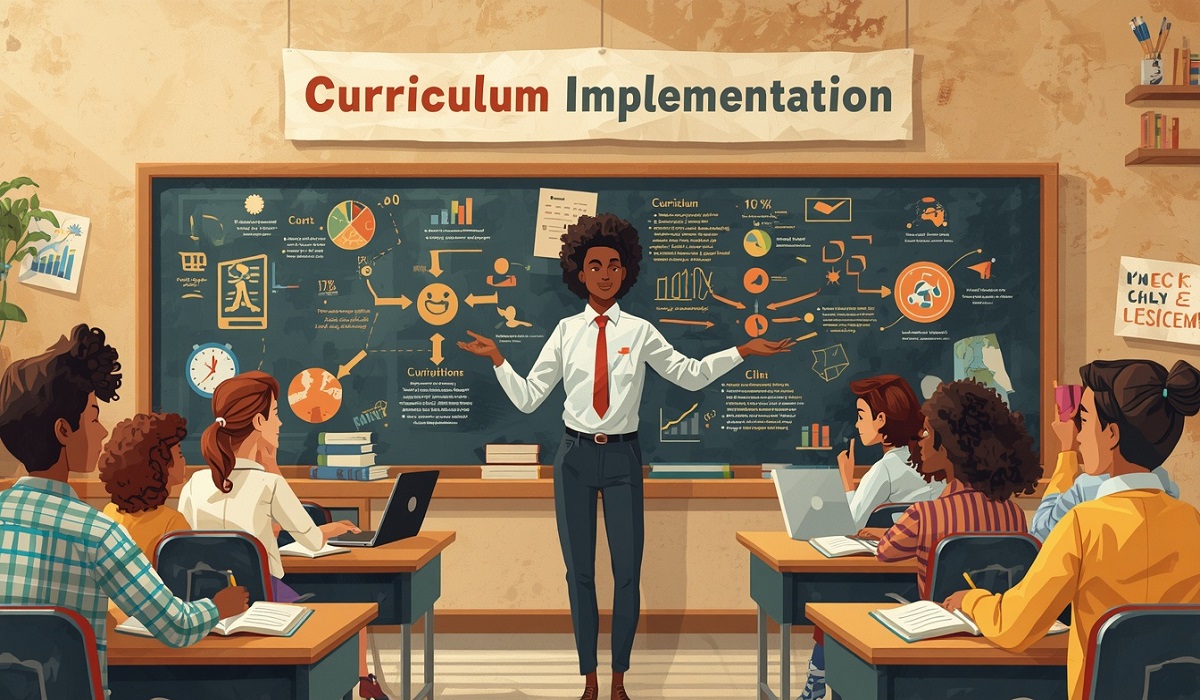
Curriculum Implementation: Let’s be honest. For years, the word “curriculum” has felt like a dusty word from a school board meeting. It meant a pile of papers, a list of standards, and a plan that often felt far away from the kids sitting in desks. But in 2026, that is changing. We are living in a time of huge change for schools, not just in what we teach, but how we bring it to life.
Welcome to the world of Curriculum Implementation in 2026. This is not a quiet, behind-the-scenes process anymore. It is a main event. Why? Because the world outside the classroom is changing at lightning speed. Technology like Artificial Intelligence (AI) is everywhere. Jobs are transforming. The skills students needed ten years ago are not the same skills they need today.
Now, schools worldwide are waking up and rewriting the rules. From Punjab, India, making AI a standard subject from 1st to 12th grade to major reviews in the UK and Bangladesh, it is clear that change is not coming; it is already here. But a new syllabus is just a start. The real magic—and the real challenge—happens when teachers have to actually use it in the classroom.
In this blog post, we are pulling back the curtain on what Curriculum Implementation in 2026 is really like. We will explore the big trends defining this year, the hard facts and issues educators are facing, and the practical steps to make it work. If you are a teacher, a principal, or a parent, this is your guide to understanding how we are rebuilding the classroom for a new generation.
The Big Picture: Why Curriculum Implementation is Changing
The Speed of Modern Life
Think about your phone. It is smarter than a computer from ten years ago. A student today has the world’s information in their pocket. Our education systems were not built for this. They were built for a different time. That means our Curriculum Implementation in 2026 has to be about learning how to think, not just what to think.
The Global Push for Future-Ready Skills
The world is looking for workers who can solve problems, speak well, and understand technology. This is pushing countries to rewrite their curriculums.
- In Pakistan, the Higher Education Commission is working to match higher education with what the country needs for development. They are focusing on “competency-based education” to make sure graduates are actually ready for the job market.
- Australia is rolling out new curriculum leadership resources. These are toolkits for school leaders to help their teachers implement the national curriculum effectively.
- In Punjab, India, a huge step is being taken. They are not just talking about AI; they are teaching it to every student. This is not a one-off project; this is a major piece of Curriculum Implementation in 2026.
The message is clear: sitting still is not an option. We are in a race to prepare our kids for a world that does not exist yet.
The Real Challenges of Curriculum Implementation in 2026
While the plan sounds good, the real world is messy. Right now, schools are facing serious hurdles. If we ignore these, even the best curriculum will fail.
The Teacher Workload Crisis
Let’s talk about the people in the classroom. Teachers are the heart of any education system, but in 2026, they are under immense pressure. A recent report from the UK’s National Education Union (NEU) highlighted some serious issues.
- Time is the Enemy: Teachers have very little time to plan. They are busy with marking, admin, and actual teaching. Expecting them to learn a whole new curriculum and create new lesson plans without giving them time to do it is a recipe for burnout.
- The Recruitment and Retention Crisis: There is a massive shortage of teachers. Many schools lack the staff to even cover normal lessons. How can they be expected to launch a new curriculum if they don’t have enough people to teach it? One teacher in the focus groups said that trying to roll out new changes under current conditions felt unrealistic.
- Lack of Information: Many teachers said they heard about new curriculum changes from their own research, not from their school leaders. If teachers don’t know what is coming, they cannot prepare for it.
This tells us that Curriculum Implementation in 2026 must involve reducing the load on teachers, not increasing it. The implementation plan must include training time and support, not just new books.
The Issue with Big Government Changes
Sometimes, the best intentions go wrong. In Bangladesh, the national curriculum has seen a lot of change recently, and it has caused a lot of confusion.
The 2021 Curriculum Rollout
The government tried to introduce a new curriculum in 2021. It was supposed to be based on continuous assessments (checking progress throughout the year) instead of huge final exams. But the rollout was messy. Teachers and parents did not understand the new system. A lot of money was spent on training, but it didn’t seem to work.
Heading Back to the Old Way
Because of the problems, the government is now talking about going back to the 2012 curriculum in 2025! They plan to introduce a “revised” curriculum in 2026. Education experts are warning that changing the curriculum so fast is dangerous. It creates uncertainty for students and teachers.
Expensive Mistakes
Changing curriculums costs a lot of money. Hundreds of millions of dollars were spent printing new books and training teachers for a system that is now being scrapped. This is a huge lesson for Curriculum Implementation in 2026: the plan must be solid before we spend the money. You cannot just force change from the top down without checking if the system is ready for it.
The Trend That is Shaping the Future: AI in the Classroom
Despite the challenges, one of the biggest stories of 2026 is the introduction of Artificial Intelligence into the school curriculum. This is the most visible and exciting part of Curriculum Implementation in 2026.
Punjab Leads the Way
The Punjab school system in India is making a massive bet on AI. They have introduced AI as a mainstream subject from Class 1 all the way to Class 12 under a project called “Sarbat.AI“. This means that over 31 lakh (3.1 million) students will learn about AI.
- How it Works: They are starting with classes 8 to 12, adding AI to the computer science classes. Later, they will expand it to the younger grades. This is a phased approach to Curriculum Implementation in 2026.
- The Teacher Training: To make this work, they are training more than 12,000 computer science teachers and over 2 lakh (200,000) teachers total. This shows that for any curriculum change, especially a big one like AI, training teachers is the most important step.
- Ethical AI: The curriculum is not just about coding. It is designed with UNESCO’s Ethical AI Framework in mind. They want students to learn to use AI in a safe, responsible, and ethical way.
What This Means for Students?
The goal here is huge. The Punjab Education Minister said they want to move from leading the Green Revolution to leading the Artificial Intelligence Revolution. They want every child to be a creator of technology, not just a user. This is a very forward-looking example of Curriculum Implementation in 2026.
Beyond Just Coding
Other places are focusing on the practical uses of AI and technology. In Pakistan, the government is launching a “Digital Grade IV Life Skills Education” program. This is not about computer science; it is about using digital tools to teach practical life skills like critical thinking, communication, and problem-solving. This shows that even when using technology, the focus is on building human skills.
How to Make It Work: The Right Way to Implement a Curriculum
Given all these challenges, is there a right way to do this? Absolutely. The experts and the evidence point to a few key steps that make Curriculum Implementation in 2026 successful.
1. The Systemic Approach
Curriculum change cannot happen in a vacuum. The UNESCO International Bureau of Education talks about a “systemic approach”. This means you cannot just change the textbook and walk away. You have to change everything together:
- Curriculum: What are we teaching?
- Assessment: How do we test what they learned?
- Teacher Training: Do they know how to teach the new stuff?
- Resources: Do we have the right tools and technology?
If you change the curriculum to include more group projects (pedagogy), but keep testing only with final exams (assessment), the system doesn’t work. Everything must align.
2. Listen to the Teachers
The UK focus groups showed that teachers feel left out. They are the ones on the front line. If they are not consulted, and if their concerns about workload are ignored, they will resist the change.
Good Curriculum Implementation in 2026 means:
- Talking to Teachers: Ask them what they need.
- Giving Time: Give them paid time to plan and train.
- Providing Resources: Give them ready-made lesson plans or examples to start with.
3. The Diagnostic Phase
Before you throw out the old curriculum, you need to look at what is already there and see what is working. UNESCO calls this the “diagnostic phase”. You cannot fix a machine if you do not know which part is broken. If students are struggling with reading, then maybe the curriculum needs to spend more time on that. If they are great at science, maybe you can move faster there.
4. Competency-Based Education (CBE)
Many countries are moving toward a system where students must prove they “know how to do” something rather than just “knowing about” it. In Bangladesh, they are trying to implement this. Research has shown that teachers there face difficulties, but the idea is sound. The goal of Curriculum Implementation in 2026 should be to produce students who can write a good email, solve a math problem, and give a confident presentation—not just memorize facts for a test.
What Success Looks Like: Key Areas of Implementation
So, how do we know if we are doing this right? Here are some key areas to watch.
Aligning Curriculum and Assessment
This is the golden rule. If you want students to learn critical thinking, the test must ask them to think critically, not just to remember facts. Schools are now working hard to make sure the assessment matches the curriculum. This was a key focus of the Australian curriculum resources and the pathway goals in the Oakland Unified School District plan.
Including All Learners
A good curriculum works for everyone. It must consider kids from all backgrounds, kids who are learning English, and kids with special needs. The Australian resources emphasize “Including all learners,” and the Pakistan digital LSBE program emphasizes being “gender-sensitive”.
Building Teacher Capability
You cannot have a high-tech curriculum without high-skill teachers. Training is not a one-time event. It must be ongoing. The Punjab AI plan includes training 200,000 teachers, which is a huge investment in people. This is the most expensive part of Curriculum Implementation in 2026, but it is the most important.
The Teacher as a “Curriculum Maker”
The UK report highlighted that teachers want to be “curriculum makers,” not just people who deliver a script. Teachers know their students best. They should be given some flexibility to adjust the curriculum to their class’s needs.
The Human Side of the Story
It is easy to get lost in the words like “systems” and “competencies,” but we must remember this is about people.
For Teachers
Teachers feel nervous about change. Many are worried they will not understand the new “AI stuff” or the new assessment style. It is the job of school leaders to reassure them. Curriculum Implementation in 2026 must provide comfort and support. It should be a journey they take together, not a “sink or swim” test.
For Students
Students are often the last to be asked about a new curriculum, but they feel the effects the most. If the curriculum is overloaded or boring, they suffer. If it is practical and interesting, they thrive. The goal is to make learning fun and relevant again. The focus groups in the UK worried that high-stakes testing is harming students’ mental health.
For Parents
Parents want to know their kids are learning important things. When a curriculum changes, they often feel confused. They don’t know how to help with homework anymore. Schools need to talk to parents, explain the changes, and show them how the new skills will help their kids in the future.
Conclusion: Turning the Page
Curriculum Implementation in 2026 is a complex, messy, and vital process. It is about rebuilding the engine of education while the car is moving. This year marks a turning point.
We see huge ambition, like teaching AI to millions of students in Punjab. We see serious struggles, like the teacher shortages and workload crises in the UK. And we see cautionary tales, like the messy curriculum changes in Bangladesh. And we see smart solutions, like the systemic approach from UNESCO and the practical leadership guides in Australia.
The world is moving fast. Technology is changing. Jobs are being redefined. Education is the only tool we have to help kids catch up with that speed. But we cannot just change the rules of the game without preparing the players.
The ultimate success of Curriculum Implementation in 2026 will not be measured by the thickness of the new textbooks or the price of the new software. It will be measured in the confidence of a teacher walking into a classroom, the spark of curiosity in a student’s eye, and the ability of a graduate to thrive in a world we cannot yet imagine. It is a challenging time to be in education. But it is also the most important time.
Frequently Asked Questions (FAQs)
1. Why is curriculum implementation such a big deal in 2026?
Because the world is changing so fast. Technology like AI is reshaping jobs and society, and schools must change the curriculum to teach the skills students need for their future, not for the past. Countries are also aligning education with national development goals to ensure a strong workforce.
2. What is the biggest obstacle to implementing a new curriculum?
The biggest issue is teacher workload and burnout. Teachers are often not given enough time to plan or train for the new changes. In the UK, surveys show that high workload and a lack of staff are seen as critical barriers to making curriculum changes work.
3. What is “Competency-Based Education” (CBE)?
CBE is a teaching method where students learn a specific skill or “competency” at their own pace and prove they have mastered it before moving on. The focus is on “knowing how to do” something, rather than just “knowing about” it. It is a focus for many curriculum reforms in 2026.
4. How are schools handling teaching Artificial Intelligence (AI)?
A major trend in 2026 is the integration of AI into the curriculum. The most striking example is in Punjab, India, where they have introduced AI as a mainstream subject from Class 1 to 12. They are training a huge number of teachers to roll this out in phases, focusing on both technical skills and ethical usage.
5. What can school leaders do to make curriculum implementation easier?
School leaders must give teachers time to plan, provide high-quality training, and listen to their concerns. The approach should be “systemic,” meaning they need to align the new curriculum with new ways of teaching and new methods of assessment. UNESCO highlights that curriculum transformation is most effective when it is planned holistically across the entire education system.
Summary
Curriculum Implementation in 2026 is defined by a global push for “future-ready” education. The year is marked by ambitious projects, like teaching AI to millions of students, and harsh realities, like teacher shortages and planning failures. Key challenges include a severe teacher workload crisis and poorly planned rollouts. However, success strategies are clear: a systemic approach, listening to teachers, and training them well. Ultimately, the goal is to shift education from memorizing facts to mastering real-world skills. This year is a turning point; how we manage this change will shape the classroom for a generation.