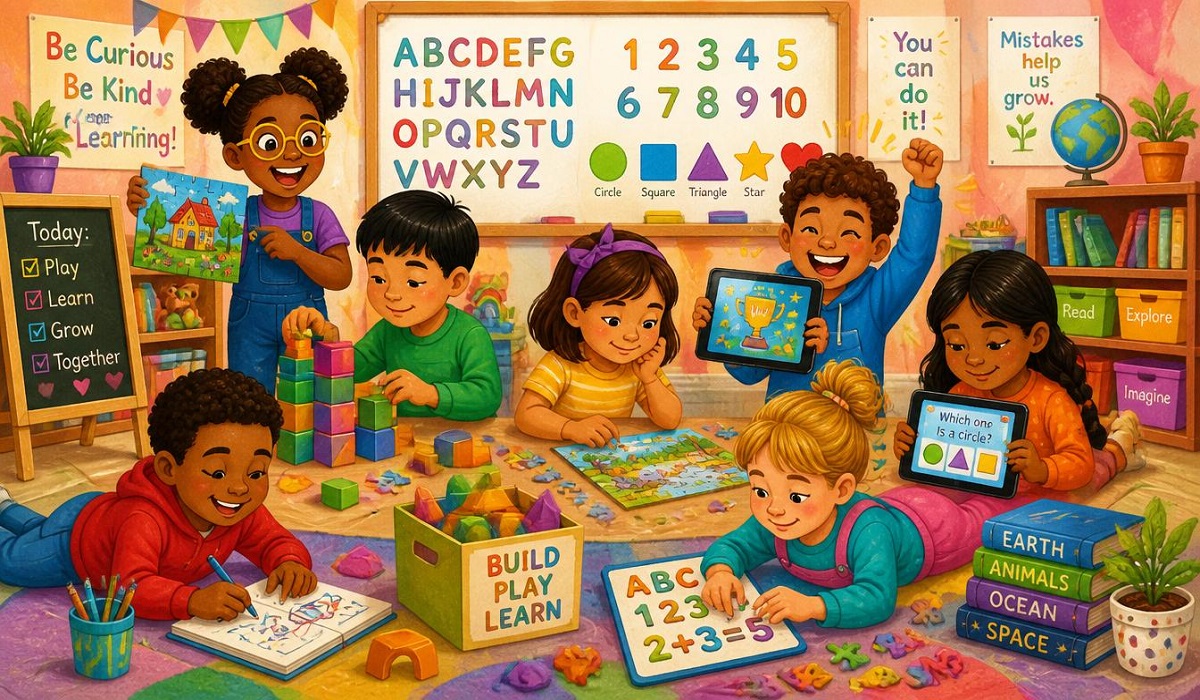
Educational Games for Kids
Educational Games for Kids: Remember when learning meant sitting at a desk, reading a textbook, and hoping you could remember the facts for a test? For many of us, that was school. But things have changed a lot. Today, the most popular educational games for kids are turning that old model on its head. They are replacing boring drills with exciting adventures and making learning something kids actually look forward to.
Think about it. When kids play a game, they are focused. They are trying to solve a problem, beat a level, or earn a reward. They are making choices and seeing what happens next. This is where the magic happens. A good educational game uses this natural love for play to teach skills like math, reading, and even coding, all while the child is having fun. It’s not about making learning feel like a chore; it’s about making it feel like play. That’s why experts call this “edutainment,” and it’s a powerful tool for helping kids learn.
In 2026/27, the choices are better than ever. There are games for every subject, for every age, and for every type of learner. Some of the most popular educational games for kids are now used in classrooms all over the world, helping teachers connect with students in a new way . Others are designed for family fun at home, turning screen time into a valuable learning experience. The global market for these games is huge and growing fast, showing just how much parents and teachers believe in this approach .
This guide will explore the top games, breaking them down by subject and age, so you can find the perfect game to help the kids in your life level up their learning.
What Makes a Game “Educational”?
Before we dive into the list of the most popular educational games for kids, it’s helpful to understand what makes a game truly educational. It’s not just about slapping a “learning” label on a game. A really good educational game does a few specific things well.
Beyond Just Fun: Key Features to Look For
First, a great educational game is engaging. It grabs the player’s attention and holds it. This often means it has a cool story, fun characters, or a challenging puzzle that makes you want to keep trying.
Second, it teaches a specific skill. This could be anything from learning how to add numbers to understanding the basics of coding. The best games teach these skills without the player even realizing it. The learning happens naturally as part of the gameplay.
Third, a quality game gives feedback. If a player makes a wrong move, the game doesn’t just say “wrong.” It helps them understand why the move was wrong and guides them toward the right answer. This helps kids learn from their mistakes in a safe and encouraging environment.
Creation Over Consumption: The New Rule
One of the biggest shifts in recent years is a focus on creation. The goal isn’t just for kids to passively consume information; it’s for them to actively create something. The most popular educational games for kids today are often the ones that give them the tools to build, design, or code their own projects .
Think of it this way: A game that only asks you to answer multiple-choice questions is fine, but it’s passive learning. A game that lets you build a city, design a level, or create an animation is active learning. This is where deep understanding happens. As one expert put it, “The output is proof of learning” . When a kid creates something in a game, they are showing they truly understand the concepts.
Why Kids Learn Better When They’re Playing?
So, why does this work so well? The science is clear. When kids are playing, their brains are more open to learning. They are relaxed, curious, and motivated. A game can take a scary subject like math and turn it into an adventure. This helps kids build confidence and develop a growth mindset—they learn that it’s okay to fail, try again, and eventually succeed.
Many of the top educational games for kids use these ideas. They give kids the power to make “meaningful choices” that affect the game’s outcome. This sense of control and agency is a powerful motivator . When a child feels they are in charge of their own learning, they are more likely to be engaged and remember what they’ve learned.
Top Educational Games by Subject
Now, let’s get to the good stuff! Here is a breakdown of some of the most popular educational games for kids, grouped by the main skill they teach. Whether you are looking for a game for your child or your classroom, there is something here for everyone.
Math Games: From Basic Counting to Complex Algebra
Math can be one of the hardest subjects to make fun, but these games do an amazing job.
- Prodigy Math: This is a massive, fantasy-based role-playing game (RPG) where kids solve math problems to cast spells and defeat monsters. It’s one of the most popular educational games for kids on the market, with over 100 million players worldwide . The game’s curriculum is aligned with school standards, making it a perfect tool for extra practice at home or in class. Kids get so caught up in the adventure that they don’t even realize they’re practicing math.
- Kahoot! Numbers by DragonBox: This award-winning app is designed to build a solid foundation in math for kids ages 4-8 . It’s great at teaching numbers, addition, and subtraction in a visual and intuitive way. It’s often recommended as a top choice for early learners . If you have a young child who is struggling with math, this is a fantastic place to start.
- Math Land: This is a classic-style adventure game where kids solve math puzzles to progress through different worlds. It covers a wide range of topics, from basic arithmetic to more complex problems, making it suitable for a broad age range .
Puzzle and Logic Games: Building Problem-Solving Superpowers
Puzzle and logic games are great for developing critical thinking, spatial reasoning, and patience. These are not just “learning games”; they are games that teach you how to think.
- Chess: The ultimate game of strategy. Chess teaches foresight, planning, and consequences. It’s one of the oldest and most enduring educational tools in history. Online platforms like Chess.com and Lichess.org have made it easier than ever for kids to learn and play against others safely .
- Sudoku: This classic number puzzle is simple to explain but can be incredibly challenging. It builds logical deduction skills, number recognition, and patience. It’s available in newspapers, books, and countless free apps, making it a very accessible educational game .
- The Genius Square: A fantastic physical board game where players race to fill a square grid with geometric shapes, using dice to determine the starting positions. It’s a fast-paced, fun way to build spatial awareness and problem-solving skills .
Coding and STEM Games: The Future of Learning
As technology becomes more and more important, knowing how to code is a super skill. These games make learning to code fun and easy.
- Scratch (MIT): This is the gold standard for teaching kids to code. Developed by MIT, it’s a free visual programming language where kids drag and drop code blocks to create their own games, stories, and animations . It’s perfect for ages 8 and up and teaches computational thinking without the need for any prior coding experience. It’s one of the most popular educational games for kids in schools worldwide.
- Minecraft: Education Edition: It’s not just a game; it’s a tool. The educational edition of Minecraft adds features for teachers to use in the classroom. Kids can learn everything from math and history to coding and chemistry. It teaches resource management, spatial reasoning, and systems thinking in a creative, open world .
- Tynker: This is a popular platform that teaches coding through fun, interactive modules. Kids build games, control robots, and create apps, earning badges and completing challenges along the way .
Language and Reading Games: Boosting Vocabulary and Literacy
Learning to read and building a strong vocabulary are foundational skills. These games make the process much more enjoyable.
- Kahoot! Learn to Read by Poio: This interactive game is designed to help children ages 3-8 learn to read. It uses a phonics-based approach and has won awards for its innovative teaching method . It’s a great way to introduce young children to the alphabet and basic reading skills.
- Scrabble Junior: A classic word game adapted for younger players. It helps kids learn new words, practice spelling, and develop their vocabulary in a fun, social setting .
- Word Search and Crossword Puzzles: These classic games are perfect for building vocabulary and spelling skills. They can be printed out or played on an app, making them a versatile and accessible learning tool .
Educational Games by Age Group
What works for a 6-year-old will probably be too simple for a 12-year-old. Here are some of the most popular educational games for kids, grouped by the best age range.
1: Ages 3-5: Early Learners
- PBS KIDS Games: This is a collection of games featuring beloved characters from PBS shows. It covers a wide variety of early learning topics, from math and reading to science and social skills .
- Sago Mini World: This app is packed with simple, open-ended games for young children. It’s great for sparking creativity and imagination without being overwhelming .
- Smart Tales: This app offers over 2,500 educational games and interactive stories for kids aged 2-11. It includes reading, math, and STEM challenges .
2: Ages 6-8: Building Foundations
- Prodigy Math: This is the perfect age to start with Prodigy. The fantasy RPG format is incredibly engaging, and the curriculum-aligned content is great for reinforcing what they are learning in school .
- ScratchJr: A simplified version of Scratch designed for younger children. It uses the same drag-and-drop concept to teach early coding skills .
- ABCya: This web-based platform has over 250 games organized by grade level and subject. It’s a huge resource for teachers and parents looking for games that are both fun and educational .
3: Ages 9-11: Deeper Learning and Strategy
- Minecraft: Kids this age can really dive deep into Minecraft, building complex structures and learning about resource management. The educational version adds a whole new dimension of learning .
- Chess: This is a great age for kids to start taking chess more seriously. They can learn strategies, solve puzzles, and play online .
- Kahoot! Algebra 2 by DragonBox: This app has been praised by The New York Times as “the most impressive math education app I’ve seen” . It’s perfect for making advanced math accessible and fun.
4: Ages 12+: Mastering Skills and Real-World Application
- Roblox Studio: While many kids love playing Roblox, Roblox Studio lets them create their own games. It’s a powerful tool for learning game design, 3D modeling, and even Lua scripting .
- Sparkli: This AI-powered learning app lets kids explore any topic they are curious about. It turns questions into visual, game-based experiences, perfect for self-directed learning .
- GarageBand: For the creatively inclined, GarageBand is a fully-equipped music creation studio. Kids can learn about composition, sound engineering, and music theory .
The Best Platforms for Educational Games
Many of these games are available on specific platforms. Here are some of the best places to find the most popular educational games for kids.
- Kahoot! Kids: This subscription service brings together 10 award-winning learning apps from the DragonBox and Poio series into one place. It covers math, reading, and more for ages 3-12 .
- SKIDOS: This platform offers over 40 educational games for kids. They have even partnered with Rovio to create Angry Birds-themed learning games that focus on emotional intelligence and logic .
- AhaSlides: This is a great tool for teachers and parents to create live quizzes and interactive games. It’s perfect for group learning, whether in the classroom or at a family game night .
- Toca Boca World: A massive digital playset where kids can create stories and explore. It’s consistently one of the highest-grossing educational apps, showing its massive popularity .
How to Choose the Right Educational Game?
With so many options, how do you pick the right one? Here are a few tips.
- Consider the child’s interests. If a kid loves space, find a game about space. If they love building, get a game where they can create.
- Check the age rating. Make sure the game is appropriate for the child’s developmental stage.
- Play together. The best way to see if a game is good is to try it out yourself.
- Look for a balance of fun and learning. The game should be engaging first and educational second.
- Read reviews. See what other parents and teachers are saying.
FAQs About Educational Games
1. Are educational games really effective?
Yes, research shows that well-designed educational games can significantly improve learning outcomes. The game-based approach increases engagement, motivation, and knowledge retention compared to traditional methods. The global educational games market is growing rapidly, highlighting their effectiveness .
2. How much screen time is too much for kids playing these games?
It’s important to find a balance. Experts generally recommend setting limits on screen time. Treat educational games like any other activity. An hour of playing a learning game is often more beneficial than an hour of passive video watching, but breaks and other activities are still important.
3. Are these games safe for my child?
Most of the well-known platforms, like Kahoot!, PBS Kids, and Scratch, have strong safety measures and are ad-free. It’s always a good idea to check the app’s privacy policy and safety features before your child starts playing. Many platforms are 100% safe and teacher-approved .
4. Can these games be used in the classroom?
Absolutely! Many of the most popular educational games for kids, such as AhaSlides, Kahoot!, and Prodigy Math, are widely used in classrooms. Teachers use them for review sessions, formative assessments, and to make lessons more interactive and fun .
5. What are some good offline educational games?
there are many great digital games, don’t forget about traditional board games. Monopoly teaches money management and math. Chess builds strategic thinking. Jigsaw puzzles are great for spatial awareness. Many of these classics are still among the best learning games for kids .
Summary
Finding the most popular educational games for kids in 2026/27 is easier than ever. With so many incredible options available, it’s a great time to be a learner. The key is to move away from mindless entertainment and towards games that build skills, encourage creativity, and foster a love of learning.
Whether it’s the math adventure of Prodigy, the creative freedom of Minecraft, or the logic puzzles of Chess, there is a perfect game out there for every child. The future of education is playful, interactive, and personalized, and it’s being driven by these amazing tools. So go ahead, level up learning!