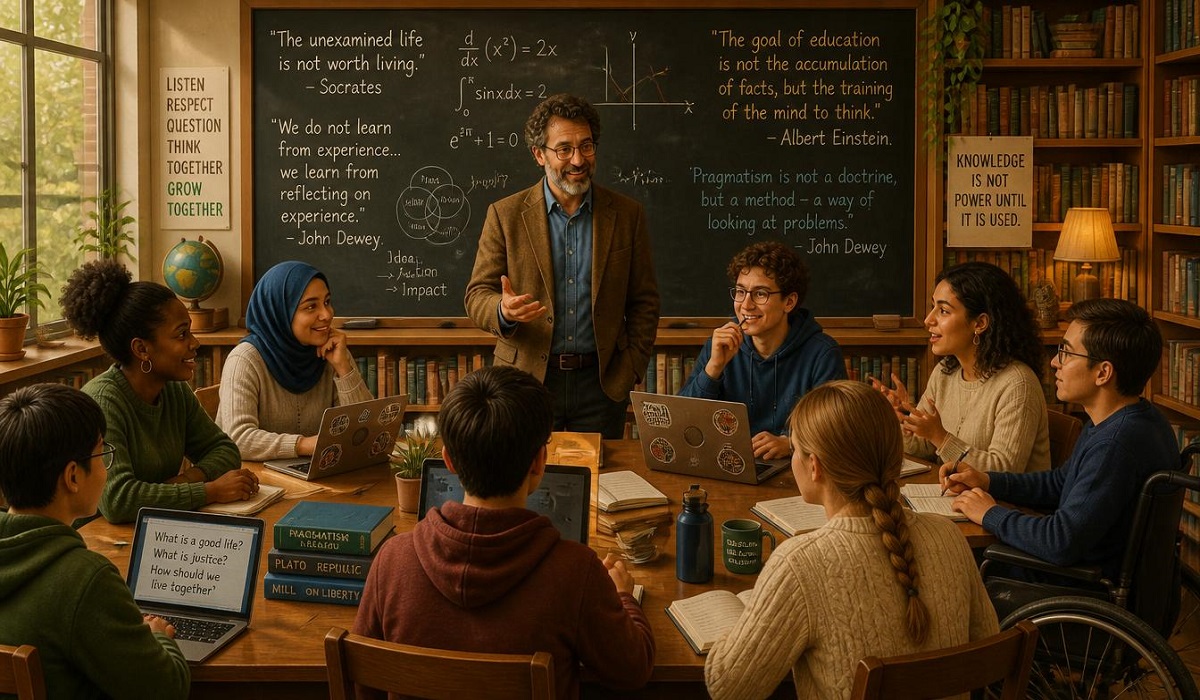
Pragmatism in Education
Pragmatism in Education: Have you ever sat in a classroom and wondered, “When am I ever going to use this in real life?” If you have, you are not alone. For generations, students have memorized facts, formulas, and dates without truly understanding how to apply them outside the school walls. This is where pragmatism in education comes to the rescue. It is a fresh way of thinking that asks a simple question: Does this learning actually help students in the real world?
Pragmatism is not just another fancy educational term. It is a philosophy that believes knowledge should be useful. Think about it: would you rather learn to cook by reading a recipe book for weeks, or by actually getting into the kitchen and making a meal? Most people would choose the second option because it is practical, memorable, and fun. That is exactly what pragmatism brings to education.
The word itself comes from a Greek word meaning “work” or “action”. Pragmatists believe that the truth of an idea lies in its practical consequences. In simple words: if it works, it has value. This idea was developed by great thinkers like Charles Sanders Peirce, William James, and John Dewey. Among these, John Dewey is the superstar of pragmatism in education. He changed the way we think about schools and learning.
Today, our world is changing faster than ever. Technology is everywhere. Jobs are evolving. The challenges of the 21st century, from climate change to social inequality, require creative problem-solving and critical thinking. Rote memorization simply won’t cut it anymore. Students need to be thinkers, doers, and innovators. This is why pragmatism is not just a nice idea—it is a necessity.
What is Pragmatism? Breaking It Down Simply
Let’s break down pragmatism into simple pieces so that anyone can understand it. Imagine you are trying to fix a broken bicycle. You can read a manual, watch videos, and ask for advice. But until you actually pick up a wrench and start working, you won’t truly understand how the bike works. That is the heart of pragmatism.
Pragmatism is the philosophy of “learning by doing.” It says that we learn best when we are actively involved in the process. It is about rolling up our sleeves, getting our hands dirty, and figuring things out through experience. This philosophy values action over passive listening. It believes that children are not empty buckets to be filled with knowledge, but rather active participants in their own learning journey.
This idea stands in sharp contrast to traditional education. In many schools, the teacher stands at the front and lectures while students take notes. The focus is on memorizing facts for a test. But pragmatism flips this model. It puts the student at the center. The teacher becomes a guide, not a dictator. The classroom becomes a workshop, not a lecture hall.
John Dewey, the father of this movement, said that “education is not preparation for life; education is life itself”. This means that learning should not be something we do to get ready for the future. It should be a meaningful part of our present. Every lesson should connect to real-world situations and help students understand the world around them.
The Core Principles of Pragmatism in Education
To really get pragmatism, it helps to understand its core principles. These are the building blocks that make this philosophy so powerful and unique.
1. Experience is the Best Teacher
Pragmatists believe that knowledge comes from experience. You can’t just tell a child that fire is hot; they need to feel the warmth to truly understand. This doesn’t mean putting children in danger, of course. It means creating safe, hands-on activities where they can discover things for themselves. When students engage in experiments, projects, and field trips, they build deep, lasting knowledge.
2. Problem-Solving is Central
Life is full of problems, and education should prepare students to solve them. Pragmatism in education focuses on real-world problems. Instead of learning math equations in a vacuum, students might use math to build a garden or plan a budget for a school event. This makes learning relevant and exciting.
3. Flexibility and Change
The world changes, and so must education. Pragmatists reject the idea of fixed, unchanging truths. They believe that what is “true” is what works right now. This encourages students to be adaptable and open-minded. They learn that answers can change as they learn more, which is a valuable lesson in our fast-moving world.
4. Democracy in the Classroom
Pragmatism values democracy. This means students should have a voice. They should be able to ask questions, challenge ideas, and participate in decisions. Dewey believed schools should be miniature communities where children learn to cooperate and respect each other. This prepares them for life in a democratic society.
5. Utility Matters
If learning is not useful, why do it? Pragmatists believe that education should serve a purpose. It should help students meet their needs and goals. This does not mean we only teach practical skills, but we should always show students how their lessons apply to real life.
The Main Figures Behind the Movement
Pragmatism in education didn’t appear out of nowhere. It was shaped by brilliant thinkers who dared to question the old ways.
John Dewey: The Hero of Learning by Doing
John Dewey is the rock star of pragmatism. He was an American philosopher and educator who lived from 1859 to 1952. Dewey argued that education should be grounded in experience. He believed that children learn best by doing and that schools should be places where students solve problems and think critically. His book “Democracy and Education” is a classic text that outlines his vision for a progressive, student-centered system.
Dewey founded the Laboratory School at the University of Chicago to test his ideas. There, he created a democratic community where students and teachers learned together. He treated students as active participants, not passive listeners. His work showed that when children are engaged, they learn more and enjoy school more.
William James: The Father of Pragmatism
William James was a psychologist and philosopher who popularized pragmatism. He wrote that the truth of an idea can be measured by its practical consequences. In education, this means that teaching methods should be judged by how well they work for students. James focused a lot on individual experience and how people learn best through personal engagement.
Charles Sanders Peirce: The Logical Thinker
Peirce was a scientist and logician who laid the foundation for pragmatism. He focused on the scientific method and how we can use it to solve problems. He emphasized clear thinking and experimentation.
Together, these thinkers gave us a powerful framework for education. They argued that schools should prepare students for life, not just for exams.
How Pragmatism Works in the Classroom?
Now that we know the theory, how does pragmatism look in real life? What does a pragmatic classroom actually look like?
Hands-On Projects
Instead of reading about the water cycle, students build a model. Instead of memorizing history dates, they create a mock interview with a historical figure. Projects allow students to use their hands, their minds, and their creativity. They learn to research, collaborate, and present their ideas. Project-based learning is a direct application of pragmatism.
Collaborative Learning
In a pragmatic classroom, students work together. They sit in groups, discuss ideas, and help each other. This mirrors the teamwork they will face in the workplace and the community. It also teaches them social skills, empathy, and how to handle conflicts.
The Teacher as a Guide
The teacher doesn’t stand at the front and talk for the whole class. Instead, they walk around, ask questions, and help students find their own answers. Teachers in a pragmatic classroom are “facilitators.” They set up the environment and the projects, but they let students take the lead.
Integration of Subjects
In real life, subjects are not separate. You use math, reading, and science all in a single day. Pragmatic education reflects this. A project might involve writing, math, science, and art all at once. This helps students see the connections between subjects and how knowledge works together in the real world.
Field Trips and Real-World Experiences
Pragmatism in education takes learning outside the school. Field trips to museums, farms, businesses, and historical sites are highly valued. Even inviting guest speakers from the community helps connect learning to reality. This makes education tangible and exciting.
Why Pragmatism Matters for the 21st Century?
Our world is facing huge changes. Artificial intelligence, automation, and global challenges are changing the job market and society. In this new world, we don’t just need workers who can remember facts. We need problem-solvers, innovators, and adaptable people.
Pragmatism in education is perfect for this moment. It teaches students how to think, not what to think. It helps them develop a growth mindset where they are not afraid of failure. Since pragmatism values experimentation, students learn that mistakes are opportunities to learn, not signs of failure.
In a world that is drowning in information, students need to know how to use information. They need to be able to spot fake news, adapt to new tools, and solve problems we haven’t even thought of yet. This is the kind of deep, flexible intelligence that pragmatism cultivates. It builds “lifelong learners” who can keep adapting and growing long after they leave school.
Many countries are now reforming their education systems to include more pragmatic elements. For example, Vietnam is looking to Dewey’s ideas to move away from rote learning towards more creative and practical education. The United States and many European countries are also emphasizing “21st-century skills” like critical thinking and collaboration, which are core to pragmatic philosophy.
The 4 Ps of Pragmatism: A Simple Framework
Sometimes pragmatism can seem a bit complex. But some experts have broken it down into a simple framework called the 4 Ps. These are four key ideas that guide a pragmatic classroom.
1. Practicality
Is it practical? Does this activity help students in the real world? If a student can’t see the point of a lesson, a pragmatic teacher will find a way to make it practical. This might mean using real-life examples, connecting to current events, or giving students a real problem to solve.
2. Pluralism
There is often more than one right answer. Pluralism means embracing different viewpoints. In a pragmatic classroom, students are encouraged to share different ideas and perspectives. The teacher doesn’t just look for one “correct” answer but appreciates a variety of solutions.
3. Participation
Learning is not a spectator sport. Students must be active participants. They should be doing, building, writing, and debating. Participation also means students have a say in what they learn and how they learn it. This builds engagement and ownership.
4. Provisionality
We need to be open to change. What is “true” today might be revised tomorrow. This doesn’t mean we don’t know anything, but it does mean we stay humble and curious. In education, this allows us to change our teaching strategies if they are not working. It also teaches students to be flexible thinkers.
Common Questions About Pragmatism
Is Pragmatism Just “Learning by Doing”?
That’s a big part of it, but it’s more than that. It’s also about why and how we learn. It’s about making learning purposeful and relevant. It is about thinking critically and working democratically. “Learning by doing” is the method, but the philosophy goes much deeper.
Does this mean we don’t need textbooks?
Not necessarily. Textbooks can be used as tools. But in a pragmatic classroom, the textbook is not the star of the show. It is a reference. Students might use it to research a project or find information. But they won’t spend hours copying from it passively.
Is it easy to implement?
It takes planning and effort. A pragmatic teacher often spends more time preparing projects and activities than a teacher who simply lectures from a book. But many teachers find it more rewarding. The benefits for the students are huge, and it makes the classroom a more exciting place to be.
Can it work with standardized testing?
This is the biggest challenge for pragmatism. Standardized tests often focus on rote memorization of facts. This can limit the amount of “learning by doing” that happens. However, many educators believe that a strong pragmatic foundation helps students think better, which in turn helps them do better on tests because they understand concepts more deeply.
Overcoming Challenges
Pragmatism in education sounds wonderful, but it also faces some challenges. It’s important to be aware of these issues so they can be addressed.
The Challenge of Testing
As mentioned, standardized testing is a major challenge. Teachers often feel pressured to “teach to the test,” which means focusing on facts and recall. This can squeeze out the time for projects and experiments. To overcome this, schools need to find a balance. They can use tests to assess basic knowledge, but they should also use projects, portfolios, and presentations to assess deeper learning.
Teacher Training
Not all teachers are trained to be facilitators. Many grew up in traditional classrooms and learned to teach by lecturing. Implementing pragmatism requires a shift in mindset. Teacher training programs need to emphasize hands-on teaching methods and show teachers how to manage a student-centered classroom.
Resources
Pragmatic teaching can require more resources. Science experiments need materials. Project-based learning needs space and time. Schools often lack funding for these things. But many pragmatic activities can be low-cost. Encouraging creativity and using recycled materials can help.
Parental Expectations
Sometimes parents are used to the old school model. They see their children doing projects and might worry that they are not getting a “proper” education. It is important for schools to communicate with parents and show them how pragmatism in education helps students grow.
Practical Examples for Teachers and Parents
You don’t need a philosophy degree to start using pragmatism. Here are some easy ways to bring a pragmatic approach to learning, whether you are a teacher in a classroom or a parent helping at home.
For Teachers
- Start a Class Garden: Use it to teach science, math, and responsibility.
- Mock Elections: During election season, let students research candidates and hold a vote.
- Reading about Change: If you are reading a book about change, have students interview their grandparents about changes in technology or culture.
- Solve a School Problem: Is the cafeteria crowded? Is there too much trash? Let students solve it.
For Parents
- Cook Together: Baking is a great way to teach math and science (chemistry!).
- Build a Birdhouse: This involves reading instructions, measuring, and using tools.
- Plan a Vacation: Let the kids help research costs, plan routes, and find activities.
- Fix Things: If something is broken, try to fix it together instead of immediately buying a new one.
The “Dewey Plan”
A classic pragmatic approach is to follow a simple plan:
- Realize a Problem: Notice there is a problem to solve.
- Observe the Situation: Gather information.
- Suggest a Solution: Guess what might work.
- Test the Solution: Try it out.
- Reflect: Did it work? What can we learn?
The Future of Education
The demand for pragmatic education is growing. People are recognizing that we can’t keep doing things the same way. The future of education is likely to be more personalized, more project-based, and more connected to the community.
Pragmatism in education offers a way forward. It helps students become critical thinkers and problem-solvers. Helps them become good citizens who can participate in a democracy. It prepares them to adapt to change. In a world where we don’t know what jobs will exist in 20 years, this is the most valuable gift we can give our children.
Schools are slowly evolving. The buzzwords now are “critical thinking,” “collaboration,” and “innovation.” This is essentially the language of pragmatism in education. As technology makes information more accessible, the role of schools will shift from teaching facts to teaching how to use facts.
Summary
Pragmatism in education is a powerful philosophy that transforms learning. It focuses on doing, experiencing, and problem-solving. Rather than just memorizing facts, students learn by engaging with real-world situations.
Key figures like John Dewey, William James, and Charles Sanders Peirce developed this idea. They believed truth is based on what works and that learning should be practical and democratic. Today, this philosophy is crucial for preparing students for the 21st century. It helps them become adaptable, critical thinkers who can solve the problems of the future.
By focusing on experience, participation, and practical relevance, pragmatism makes school exciting and meaningful. It proves that education is not just about filling a bucket, but about lighting a fire.
FAQs
1. What is pragmatism in education in simple terms?
Pragmatism in education is the belief that students learn best by doing and experiencing things. Instead of just memorizing facts, they work on projects, solve real problems, and connect their lessons to real life. The main idea is that learning should be practical and useful.
2. Who was John Dewey, and why is he so important?
John Dewey was a famous American philosopher and educator. He is known as the father of pragmatism in education. He argued that schools should be like miniature democracies where students learn by doing. Believed education should prepare students for life, not just for exams.
3. How is pragmatism different from traditional education?
Traditional education is often teacher-centered and focuses on memorizing facts from books. Pragmatism is student-centered and focuses on hands-on learning. In a pragmatic classroom, the teacher guides students, while in a traditional classroom, the teacher lectures.
4. Can pragmatism work with standardized tests?
It can be challenging because standardized tests often focus on memorization. However, many teachers believe that when students understand concepts deeply through experience, they perform better on tests. A mix of both methods is often used.
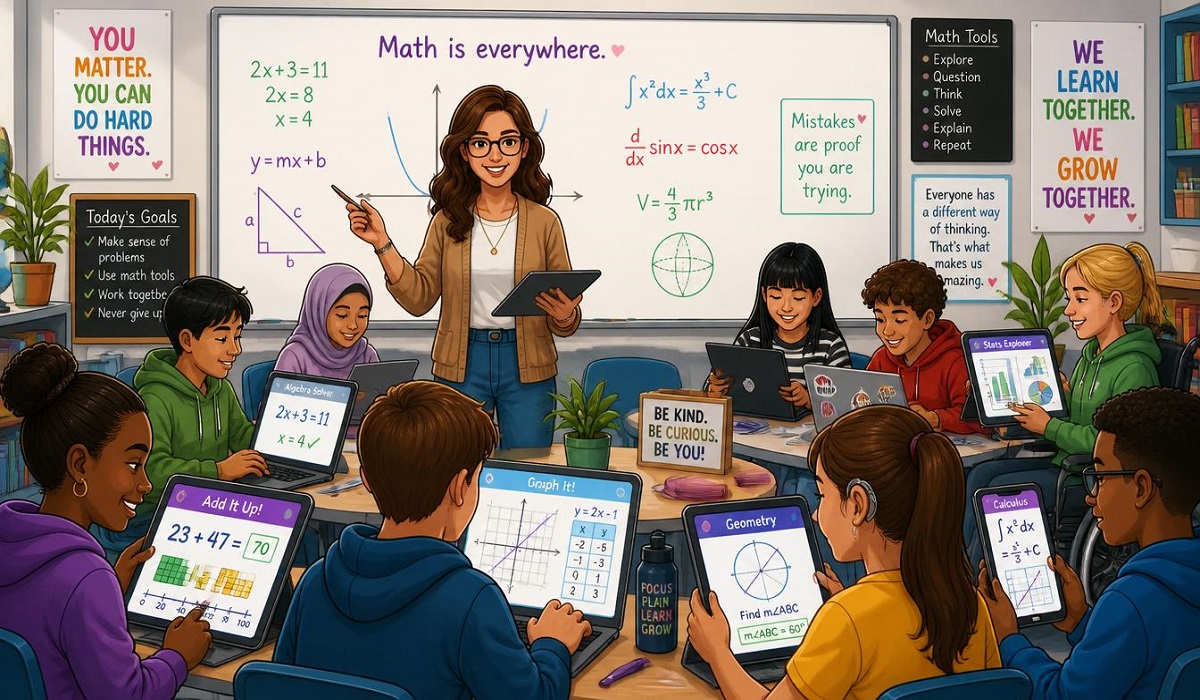
5. What does a pragmatic classroom look like?
A pragmatic classroom is busy and active. Students are often working in groups on projects. You see experiments, art, writing, and problem-solving happening. The teacher is moving around, helping and asking questions, rather than just standing at the front of the room