Quality of Life
Quality Life is something we all think about, even if we don’t always use those exact words. Have you ever wondered why some days feel amazing while others drag on? Or why one person seems happy with simple things while another with lots of money feels unhappy? That’s where understanding quality of life comes in.
In this article, we’ll break down what is quality life in easy language. We’ll look at the four main types with clear examples from real life. You’ll also find tips you can use today, no matter your age or where you live. Let’s dive in and make sense of something that affects every part of our days.
What Does Quality Life Mean?
Quality life (often called QoL) is how good or satisfying your everyday life feels to you. It’s not just about being healthy or having money. It’s a mix of things that make you feel happy, safe, connected, and able to enjoy life.
Think of it like this: Imagine your life as a big puzzle. Each piece – your health, friends, home, work, and free time – fits together. When most pieces are in good shape, your quality of life is high. If some pieces are missing or broken, it feels lower.
The World Health Organization describes it as your own view of where you stand in life, considering your culture, goals, and what you expect. It includes both good and tough parts of living.
It’s personal. What feels like great quality life for a busy city worker might differ from a farmer in a quiet village. But some things are common, like feeling healthy, having loving relationships, and living in a safe place.
Why does it matter? People with higher quality of life tend to live longer, feel less stressed, and achieve more. Countries even measure it to see how well their citizens are doing.
Why Should You Care About Quality Life?
Life isn’t only about working hard or earning more. Many people chase success but forget to enjoy the journey. Focusing on quality of life helps you balance things. It can improve your mood, relationships, and even your work performance.
For kids and teens, good quality of life means fun learning, playing outside, and feeling supported at home. For adults, it might mean time with family after work or hobbies that relax you. Older people, it could be staying active and connected with friends.
When quality of life is low, people might feel tired all the time, lonely, or worried about the future. The good news? You can improve it step by step.
The 4 Types of Quality Life
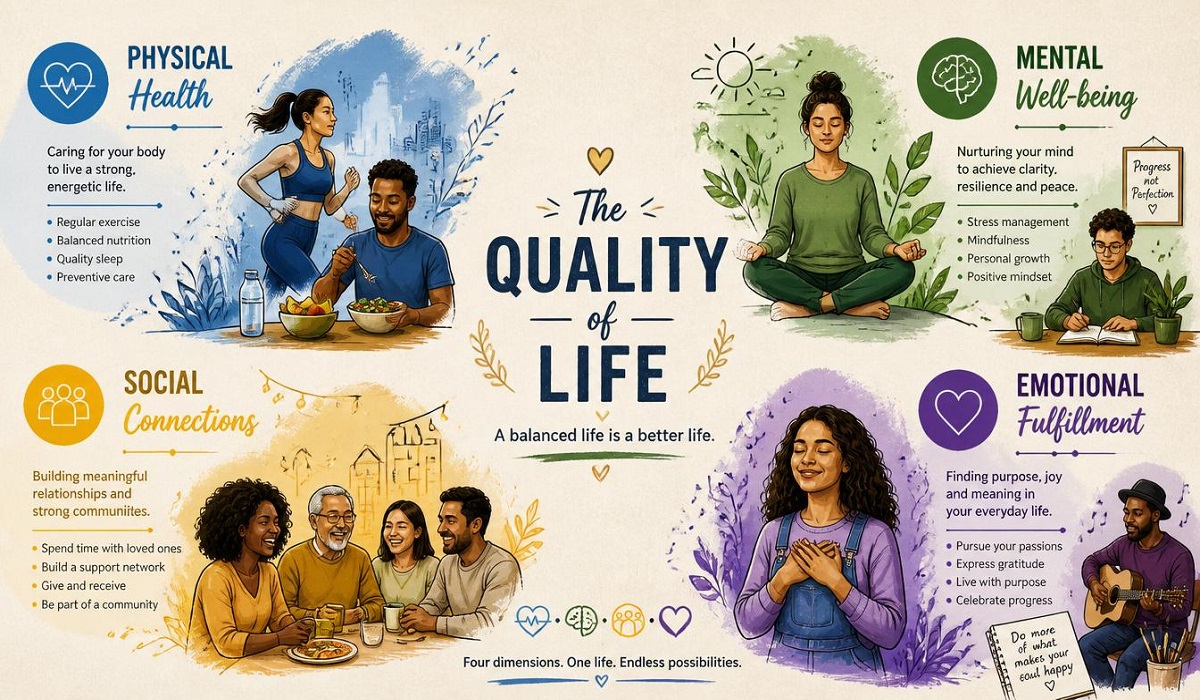
Experts often look at quality of life in four main areas or domains. These come from tools like the WHOQOL questionnaire. Let’s explore each one with simple explanations and real examples.
1. Physical Quality Life
This type is about your body and how well it works. It includes health, energy levels, sleep, food, and ability to move around without too much pain.
Real-life example: Sarah is a 35-year-old teacher. She eats fresh fruits and vegetables, walks every morning, and sleeps 7-8 hours. She feels energetic and rarely gets sick. Her physical quality of life is high.
Compare that to Mike, who works night shifts, eats fast food often, and skips exercise. He feels tired and has back pain. His physical quality is lower, even if he earns more money.
How to improve it:
- Eat balanced meals with veggies, proteins, and whole grains.
- Move your body daily – walk, dance, or play sports.
- Get regular check-ups with a doctor.
- Drink plenty of water and limit sugary drinks.
Small changes like these can make a big difference in how strong and lively you feel.
2. Psychological (Mental and Emotional) Quality Life
This covers your thoughts, feelings, and mental health. It includes happiness, handling stress, self-confidence, and enjoying life without too much worry or sadness.
Real-life example: Aman, a college student, practices mindfulness for 10 minutes daily. He talks openly with friends when stressed and pursues hobbies like drawing. Even during tough exams, he feels positive overall. His psychological quality of life is strong.
On the other hand, Priya feels anxious a lot because she compares herself to others on social media and doesn’t take breaks. She often feels down, which lowers her mental quality of life.
Tips to boost it:
- Practice gratitude by writing three good things each day.
- Talk to someone you trust when feeling low.
- Limit screen time and try relaxing activities like reading or listening to music.
- Set small goals and celebrate wins, no matter how tiny.
Remember, it’s okay to ask for help from counselors or family. Mental health is just as important as physical health.
3. Social Quality Life
This type is about your relationships and connections with other people. Family, friends, community, and feeling like you belong matter a lot here.
Real-life example: The Lopez family has weekly game nights and helps neighbors. Their kids play safely outside with friends. They feel supported and loved. This gives them high social quality of life.
In contrast, Raj works from home alone most days and rarely meets people. He feels isolated, even with a good salary. His social quality suffers.
Ways to strengthen social life:
- Spend time with family and call friends regularly.
- Join clubs, sports teams, or community groups.
- Be kind and help others – it builds strong bonds.
- Attend local events or volunteer.
Good relationships act like a safety net during hard times and make happy times even better.
4. Environmental Quality Life
This focuses on your surroundings – your home, neighborhood, nature, safety, and access to services like schools, hospitals, and clean air/water.
Real-life example: In a small town with parks, clean rivers, and friendly neighbors, children bike safely to school and families enjoy weekend picnics. People here rate their environmental quality high.
Meanwhile, in a crowded city with heavy pollution, noisy traffic, and limited green spaces, residents might feel stressed and less happy with their environment.
Practical improvements:
- Keep your home clean and organized.
- Spend time in nature – visit parks or plant a small garden.
- Support local efforts for cleaner air or better public transport.
- Choose safe neighborhoods when possible.
Even small actions like recycling or opening windows for fresh air help.
How the 4 Types Work Together?
These types don’t stand alone. They connect. Good physical health helps your mental state. Strong relationships make tough environments easier to handle. When all four are balanced, your overall quality of life feels much better.
For instance, a person with a great job but poor social life might still feel unhappy. Or someone in a beautiful place but with health problems may not enjoy it fully.
Factors That Affect Quality Life
Many things influence it:
- Money and Work: Enough income for basics plus some fun is key, but too much focus on work can hurt family time.
- Education: Learning new skills builds confidence and opportunities.
- Safety and Freedom: Feeling secure and free to make choices matters a lot.
- Leisure and Hobbies: Time to relax and do what you love prevents burnout.
- Culture and Values: What your community believes can shape your goals.
Countries like those in Northern Europe often score high because of good healthcare, education, and work-life balance.
Real Stories: Quality Life in Action
Story 1: Maria’s Turnaround Maria was overweight, stressed at her office job, and lonely after moving to a new city. She joined a walking group (physical + social), started cooking healthy meals, and volunteered at an animal shelter. Within a year, she felt happier and more energetic. All four types improved together.
Story 2: Ahmed and His Family Ahmed’s village had poor roads and limited schools. He worked with neighbors to build a community center and garden. Kids now play safely, and adults share skills. Their environmental and social quality rose, boosting everyone’s mood.
These stories show that small, consistent actions lead to big changes.
Tips to Improve Your Quality Life Today
- Start Small: Pick one area, like walking 15 minutes daily.
- Track Progress: Keep a simple journal of what makes you feel good.
- Balance Work and Rest: Set boundaries so work doesn’t take all your energy.
- Build Connections: Reach out to one person this week.
- Appreciate What You Have: Practice thankfulness daily.
- Learn Continuously: Read books, watch helpful videos, or take free online classes.
- Seek Help When Needed: Doctors, counselors, or community workers can support you.
Common Myths About Quality Life
- Myth 1: More money always means better life. (Not true – many rich people feel empty without relationships.)
- Myth 2: It’s only for healthy or young people. (Everyone can work on it at any stage.)
- Myth 3: It’s the same for everyone. (It’s very personal.)
Understanding these helps you focus on what truly matters to you.
Measuring Your Own Quality Life
You don’t need fancy tests. Ask yourself simple questions:
- Do I feel healthy most days?
- Am I happy with my relationships?
- Does my home and neighborhood feel good?
- Do I have moments of joy and purpose?
There are free online quizzes based on WHO tools, but your honest feelings are the best measure.
Quality Life for Different Age Groups
Kids and Teens: Play, learning, and family support are huge. Limit too much screen time.
Adults: Balance career, family, and self-care.
Seniors: Staying active, social, and independent keeps life fulfilling.
Everyone benefits from focusing on the four types.
Global Perspective
Different countries have different strengths. Some excel in safety and healthcare, others in community spirit or nature. Learning from them can inspire changes at home.
Challenges and How to Overcome Them?
Life throws curveballs like illness, job loss, or moving. Building strong foundations in all four areas makes recovery easier. Resilience comes from practice.
Future of Quality Life
With technology, climate changes, and new ways of working, our understanding keeps evolving. Focusing on sustainable, balanced living will be key.
Frequently Asked Questions (FAQs)
1. What is the simplest definition of quality life?
It’s how satisfied and happy you feel with your overall life, including health, relationships, and surroundings.
2. Can money buy quality life?
It helps with basics like food and shelter, but beyond that, relationships, health, and purpose matter more.
3. How do I know if my quality of life is low?
Signs include constant tiredness, loneliness, lack of joy, or feeling unsafe or unhealthy often.
4. Are the 4 types of quality of life the same everywhere?
The main ideas are similar, but personal and cultural differences affect how people experience them.
5. What is one quick way to improve quality life?
Go for a short walk outside and call a friend – it helps physical, mental, social, and environmental sides at once.
Summary
What is quality life? It’s your personal sense of well-being across physical, psychological, social, and environmental areas. By understanding these 4 types of quality of life with examples, you can take real steps to make your days better.
Remember, it’s not about being perfect. It’s about small improvements that add up to a happier, more fulfilling life. Start today – eat better, connect with others, enjoy nature, and care for your mind. Your future self will thank you.